

By SCM Foreign Desk I Thursday, July 23, 2026
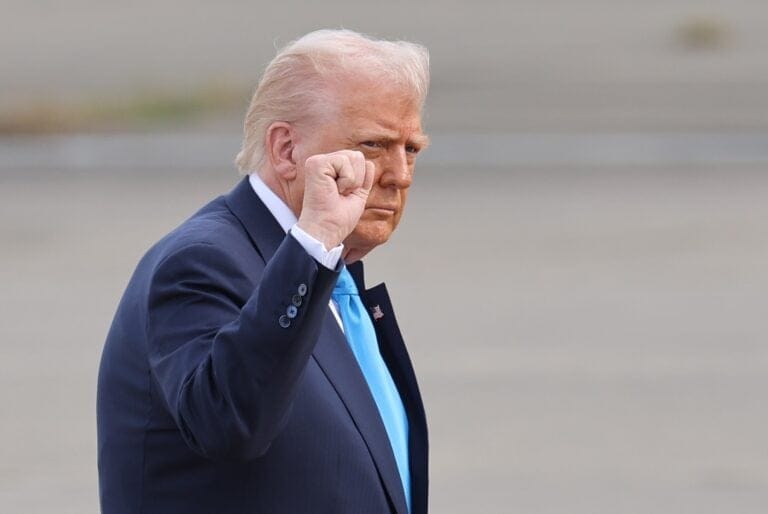
WASHINGTON — President Donald J. Trump warned Thursday that the United States is on the verge of launching a massive new military operation against Iran, threatening an attack that would dwarf previous strikes and potentially reopen full-scale hostilities in the Middle East.
Speaking in an interview, Mr. Trump signaled that while no final command had been issued to defense officials, military planning was complete and a final decision was imminent.
”I am considering a massive attack. Bigger than ever before,” Mr. Trump said. “I am close to making a decision. We are all set for it.”
He added that any potential operation would be “way bigger than Operation Epic Fury and bigger than any attack ever carried out before,” referring to the intense multi-week air and naval campaign launched by American and Israeli forces.
Senior defense officials confirmed Thursday that military planners have presented the White House with updated targeting packages, though two administration officials emphasized that the Pentagon had not yet received formal authorization to initiate strikes.
The president’s remarks follow a sharp escalation in maritime confrontation across vital global oil shipping channels. Over recent days, Iran-backed Houthi militants in Yemen resumed missile and drone attacks on commercial vessels in the Red Sea, including a strike targeting two Saudi oil tankers. Simultaneously, Iranian naval assets in the Strait of Hormuz have engaged in fresh confrontations with international maritime traffic, prompting retaliatory U.S. naval activity.
In a social media post earlier in the day, Mr. Trump warned Tehran directly that Washington would hold Iran accountable for continued proxy attacks, promising “major military punishment” if shipping lines were disrupted further.
The administration’s renewed rhetoric comes at a sensitive moment for global oil markets, which spiked sharply following the president’s statements due to fears of protracted supply disruptions through the Strait of Hormuz, where nearly a fifth of the world’s petroleum passes daily.

The precedent for Mr. Trump’s latest threat is Operation Epic Fury, the joint U.S.-Israeli campaign launched in late February 2026. That operation targeted Iranian ballistic missile production sites, naval facilities, air defense batteries, and remnants of Tehran’s nuclear infrastructure.
While Epic Fury severely degraded Iran’s conventional military capacity, it also led to weeks of tit-for-tat missile strikes across the Gulf, impacting military installations and commercial ports across the region.
Although a Pakistani-mediated framework agreement temporarily cooled active combat operations in late spring, root political tensions between Washington and Tehran remained unresolved.
National security analysts note that a military campaign exceeding Epic Fury in scale would likely require extensive deployment of strategic bombers, standoff cruise missiles, and sustained regional air superiority operations.
Mr. Trump suggested that coalition partners could participate if requested, noting Israel “would join in two minutes if I ask them to,” while maintaining that American forces were fully equipped to act unilaterally. “We don’t need anybody,” he said.
Despite the harsh rhetoric, diplomacy has not ceased entirely, though progress remains stalled. Regional mediators from Oman and Qatar have attempted to broker a broader deal on nuclear enrichment limits and regional security guarantees, but both sides remain far apart.
Addressing the status of negotiations, Mr. Trump asserted that Iranian leaders desired a resolution but had not made sufficient concessions. “They haven’t received enough pain yet,” he claimed.
Regional diplomats acknowledged that Iranian officials had rejected the latest ceasefire and monitoring proposal, citing ongoing U.S. economic sanctions and military presence in Gulf waters. “We are trying, but the Iranians are not being helpful,” one regional diplomat familiar with the talks said.
For now, military command centers across the Middle East remain on high alert. With naval strike groups positioned in the Arabian Sea and Persian Gulf, world leaders and diplomatic envoys are watching closely to see whether Washington will transition from public warnings to action.
