


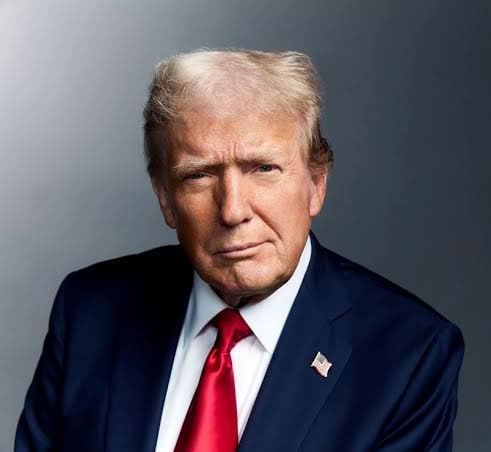
Following a phone call with the Russian leader, the president said Moscow and Washington are aligned on preventing a nuclear-armed Tehran, though he urged a focus on Ukraine.
By SCM Staff Writer I April 29, 2026
WASHINGTON — President Donald Trump said on Wednesday that Russian President Vladimir Putin has expressed a desire to assist the United States in curbing Iran’s nuclear program, suggesting a rare moment of alignment between the two powers despite the ongoing frozen conflict in Eastern Europe.
Speaking to reporters following a high-stakes phone call with the Russian leader, Mr. Trump indicated that Moscow’s concerns regarding a nuclear-armed Iran mirror those of his administration.
“He doesn’t want to see them have a nuclear weapon either,” Mr. Trump said, referring to Mr. Putin.
The President’s comments come at a time of heightened regional volatility. Mr. Trump painted a picture of a severely diminished Iranian military, claiming that Tehran has been “significantly weakened” and currently possesses only a “small percentage” of its former missile stockpile.
He issued a blunt warning that any remaining military capabilities could be “quickly targeted” should the Islamic Republic cross Washington’s “red line” regarding enrichment.
”The United States will not allow Iran to develop a nuclear weapon,” Mr. Trump stated, reiterating a cornerstone of his foreign policy.
Perhaps the most striking detail of the call was Mr. Putin’s reported offer to act as a mediator or technical partner in the nuclear standoff.
According to Mr. Trump, the Russian president expressed a specific interest in being involved in the oversight or management of Iran’s nuclear enrichment processes.
“He told me he’d like to be involved with the enrichment if he can help us get it,” Mr. Trump said.
While the President appeared open to the sentiment of cooperation, he signaled that his primary expectation for Moscow remains centered on the war in Ukraine. Mr. Trump noted that while he welcomed the help on Iran, he told Mr. Putin he would prefer the Kremlin focus its diplomatic and military energies on bringing an end to the Ukrainian conflict.
The revelation of the Trump-Putin call highlights the complex “triangular diplomacy” the administration is attempting to navigate.
Since returning to the White House, Mr. Trump has sought to combine “maximum pressure” on Tehran with a transactional approach to Moscow.
Historically, Russia has maintained a nuanced relationship with Iran—acting as a primary builder of its civilian nuclear infrastructure at Bushehr while simultaneously voting for past UN sanctions to prevent Tehran from acquiring a warhead.
However, the geopolitical landscape has shifted since 2022. Russia’s reliance on Iranian-made “Shahed” drones for its campaign in Ukraine has forged a deep military alliance between Moscow and Tehran, leading many Western analysts to doubt whether Mr. Putin truly intends to pressure his primary arms supplier.
Critics of the administration warned on Wednesday that any Russian involvement in Iranian enrichment could serve as a “Trojan horse,” allowing Moscow to protect its ally from Western sanctions while maintaining its influence in the Middle East.
For now, the White House appears to be testing whether Mr. Putin’s desire for a global seat at the table can be leveraged to neutralize the Iranian nuclear threat—provided the two leaders can first find common ground on the future of Ukraine.