

BY SCM CORRESPONDENT
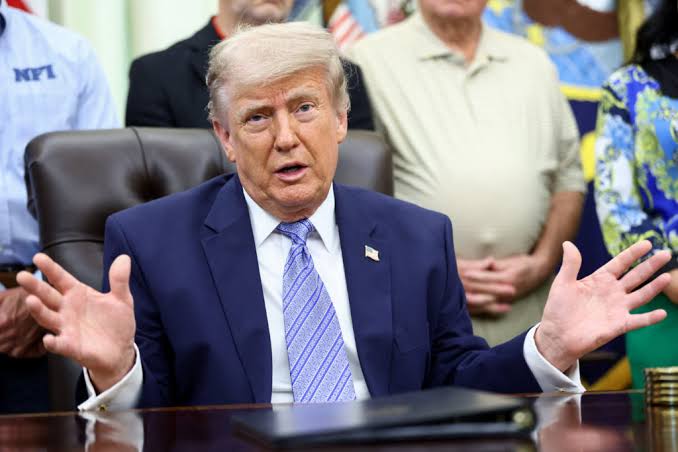
WASHINGTON — President Donald J. Trump announced on Friday that the United States is lifting its intense, weeks-long naval blockade of Iranian ports and the Strait of Hormuz.
The sudden move signals the most substantial breakthrough yet in halting the three-month-old war between the U.S., Israel, and Iran, though the White House emphasized that a final peace agreement remains contingent on Tehran meeting strict American terms.
Writing on social media following an urgent Situation Room meeting with senior aides—including Vice President JD Vance, special envoy Steve Witkoff, and adviser Jared Kushner—Mr. Trump declared that ships caught in the maritime standstill could finally return home.
”Ships caught in the Strait due to our amazing and unprecedented Naval Blockade, which will now be lifted, may start the process of ‘heading home!'” Mr. Trump wrote.
The decision temporarily eases a high-stakes military standoff in one of the world’s most critical economic arteries, which has choked global energy supplies and sent oil markets into a tailspin since the outbreak of hostilities in late February.
Behind the Blockade: How the Crisis Escalated
The lifting of the blockade marks a pivotal turn in a fast-moving conflict that transformed the Persian Gulf into an active warzone earlier this year.
Outbreak of War
February 28, 2026
The United States and Israel launch a coordinated air campaign against Iran following months of escalating regional proxy conflicts. In rapid retaliation, Tehran deploys its naval forces and mine stockpiles to effectively shut down the Strait of Hormuz to international shipping.
Imposition of the U.S. Blockade
April 13, 2026
Following the collapse of indirect peace negotiations in Islamabad, President Trump orders United States Central Command (CENTCOM) to enforce a strict naval blockade encompassing the entirety of the Iranian coastline to cut off Tehran’s remaining oil exports.
The 60-Day Truce Proposal
Late May 2026
With mediation from Pakistan and regional Gulf allies, negotiators draft a memorandum of understanding (MoU) establishing a 60-day extension of a fragile ceasefire, laying the groundwork for the blockade to be lifted.

The U.S. Demands: The Price for Ending the War
While the lifting of the blockade acts as a massive gesture of de-escalation, senior administration officials warned that the broader war will not officially conclude until Iran satisfies several uncompromising American demands.
According to White House briefings and statements from the president, the U.S. position hinges on three primary non-negotiable pillars:
Complete Nuclear Dismantlement: Mr. Trump stated that Iran must cooperate directly with the U.S. to ensure its estimated 900-pound stockpile of highly-enriched uranium is fully unearthed from its underground facilities and completely destroyed.
“Iran must agree that they will never have a Nuclear Weapon or Bomb,” Trump reiterated.
Unrestricted, Toll-Free Shipping: While Iranian state media has claimed Tehran intends to retain oversight and levy services fees on ships transiting the Strait of Hormuz, the White House demands the immediate, unrestricted opening of the channel in both directions with absolutely zero tolls or restrictions.
Immediate De-mining: As part of the tentative 60-day framework, the U.S. expects the Islamic Revolutionary Guard Corps (IRGC) to completely clear the naval mines it laid throughout the waterway.
”The deal being floated is subject to finalization,” a senior administration official cautioned, speaking on the condition of anonymity. “Lifting the blockade gets the shipping lanes moving, but if the regime fails to follow through on destroying their enriched nuclear material, our military assets remain positioned to resume strikes instantly.”
Global Economic Relief and Next Steps
The decision to lift the blockade is expected to provide immediate psychological relief to global financial and energy markets. Before the conflict, roughly 25% of the world’s seaborne oil trade and 20% of liquefied natural gas passed through the narrow strait.
The dual-layered squeeze of Iran’s initial closure and the subsequent U.S. retaliatory blockade had effectively brought commercial transit to a halt, driving shipping insurance costs to prohibitive highs.
Negotiators from the U.S., Iran, and regional stakeholders are expected to spend the coming days hammering out the “final aspects and details” of the memorandum of understanding. However, deep divisions remain.
Reports from Tehran indicate that hardline factions within the IRGC are resistant to giving up management of the strait and their nuclear leverage—meaning that while the naval blockade has been lifted, the path to an enduring peace remains highly volatile.
