

By SCM International Desk I Thursday, Sept 17, 2026
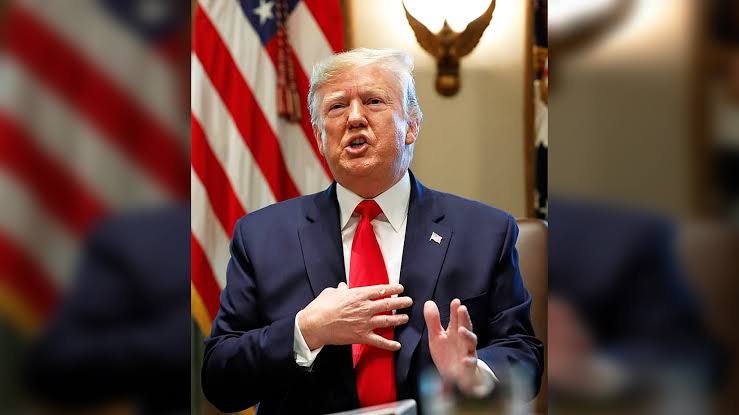
WASHINGTON — President Donald J. Trump escalated transatlantic trade tensions, warning that the United States could completely cut off trade with the European Union or slap the bloc with sweeping new tariffs if Brussels moves forward with a proposal to make Canada its first-ever “associate member”.
Speaking to reporters upon landing in North Carolina, Mr. Trump called the idea of Canada joining the 27-nation bloc in an associate capacity “laughable” and criticized Ottawa as a “terrible trade partner”.
He warned that Washington would view the diplomatic arrangement through a security lens.
”If I think it’s at all a hostile act, I will put very serious tariffs or stop trading with Europe on many things,” Mr. Trump said. “If it’s a good intention, that’s fine. If it’s a bad intention, we put very heavy tariffs.”
The President’s comments came hours after European Commission President Ursula von der Leyen delivered her State of the European Union address in Strasbourg, France, directly inviting Canadian Prime Minister Mark Carney to build an “Alliance for the Future” through an unprecedented associate status.
The exchange marks a sharp deterioration in relations across the Western alliance, as traditional American partners seek ways to insulate their economies against Washington’s increasingly aggressive tariff policies.
The clash stems from an unprecedented geopolitical shift between Ottawa and Brussels, accelerated by mounting economic pressure from Washington.
Since returning to the White House, Mr. Trump has imposed aggressive tariffs on traditional American allies and repeatedly suggested that Canada should consider becoming the 51st U.S. state.
Bilateral trade negotiations between the U.S. and Canada recently stalled, leaving Ottawa vulnerable, given that roughly 70 percent of Canadian exports bound for the global market head directly to the United States.

In response, Prime Minister Carney has pursued a strategy aimed at diversifying Canada’s economic and defense ties beyond North America.
Arguing that “middle powers” must coordinate to resist pressure from dominant global hegemonies, Ottawa turned to Brussels.
During her address, Ms. von der Leyen framed the proposed arrangement as a natural step forward from the existing Comprehensive Economic and Trade Agreement (CETA).
The proposed associate status would not grant Canada full EU membership—which under current treaties is strictly reserved for European nations—but would establish deep integration across strategic sectors.
Despite the enthusiasm in Strasbourg, the legal framework for “associate membership” remains undefined in EU treaties and would require unanimous approval from all 27 member states, several of which remain wary of provoking a full-scale trade war with the United States.
Mr. Trump’s swift threat to sever trade ties underscores the razor-thin margin European and Canadian leaders navigate as they seek strategic independence without triggering economic isolation from the world’s largest economy.
To better understand the economic and diplomatic fallout of these trade threats, check out EU invites Canada to become ‘associate member’ as US ties sour.
This report provides essential context on the unprecedented nature of the EU’s offer and the growing trade divide between Washington, Ottawa, and Brussels.
