

By Our Online Reporter
WASHINGTON — In a dramatic flurry of social media diplomacy on Monday, President Donald Trump announced that Israel and Hezbollah had agreed to a mutual de-escalation, claiming that Israeli forces advancing toward Beirut had been ordered to turn back.
However, the assertion of a breakthrough was almost immediately clouded by a stern public rejoinder from Israeli Prime Minister Benjamin Netanyahu, who declared that Israeli military operations would proceed in southern Lebanon and threatened devastating strikes on Beirut if Hezbollah continued its rocket attacks.
The conflicting statements underscore the profound fragility of American-led efforts to salvage a fracturing regional truce and illustrate the starkly divergent messaging between the White House and its closest Middle Eastern ally.
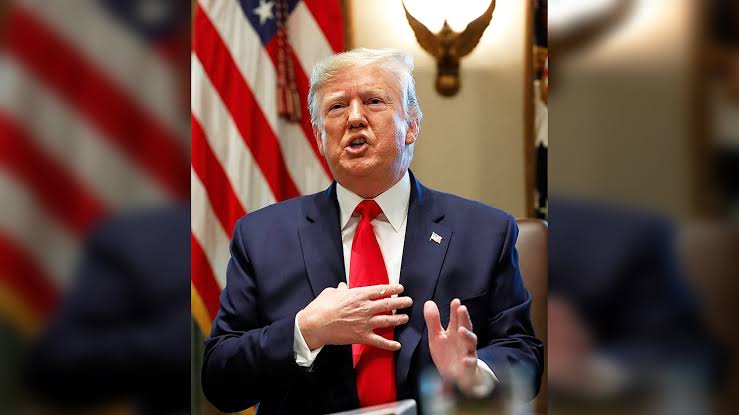
Writing on his platform, Truth Social, Mr. Trump stated that he had held a “very productive call” with Mr. Netanyahu and had separately communicated with Hezbollah through “highly placed representatives.”
”There will be no Troops going to Beirut, and any Troops that are on their way, have already been turned back,” Mr. Trump wrote. He added that Hezbollah “agreed that all shooting will stop — That Israel will not attack them, and they will not attack Israel.”
The president’s announcement appeared timed to avert a massive, imminent expansion of the conflict. Just hours earlier, the Israeli government had ordered significant air assaults and advanced troop maneuvers targeting the southern suburbs of Beirut—a stronghold of the Iranian-backed militant group—prompting thousands of Lebanese civilians to flee the capital in panic.
Writing on his platform, Truth Social, Mr. Trump stated that he had held a “very productive call” with Mr. Netanyahu and had separately communicated with Hezbollah through “highly placed representatives.”
”There will be no Troops going to Beirut, and any Troops that are on their way, have already been turned back,” Mr. Trump wrote. He added that Hezbollah “agreed that all shooting will stop — That Israel will not attack them, and they will not attack Israel.”
The president’s announcement appeared timed to avert a massive, imminent expansion of the c onflict. Just hours earlier, the Israeli government had ordered significant air assaults and advanced troop maneuvers targeting the southern suburbs of Beirut—a stronghold of the Iranian-backed militant group—prompting thousands of Lebanese civilians to flee the capital in panic.
The optimism generated by the White House was quickly tempered by Mr. Netanyahu. In a sharp public statement issued shortly after his conversation with the American president, the prime minister clarified that while a direct march on the capital might be paused, Israel’s core military objectives remained non-negotiable.

”The IDF will continue to operate as planned in southern Lebanon,” Mr. Netanyahu posted on social media.
Addressing the threat to the Lebanese capital, the prime minister left no room for ambiguity regarding his rules of engagement. “If Hezbollah does not cease attacking our cities and citizens—Israel will attack terror targets in Beirut,” he warned, concluding emphatically:
“This stance of ours remains unchanged.”
The mixed messaging left diplomats and military analysts scrambling to decipher whether a binding understanding had actually been reached, or if Mr. Trump had simply used his public platform to force a reluctant pause on an Israeli command structure determined to press its tactical advantage.
The diplomatic whiplash comes amid the slow-motion collapse of a broader regional ceasefire brokered by the United States. While a formal truce was signed, the agreement has been repeatedly tested by intense, deadly friction on the ground.
The primary catalyst for the current crisis is the status of southern Lebanon. Under previous international frameworks and the terms of the spring truce, Hezbollah was required to withdraw its military infrastructure north of the Litani River. Israel contends the group never complied, utilizing the border zone to launch ongoing drone and rocket assaults against towns in northern Israel, including the outskirts of Haifa.
In response, the Israeli military launched its deepest ground incursion into Lebanon in more than a quarter-century, capturing the strategic, hilltop Beaufort Castle and moving forces perilously close to the capital. The escalation has exacted a heavy toll, with Lebanese health officials reporting thousands of casualties since fighting renewed earlier this spring.
The crisis has also reverberated globally. Earlier on Monday, Iranian state media reported that Tehran was suspending its indirect diplomatic talks with the United States in protest of the Israeli push toward Beirut, threatening to activate regional proxies to shut down critical commercial shipping lanes in the Red Sea and the Bab al-Mandeb Strait.
By intervening directly, Mr. Trump appeared determined to prevent a localized border war from spiraling into a total regional conflagration.
Yet, as rocket sirens continued to wail across northern Israel on Monday evening and smoke rose from southern Lebanese villages, the reality on the ground suggested that stopping the shooting would require far more than social media declarations.
