

By SCM Foreign Correspondent
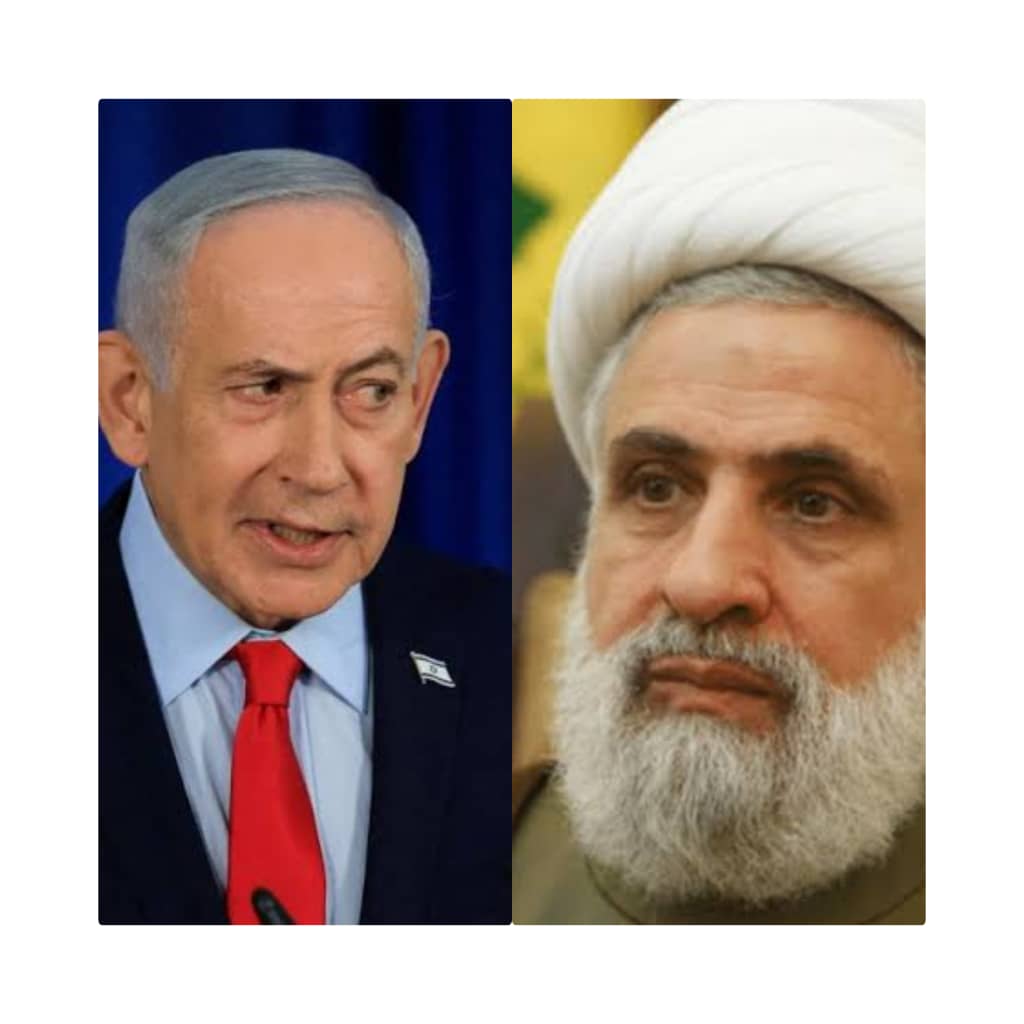
BEIRUT, Lebanon — Hezbollah’s top leader on Thursday forcefully rejected a newly proposed, U.S.-brokered ceasefire agreement between Israel and the Lebanese government, branding the direct negotiations a “farce” and a “humiliation” that would strip Lebanon of its sovereignty.
In a defiant televised address, Hezbollah Secretary-General Naim Qassem shattered brief hopes for a diplomatic breakthrough, warning that the militant group would not disarm or abandon the battlefield.
His remarks came less than 24 hours after Lebanese and Israeli diplomats in Washington had tentatively agreed to a phased truce aimed at halting the devastating border war.
”We are concerned only with a comprehensive end to the aggression, a ceasefire, and Israel’s full withdrawal,” Qassem said. He claimed that the terms of the agreement—which reportedly hinge on Hezbollah halting all rocket fire and retreating north of the Litani River without guaranteeing an immediate Israeli withdrawal—amounted to a mandate for defeat.
”Disarming the resistance means the destruction of Lebanon’s strength,” Qassem said, arguing that the framework was a thinly veiled attempt to force Beirut to “submit to the Greater Israel project.”
He added a warning to Lebanese state negotiators: “Israel will achieve its goals through politics rather than war if we surrender.”
The rejection underscores a widening chasm between Hezbollah and the Lebanese government, which has been attempting to reassert state authority and negotiate an end to a conflict that has left large swathes of southern Lebanon in ruins.
Under the proposed framework, Lebanon and Israel would establish “pilot zones” where the under-resourced Lebanese Armed Forces would take exclusive security control, effectively barring non-state actors.
Because Hezbollah is not an official party to the Washington talks, the Lebanese government has faced intense pressure to rein in the group. Following Qassem’s speech, Lebanese Prime Minister Nawaf Salam warned that those who reject the diplomatic track would “bear responsibility for the consequences,” calling negotiations the “fastest and least costly road” for the country.

But Qassem made clear that Hezbollah intends to dictate its own terms. He warned that as long as Lebanese border villages face bombardment by the Israel Defense Forces (IDF), “Israeli settlements will not be safe.” Evoking deeply polarized religious and historical rhetoric, he declared, “The killers of prophets will not settle on our land. We will fight the invaders until we expel them.”
The current crisis erupted on March 2, 2026, when Hezbollah launched a massive campaign of rocket and drone strikes into northern Israel. The group stated the attacks were in support of its regional patron, Iran, which had just come under joint military strikes by the United States and Israel.
In the three months since, the conflict has rapidly eclipsed the intensity of previous border skirmishes. In April, Israel launched “Operation Eternal Darkness,” unleashing a fierce aerial campaign targeting Hezbollah command structures in Beirut’s southern suburbs, the western Bekaa Valley, and the south.
Concurrently, the IDF pushed five military divisions into southern Lebanon, establishing a heavily fortified buffer zone spanning over 600 square kilometers and destroying dozens of border towns to prevent Hezbollah fighters from launching cross-border raids.
While a temporary, U.S.-mediated 10-day truce was struck on April 16 and subsequently extended, it failed to halt the underlying violence. Israel has insisted on its right to launch preemptive strikes to block Hezbollah’s rearmament, while Hezbollah has routinely ignored demands to vacate the southern border region.
Even as diplomats in Washington finalized the draft agreement on Wednesday, the reality on the ground remained unyielding. On Thursday morning, a fresh salvo of Hezbollah rockets targeted IDF positions inside the Lebanese village of Qantara and northern Israeli communities.
Military footage released last week by the group showed extensive rocket barrages illuminating the night sky over Galilee, illustrating the group’s lingering arsenal despite months of Israeli bombardment.
In response to Thursday’s rocket fire, Israeli airstrikes pounded the Nabatieh region and the Bekaa Valley, killing at least four people. Israeli Defense Minister Israel Katz confirmed that military operations would continue unabated despite the diplomatic announcements in Washington.
”The IDF will continue its fire and activity at this stage,” Katz said in a statement, emphasizing that Israeli troops would remain firmly positioned in the southern security zone and that displaced Lebanese civilians would not yet be permitted to return.
With Hezbollah refusing to blink and Israel dug into southern Lebanese territory, the U.S.-led effort to avert a wider regional conflagration appears to have hit a critical, and potentially fatal, roadblock.
