

By Our Man in Monterrey
It was billed as a night of history in Mexico, but by the final whistle, it felt more like a brutal public execution. In the 1,000th match in FIFA World Cup finals history, Japan did not just stroll into the record books—they danced, chopped, and completely dismantled a woeful Tunisia side four-nil.
The devastating defeat officially brands the Carthage Eagles as the very first casualties of the 2026 tournament, sending Hervé Renard’s men packing with a game to spare, while the rampant Samurai Blue stand on the absolute precipice of the knockout rounds.
Talk about a baptism of fire. Poor old Hervé Renard was parachuted into the hot seat just five days ago after Sabri Lamouchi was ruthlessly sacked following a five-one mauling by Sweden. Renard, the white-shirted wizard who famously masterminded Saudi Arabia’s shock win over Argentina in 2022, was brought in to provide a miracle. Instead, his tactical game plan was utterly shredded within four minutes by a Japanese side playing with the cheat codes turned firmly on.
The match was barely warm when Japan’s supreme midfield architect, Keito Nakamura, went on a dazzling, jinking run down the left flank. Leaving Tunisian defenders clutching at the thin Monterrey air, Nakamura sliced his way into the penalty area and delivered a devastating low ball across the face of goal.
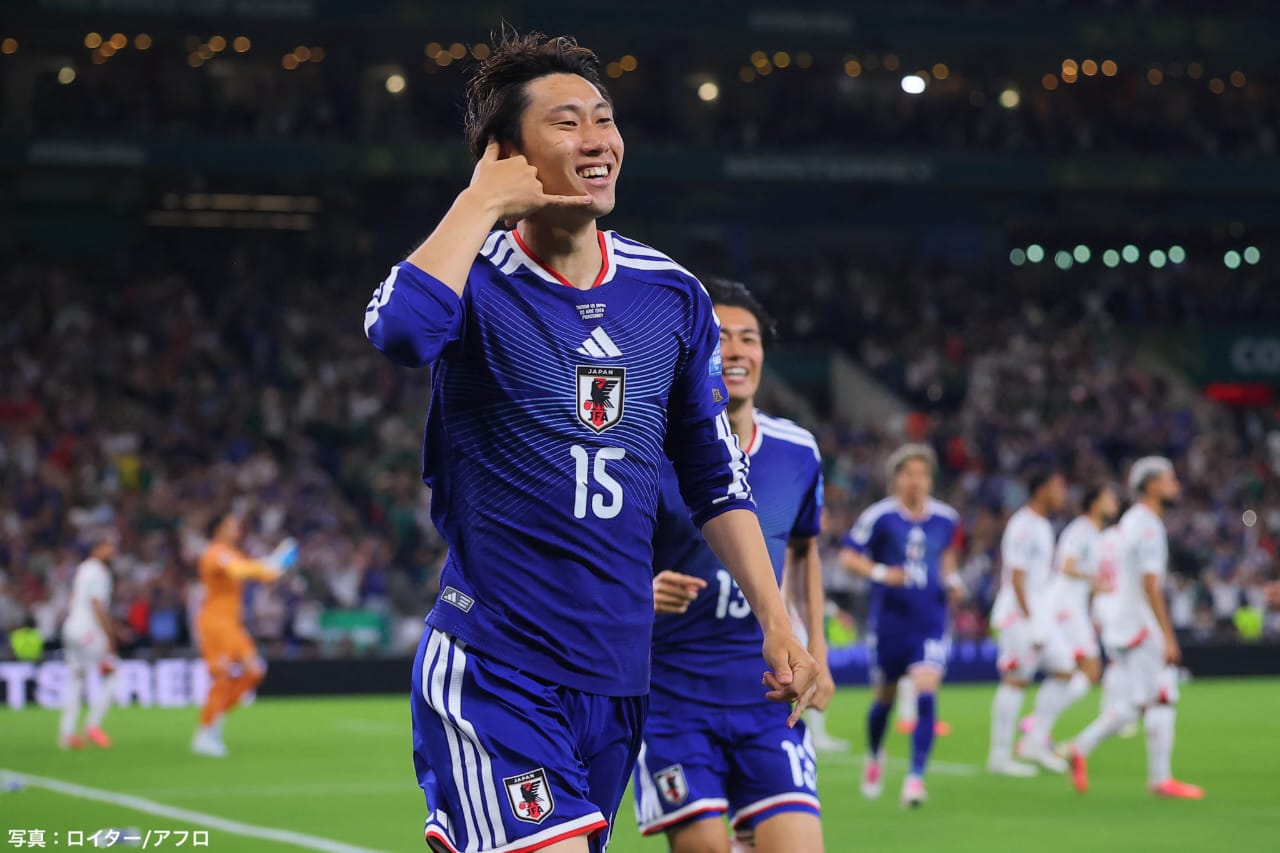
Arriving on cue like an express train was shadow striker Daichi Kamada, who calmly prodded the ball home through a desperate crowd of white shirts to give the Asian side a dream start. It was Kamada’s second goal of the tournament and the fastest goal Japan has ever scored in World Cup history.
Tunisia, looking entirely shell-shocked and set up in a rigid, passive five-three-two formation, simply could not deal with Japan’s relentless energy. The Samurai Blue pressed high, hunting in packs and choking the life out of the African side’s midfield.
Hannibal Mejbri, once of Manchester United, spent the evening chasing shadows as Japan dominated the statistical battleground, controlling sixty-two percent of the total possession and leaving Tunisia pinned inside their own half.
Just after the half-hour mark, the match effectively ended as a contest, courtesy of a bit of absolute individual brilliance from Feyenoord hitman Ayase Ueda. Seizing the ball near the center circle, Ueda was allowed the absolute freedom of the Sierra Madre mountains to stride aggressively forward.

With the Tunisian backline backing off in sheer terror, the lethal striker unleashed a venomous, arrowed low drive from the edge of the box that left keeper Aymen Dahmen completely rooted to the spot. It was a goal of pure confidence, a stark contrast to a Tunisia team that looked emotionally bankrupt.
Renard tried to ring the changes at the interval, throwing on Ismaël Gharbi and Mohamed Amine Ben Hamida in a desperate bid to find some sort of creative spark. But it was entirely in vain.
The statistics painted a grim picture for the North Africans, who managed to muster a grand total of just four shots throughout the entire ninety minutes, with only a solitary, tame effort actually finding its way on target. At the other end, Japan were operating a firing squad, rattling off fifteen shots in total, nine of which forced the overworked Dahmen into action.
As the second half wore on and Tunisia threw bodies forward in a desperate, naive attempt to salvage their World Cup lives, Japan’s speed on the counter-attack became downright terrifying. In the sixty-ninth minute, the majestic Kamada turned provider.
He cut open the Tunisian defense with a surgical, pinpoint through-ball that unleashed Junya Ito. Showing ice-cold composure in the one-on-one, Ito effortlessly slotted a low finish past Dahmen to spark wild celebrations among the traveling Japanese contingent.
Yet, Hajime Moriyasu’s side were not done treating the crowd. Six minutes from time, substitute Kaishu Sano floated a gorgeous, hanging cross to the back post. Ueda, smelling blood, rose above his marker with spectacular athletic prowess, powering a magnificent, looping header back across goal and into the top corner.
It was his second of the match, sealing Japan’s biggest-ever win in a World Cup tournament and making them the first Asian nation to ever score four goals in a single finals match.
The full-time statistics told the tale of a complete mismatch: Japan utterly dominated the corner count with eight corners to Tunisia’s zero, while committing a mere seven fouls compared to Tunisia’s fourteen, proving that elegance completely triumphed over aggression.
For Tunisia, a dead-flicker clash against the Netherlands awaits, but it is nothing more than an exercise in pride. For Japan, who now sit level with the Dutch on four points at the summit of Group F, the sky is the absolute limit. On this historic night, they looked like true world-beaters.
