

By SCM Staff Writer
ABUJA, Nigeria — In a significant escalation of the Nigerian government’s long-standing crackdown on financial sector malpractice, the Economic and Financial Crimes Commission (EFCC) officially arraigned Mr. Tunde Ayeni, the former Chairman of the Board of Directors of the defunct Skye Bank Plc, on charges related to an alleged ₦15.6 billion fraud.
The proceedings, which took place before the Federal High Court in Abuja, mark a pivotal moment in the legal aftermath of the collapse of Skye Bank, once one of Nigeria’s most prominent commercial lenders.
The prosecution alleges that Mr. Ayeni, along with other high-ranking members of the bank’s erstwhile leadership, engaged in a sophisticated web of financial maneuvers that resulted in the disappearance of billions in depositors’ funds.
The Charges and the Arraignment
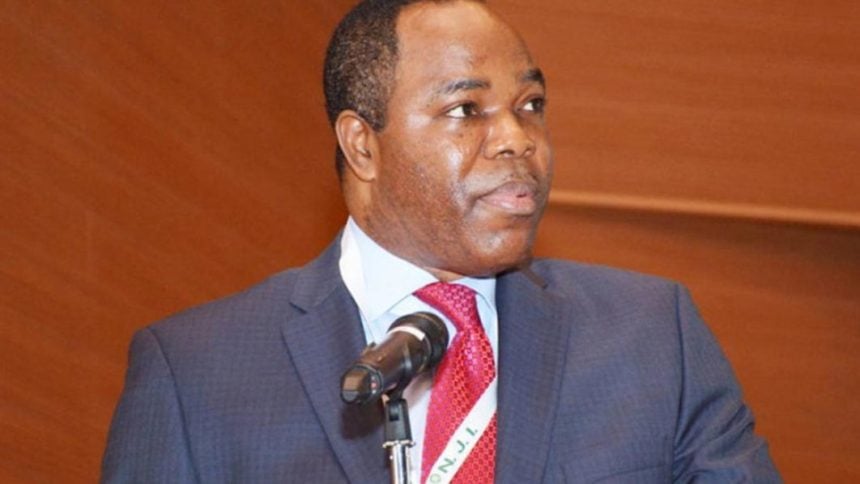
Mr. Ayeni appeared before the presiding judge looking somber, as the court registrar read out the multi-count charge. The indictment centers on allegations of money laundering, criminal breach of trust, and the misappropriation of bank assets.
Specifically, the EFCC contends that the former chairman used his position of influence to facilitate unauthorized loans and transfers to entities in which he held a vested interest, totaling approximately ₦15,600,000,000.
Under the prosecution of the EFCC, the government argued that these actions were not merely administrative lapses but were deliberate efforts to siphon capital, leading directly to the bank’s insolvency and subsequent takeover by the Central Bank of Nigeria (CBN).
”The integrity of the Nigerian banking system rests on the accountability of its leaders,” a spokesperson for the EFCC stated following the hearing. “This case serves as a clear signal that the era of impunity within the financial corridors of power is over.”
To understand the gravity of the charges against Mr. Ayeni, one must look back at the 2018 dissolution of Skye Bank. Following years of deteriorating capital adequacy ratios and chronic liquidity issues, the Central Bank of Nigeria revoked its operating license.
The assets and liabilities of the defunct institution were subsequently transferred to Polaris Bank, a “bridge bank” established to stabilize the financial system and protect depositors.
The CBN’s intervention revealed a “black hole” in the bank’s balance sheet, much of which was attributed to insider related-party transactions. Mr. Ayeni, who served as chairman during the period leading up to the intervention, has been a central figure of interest for investigators for several years.
Counsel for Mr. Ayeni maintained their client’s innocence, arguing that the transactions in question were standard business operations conducted in good faith.

The defense team emphasized that the banking sector’s volatility and regulatory shifts were to blame for the institution’s struggles, rather than any criminal intent on the part of the board.
The defense also filed for bail, citing Mr. Ayeni’s cooperation with previous investigative invitations. While the prosecution initially raised concerns regarding the risk of flight given the magnitude of the sum involved, the court has taken the bail application under advisement, setting strict conditions for the defendant’s temporary release.
The trial is being closely watched by international investors and local stakeholders alike.
For Nigeria, the successful prosecution of high-profile “white-collar” crime is seen as a litmus test for the country’s judicial independence and its commitment to global financial standards.
The ₦15.6 billion figure is staggering, even by the standards of previous Nigerian banking scandals. It represents more than just a loss of capital; it represents a breach of trust for millions of small-scale depositors who relied on Skye Bank for their livelihoods.
As the case moves to the evidentiary stage, the court is expected to summon various financial
experts and former bank executives to testify.
The legal battle ahead promises to be protracted, likely unearthing further details about the internal governance—or lack thereof—at one of Nigeria’s most spectacular corporate failures.
The trial is scheduled to resume later this month, as the EFCC prepares to present its first batch of witnesses.
If convicted, Mr. Ayeni faces a significant prison sentence and the potential forfeiture of personal assets to recover the missing billions.
