

BY OUR CHIEF FOOTBALL WRITER AT BC PLACE
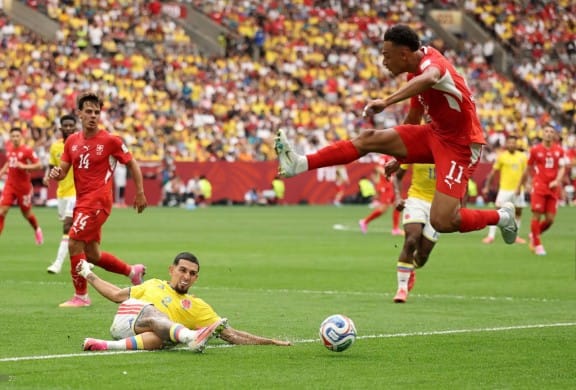
VANCOUVER – THE SCENE inside Vancouver’s closed-roof stadium was a intimidating, deafening wall of bright South American yellow. For over two brutal hours, a fiercely partisan crowd of fifty-two thousand spectators hissed and booed every solitary touch of a white Swiss shirt.
Yet, when the nerve-shredding, agonizing drama of a FIFA World Cup penalty shootout reached its absolute breaking point, it was the ice-cold, unshakeable discipline of Switzerland that silenced the Colombian carnival.
Following a grueling, physical, and ultimately barren goalless draw after one hundred and twenty minutes of high-stakes tension, Switzerland marched on to a historic four-to-three penalty shootout victory. In doing so, Murat Yakin’s resilient squad booked a dream quarter-final date with Lionel Messi’s Argentina, reaching the last eight of football’s greatest tournament for the first time since 1954.
This was a vintage, modern knockout battle defined by structural perfection and world-class superstars refusing to blink. On one side stood the majestic, iconic James Rodríguez, breaking his nation’s all-time appearance record with his one hundred and thirty-first cap, pulling the creative strings alongside Liverpool’s lightning-fast winger Luis Díaz.
On the other side, marshalling his Troops with typical steel and arrogance, was Switzerland’s midfield general Granit Xhaka, flanked by Manchester City’s defensive rock Manuel Akanji and Borussia Dortmund’s phenomenal goalkeeper Gregor Kobel.
From the opening whistle, the contest was an intense game of tactical chess. Colombia looked the more fluid side early on. Just before the first-half hydration break, the veteran James Rodríguez pinched possession deep in the final third, slipping a clever ball to Díaz.
The Anfield star instinctively laid it off for Gustavo Puerta on the edge of the box. Puerta hit a magnificent, curling effort destined for the top corner, but Kobel rose elegantly, flexing his giant frame to punch the ball clear.
Switzerland, forced to play without their injured twenty-year-old breakout star Johan Manzambi, relied heavily on Xhaka’s tactical discipline.
The Bayer Leverkusen captain was everywhere, snapping into tackles and picking up a yellow card in the fifty-first minute for his troubles. Colombia’s Luis Suárez also entered the referee’s book just before being substituted, highlighting a bruising middle period where physical challenges far outweighed clear-cut chances.
The match truly caught fire in extra time. Colombia came agonizingly close to breaking the deadlock in the ninety-ninth minute. The electric sub Jaminton Campaz escaped down the left wing, delivering an absolute peach of a cross to Luis Díaz. Díaz’s goal-bound effort struck the underside of the crossbar via a deflection off Nico Elvedi, sending a collective gasp through the stadium.

Moments later, it was Switzerland’s turn to agonizingly miss out. Zeki Amdouni, brought on to replace Fabian Rieder, worked space ten yards out and unleashed a venomous drive, only for Colombia’s keeper Camilo Vargas to produce a brilliant, diving save to his left.
As the final whistle blew after extra time, history beckoned. Cruelly, neither nation had ever won a World Cup penalty shootout before this fateful evening.
The shootout began in clinical fashion. Colombia’s substitute magician Juan Fernando Quintero calmly slotted his left-footed penalty down the center. Up stepped Swiss skipper Granit Xhaka, carrying the immense weight of his nation. With absolute ice in his veins, Xhaka stepped up and confidently buried his strike to make it one-one.
Then came the first catastrophic swing of momentum. Former Tottenham defender Davinson Sánchez let the pressure get the better of him, firing a weak penalty that flew wide of the target.
Seizing the advantage, Amdouni strolled up and stroked his spot-kick into the bottom right corner with incredible composure, putting the Swiss two-one ahead.
Campaz managed to squeeze his shot just under a diving Kobel to level for Colombia, before a moment of sheer horror struck the Swiss camp. The dependable Manuel Akanji staggered his run-up, choked, and blazed his penalty completely over the crossbar. The Colombian fans roared, sensing a miraculous lifeline.
But their joy was instantly extinguished by the man of the hour: Gregor Kobel. Faced with Colombia’s dangerous forward Cucho Hernández, Kobel guessed correctly, diving spectacularly to his bottom left to pull off a magnificent, clean save. The Swiss section erupted.
Cedric Itten stepped up next, drilling his penalty straight down the middle to put Switzerland three-two up. Luis Díaz responded under maximum pressure, coolly slotting his shot into the bottom left corner after a stuttering run-up to pull it back to three-three.
The stage was perfectly set for Rubén Vargas. The Augsburg winger, who had replaced Dan Ndoye late in regulation time, walked up to the spot knowing a single kick would secure immortality. With a deep breath and a clinical strike, Vargas sent Camilo Vargas the wrong way, hitting the back of the net to seal the four-to-three triumph.
Statistically, the raw data completely reflected the fiercely contested nature of this tactical war. Across the full one hundred and twenty minutes, Colombia narrowly controlled fifty-one percent of the total ball possession, leaving Switzerland with forty-nine percent.
It was an offensive stalemate, with Colombia registering twelve total shots compared to Switzerland’s ten. However, defensive discipline was the true story of the night; both teams managed to register a mere three shots each on target. The physical intensity was illustrated by the foul count, with the Swiss committing seventeen fouls to Colombia’s fifteen, forcing the referee to issue three yellow cards to Switzerland and two to Colombia.
Ultimately, it was the very final statistic—four successful penalties to three—that rewrote Swiss football history.
