

By SCM Staff Writer I May 3, 2026
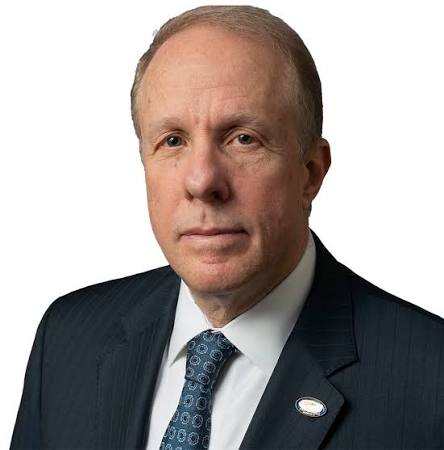
WASHINGTON — Stephen A. Feinberg, the billionaire financier who left the heights of Wall Street to serve as the chief operating officer of a rebranded and increasingly assertive Department of War, resigned his post late Saturday.
His departure marks the exit of a central figure in the Trump administration’s efforts to run the American military apparatus with the ruthless efficiency of a private equity firm.
Mr. Feinberg, 66, was the 36th person to hold the office formerly known as the Deputy Secretary of Defense. His tenure was defined by a historic administrative shift on September 5, 2025, when an executive order formally reverted his title and that of the department to their pre-1947 “War” designations—a move Mr. Feinberg was tasked with operationally implementing across the world’s largest bureaucracy.
A spokesperson for the Department of War confirmed the resignation, noting that Mr. Feinberg had no public events scheduled for the weekend. The Pentagon offered no immediate reason for the departure, though officials close to the Deputy Secretary suggested he had accomplished the primary “budgetary modernization” goals he set out to achieve upon his confirmation in March 2025.
From Cerberus to the Pentagon
The co-founder of Cerberus Capital Management, Mr. Feinberg brought a reputation for intense privacy and a fixation on supply-chain logistics to the E-Ring. Unlike many of his predecessors who came from the traditional “defense-industrial complex” or academic circles, Mr. Feinberg operated through the lens of a turnaround specialist.
As the second-highest-ranking official in the department, he managed the day-to-day operations and a budget exceeding $900 billion. He was the pragmatic engine behind the ideological priorities of Secretary of War Pete Hegseth, focusing specifically on strengthening the defense industrial base and streamlining the acquisition of munitions and emerging technologies.
During his confirmation hearings in early 2025, Mr. Feinberg told senators that those responsible for the military’s ledger were often disconnected from the “financial details.”
He spent much of the last year attempting to bridge that gap, applying the same “boots-on-the-ground” auditing style that built his multibillion-dollar investment empire.
A Period of Transformation
Mr. Feinberg’s exit comes at a sensitive time for the administration. Having served as the Chair of the President’s Intelligence Advisory Board during the first Trump term, he was seen as a bridge between the MAGA movement’s civilian leadership and the career military brass.
His tenure was not without controversy. Critics often pointed to his previous ownership of major defense contractors through Cerberus as a potential conflict of interest, though Mr. Feinberg underwent a rigorous divestment process before being sworn in on March 17, 2025.
Within the halls of the Pentagon—now the Department of War—his presence was felt most in the “war room” meetings regarding procurement. He famously pressured legacy contractors to lower costs while fast-tracking contracts for tech-focused defense startups.
The resignation leaves a significant void at the top of the department’s civilian leadership. As the administration continues to navigate heightened tensions in Eastern Europe and the Middle East, the role of “COO of War” remains a linchpin for global logistics.
Secretary Pete Hegseth praised Mr. Feinberg’s service in a brief statement, calling him a “patriot who understood that American strength is built on a foundation of economic and industrial superiority.”
The White House has not yet signaled a successor. For now, the Department of War’s massive daily operations will fall to a temporary acting deputy, even as the “War” rebranding effort Mr. Feinberg spearheaded continues to reshape the face of American defense.
Advertisement

