

Admin I Wednesday, Oct. 07, 2026
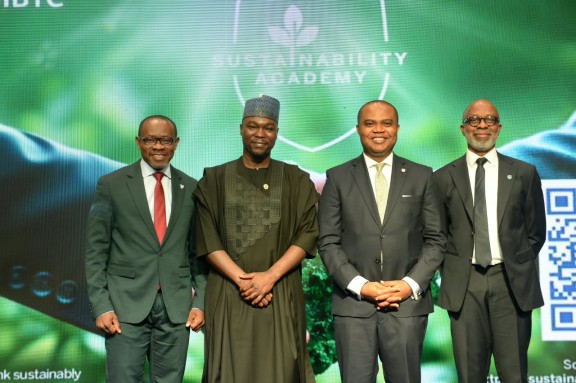
LAGOS, Nigeria – Stanbic IBTC Holdings, A member of Standard Bank Group has concluded the third edition of its flagship Sustainable Finance Summit, reinforcing its commitment to advancing sustainable finance in Nigeria.
The hybrid summit brought together leaders from the financial, regulatory, public, academic and technology sectors under the theme, ‘Financing a Just Transition: Mobilising Capital for People, Policy and Prosperity The summit, which was held at the Lagos Continental Hotel, Victoria Island, and streamed live on YouTube, convened C-suite executives, regulators, investors, sustainability professionals, policymakers, academics, and other stakeholders from Nigeria and beyond.
Speaking at the event, Chuma Nwokocha, Chief Executive, Stanbic IBTC Holdings, said the summit was started to move Nigeria’s sustainable finance conversation from dialogue to action by bringing together stakeholders capable of shaping the country’s sustainable finance ecosystem. He noted that sustainable finance has moved from the margins to the mainstream, supported by stronger collaboration, broader participation, and greater market
awareness.
“For us at Stanbic IBTC, the conversation about sustainability is no longer about the future. Sustainability is here, it is real, and it requires action now. It is about how we allocate capital
today; how we shape policy; how we bring others along on the journey; and how we build institutions capable of delivering prosperity for every Nigerian and for future generations.”
In addition to the summit’s focus on action-driven initiatives, the Standard Bank Sustainability Academy was officially launched as a significant step towards fostering a culture of sustainability in Nigeria. This innovative programme aims to provide free, high-
quality educational resources to individuals enthusiastic about sustainable practices and finance.
By engaging a diverse audience, the Academy seeks to empower individuals, promoting awareness and practical skills essential for driving Nigeria’s sustainable development efforts forward. This initiative not only expands access to critical knowledge but
also builds a vibrant community committed to sustainable solutions.
According to Chuma, “We embraced an initiative-taking approach, exemplified by the launch of The Standard Bank Sustainable Academy. This initiative not only provides free access to
vital knowledge on sustainability and sustainable finance but also fosters a vibrant community ready to engage in Nigeria’s sustainable development journey,” he stated.
In his opening remarks, Bongo Adi, Professor of Economic and Business Intelligence, Lagos Business School, said Nigeria had reached a critical point where economic growth and
climate action are no longer competing priorities.
“At the centre of this transition are people and their livelihoods. Sustainable finance can catalyse private capital, create green jobs, strengthen local economies, and foster shared prosperity. The transition is not merely an exercise in managing risk. It is a commitment to millions of Nigerians through private investment in resilient infrastructure, clean energy access, and sustainable enterprises,” Adi said.
Delivering a goodwill message, the Special Adviser to the President on Climate Finance, Mallam Ibrahim Shelleng, said Nigeria had established the policy, regulatory and institutional frameworks required to translate its climate ambitions into investment opportunities.
He highlighted the Climate Change Act, Nigeria’s updated Nationally Determined Contribution, the Energy Transition Plan, the Electricity Act, the emerging sustainable finance taxonomy,
and the country’s carbon-market framework as measures supporting an inclusive transition and increased private-sector participation.

“Nigeria has established a long-term pathway for power, transport, and industry. The objective is to pursue a transition that is ambitious, just and aligned with the Paris Agreement. Our transition must expand access to energy, increasing industrial productivity, creating employment, and improving the quality of life for Nigerians,” He reiterated.
In her virtual keynote address, Titilayo Oshodi, Special Adviser to the Lagos State Governor on Climate Change and Circular Economy, said Nigeria’s just transition must simultaneously
expand access to reliable energy, strengthen infrastructure, create jobs, and help businesses respond to climate-related risks.
“The question is not whether Nigeria should develop or transition. We must do both, and we must find ways to take them forward together. Clean energy can expand access to reliable power, resilient infrastructure can protect economic activity, and a strong circular economy can turn waste into businesses, jobs, and productive resources.
However, these opportunities will not achieve the scale we need if they remain ideas. They must become well-prepared projects capable of attracting the right financing,” Oshodi said.
During a panel discussion titled “Unlocking and Mobilising Domestic Capital for Nigeria’s Just Transition and Sustainable Growth,” Abraham Durosawo, Vice President at the Nigeria
Sovereign Investment Authority; Efe Omoduemuke, Executive Director, Investments, Stanbic IBTC Pension Managers; Barbara Izilein, Executive Director, Operations at The Infrastructure Bank; and Dr Adebola Odunsi, Chief Executive Officer of Carbonivity,
examined the conditions required to attract long-term domestic capital to sustainable projects.
The panelists agreed that while capital availability was not the principal constraint, a significant challenge lay in the shortage of bankable, investment-ready projects.
They emphasised that such projects must have clear objectives, transparent cash flows, demonstrable market demand, and credible financial projections. Additionally, these projects need to be properly structured, appropriately de-risked, and aligned with investors’ return, impact, and risk requirements.
Furthermore, the panelists highlighted the importance of technical assistance in preparing viable transactions across both the public and private sectors. They called for environmental,
social, and governance considerations to be integrated into investment decisions, supported by credible data, strong partnerships, and appropriate risk-mitigation structures.
As the financial landscape places greater emphasis on environmental, social and governance principles, Stanbic IBTC said it would continue to support initiatives that advance Nigeria’s transition to a climate-smart and resilient economy.
The organisation maintained that the transition must create measurable economic value while expanding opportunities for individuals, businesses, and communities.
