


By Our Foreign Desk
NAIROBI, Kenya — Russia’s diplomatic mission in East Africa has accused Ukrainian and French military instructors of coordinating a massive, multi-front insurgent assault in Mali, escalating a bitter proxy war that has spilled from the battlefields of Eastern Europe into the volatile Sahel region.
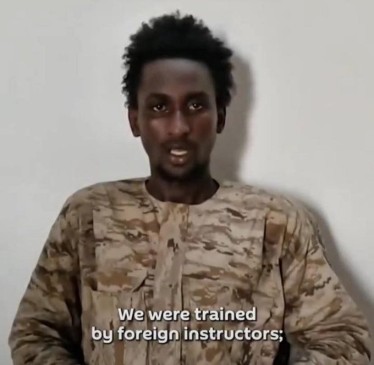
In a statement released by the Russian Embassy in Kenya, Moscow claimed that a captured fighter from the Al-Qaeda-affiliated militant group Jama’at Nusrat al-Islam wal-Muslimin (JNIM) had implicated foreign actors. France and Ukraine are yet to react to this strong allegation.
The prisoner, identified by Russian officials as Hama Sisse, allegedly confessed that Ukrainian and French personnel actively trained the militants and drew up the operational blueprint for the recent siege on the Malian capital, Bamako.
”The foreigners trained the militants for attack and drew up the plan of action,” the embassy statement read.
The allegations follow a weekend of unprecedented violence across Mali. A highly coordinated offensive launched by JNIM jihadists and Tuareg-dominated separatist forces struck Bamako and several strategic military hubs, pushing Mali’s ruling military junta and its Russian security partners into a defensive crisis.
The multi-city blitz resulted in the death of Mali’s Defense Minister, General Sadio Camara—a key architect of the country’s alliance with Moscow—who was killed in a suicide bombing at a heavily fortified garrison outside the capital.
Spokespersons for the French and Ukrainian governments did not immediately return requests for comment, though both nations have previously rejected Russian accusations of sponsoring terrorism in the region.
The explosive allegations by the Russian embassy highlight how deeply the war in Ukraine has intertwined with the geopolitical realignment of West Africa.
1. The Fall of the French Alliance and the Rise of Russia
For a decade, France was the primary military arbiter in Mali, deploying thousands of troops under Operation Barkhane to combat a brutal Islamist insurgency. However, following back-to-back military coups in 2020 and 2021, Mali’s military junta, led by Colonel Assimi Goïta, severed ties with Paris.
Demanding the exit of French forces and United Nations peacekeepers, the junta turned to Moscow for survival. In late 2021, mercenaries from the Wagner Group—since rebranded and reorganized under direct Kremlin control as the Africa Corps—deployed to Mali to secure the regime and spearhead counter-insurgency operations.
2. The African Sub-Plot of the Ukraine War
The accusation that Ukraine is aiding African militants is not entirely without precedent. Following a major rebel ambush in northern Mali in July 2024 that killed dozens of Russian mercenaries, Ukrainian intelligence officials publicly hinted at providing logistical and intelligence support to the Tuareg rebels.
That admission triggered a severe diplomatic rift, prompting Mali and neighboring Niger to cut diplomatic ties with Kyiv.
Western intelligence analysts note that Ukraine has increasingly sought to target Russian assets, paramilitaries, and economic interests far beyond its own borders—including in Sudan and the Sahel—to drain Moscow’s resources and exact a heavy price for its aggression in Europe.
3. A Highly Precarious Moment for the Sahel
The latest claims come at a moment of severe vulnerability for Russia’s Africa Corps and the Malian state. Despite promises that Russian intervention would crush the insurgency, security in Mali has precipitously degraded.
The weekend assault proved that rebels can bypass the country’s most fortified defenses and strike the heart of the regime. By framing a devastating domestic security failure as an act of international aggression orchestrated by Paris and Kyiv, Moscow is attempting to shift the blame while reinforcing its narrative that it is defending African sovereignty against neo-colonial Western plots.