


By SCM Staff Writer I Monday, October 06, 2025
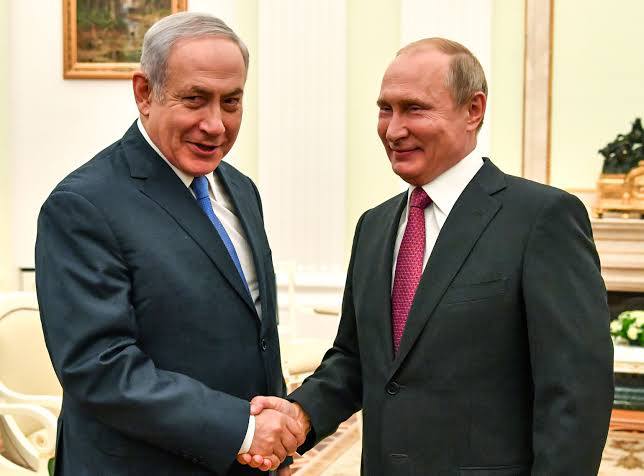
MOSCOW — Russian President Vladimir Putin and Israeli Prime Minister Benjamin Netanyahu held a detailed telephone conversation today, focusing on the volatile developments in the Middle East, with particular attention paid to the U.S. plan for normalizing the situation in Gaza.
According to a readout from the Kremlin, the two leaders had a “thorough discussion” of the region’s latest dynamics. President Putin reportedly reiterated Russia’s “steadfast support” for resolving the long-standing Palestine issue comprehensively, grounding the approach in the “well-known basis of international law.”
This emphasis aligns with Moscow’s long-standing diplomatic position advocating for a two-state solution.
The conversation went beyond the immediate crisis in the Palestinian territories. Putin and Netanyahu also exchanged views on several other complex regional matters.
Of particular note was the shared interest expressed in “searching for ways to settle the situation surrounding Iran’s nuclear programme.”
The Israeli government views Tehran’s nuclear ambitions as an existential threat, while Russia remains a key player in the diplomatic efforts to revive the 2015 nuclear accord.
Furthermore, the leaders discussed the need to “stabilize the situation surrounding Syria further via negotiations.” Russia is a key military and political backer of Syrian President Bashar al-Assad, while Israel routinely conducts strikes against Iranian and Iran-backed targets within Syria.
Birthday Wishes and Holiday Greetings
The high-stakes diplomacy was punctuated by personal exchanges of goodwill.
As tomorrow marks Vladimir Putin’s birthday, the Prime Minister of Israel conveyed his best wishes to the Russian President. In turn, President Putin offered Benjamin Netanyahu and the people of Israel greetings for the Jewish holiday of Sukkot, which began this past week.
The call underscores the complex web of diplomatic relations and competing interests that define the current geopolitical landscape in the Middle East, even as leaders maintain dialogue on the most pressing security challenges.