

Admin I Wednesday, July 22, 2026
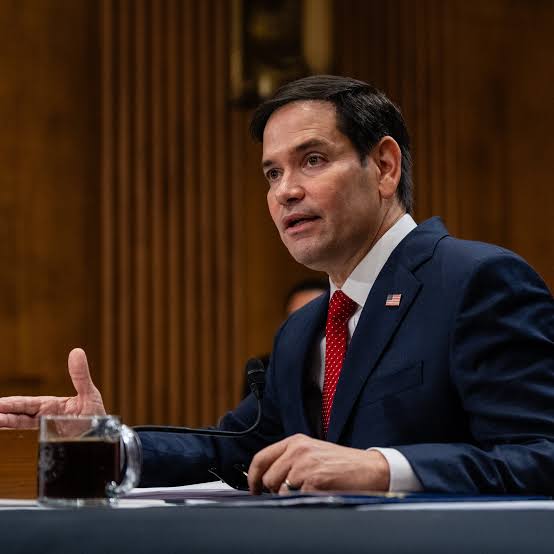
MANILA — Flanked by reporters at the Philippine International Convention Center following a marathon session with foreign counterparts, Secretary of State Marco Rubio framed the Trump administration’s foreign policy as a delicate exercise in high-stakes risk management: maintaining firm red lines on global security while keeping lines of communication open with the nation’s primary geopolitical rivals.
Speaking to the press on Wednesday, Rubio offered an expansive accounting of U.S. grand strategy across multiple active flashpoints—from maritime firefights in the Middle East and escalating economic warfare to high-stakes summitry in Asia.
Throughout his remarks, the Secretary repeatedly emphasized that navigating vast ideological and strategic divides requires pragmatism rather than retreat, positioning active engagement as an essential safeguard against global catastrophe.
Prepping the Ground for Washington Summitry
At the core of Rubio’s diplomacy in Manila was an extended bilateral session with Chinese Foreign Minister Wang Yi.
Addressing speculation that the meeting’s length signaled friction, Rubio dismissed the notion, attributing the duration to the routine tempo of formal translation. Instead, he underscored that the primary objective was establishing the groundwork for Chinese President Xi Jinping’s upcoming official visit to Washington in September.
“Look, these are the two most powerful countries in the world, particularly economics, but also—I mean, we have to have a relationship,” Rubio said. While acknowledging that fundamental disagreements between Beijing and Washington will persist for the foreseeable future, he defined the State Department’s principal mandate as keeping those friction points from boiling over into open conflict.
“Our job is to sort of manage those so that they never get out of control.”
Rubio noted that both sides are actively working to establish concrete deliverables ahead of the September meeting, including the operational launch of joint working groups and proposed boards of trade and investment conceived during earlier diplomatic trips to China.
At the same time, the Secretary made clear that diplomatic outreach does not signal a retreat from U.S. treaty commitments or freedom of navigation rights in the Indo-Pacific. Reaffirming Washington’s ironclad defense alliance with the Philippines, Rubio warned against recent “escalatory” encounters between Chinese vessels and Philippine forces in the South China Sea.
He added that U.S. forces would continue to navigate and fly through international waters despite Beijing’s opposition.
Degrading Iran’s “Conventional Shield”
Turning to the Middle East, Rubio presented a stark assessment of the ongoing confrontation with Iran in the Strait of Hormuz, where commercial shipping vessels have faced repeated missile and drone strikes.
Rejecting assertions that a recent Memorandum of Understanding (MOU) conceded international authority to Tehran, Rubio declared the agreement effectively invalidated by Iranian non-compliance.
”That deal called for the opening of the straits, free and fair navigation,” Rubio explained. “In fact, they were supposed to put out a statement to that regard a week and a half ago. And instead… they targeted and blew up or hit a ship.”

Rubio placed the blame for the broader regional instability on Iran’s decades-long investment in asymmetric warfare, proxy forces, and missile development at the expense of its domestic economy.
He noted that Tehran is currently battling runaway inflation, skyrocketing food costs, and severe economic distress—vulnerabilities masked only by its military posturing.
“This is exactly the conventional shield that they were going to hide behind to pursue a nuclear program and challenge the world to do anything about it,” Rubio stated, arguing that U.S. military strikes against launch sites have significantly degraded Iran’s capabilities.
“A year from now, Iran would have had so many missiles and drones that they would have been behind a conventional shield that would have given them immunity to do whatever they wanted.”
While reiterating that President Trump remains open to a negotiated settlement that permanently bars Iran from obtaining nuclear weapons or funding regional proxies, Rubio affirmed that U.S. naval forces will continue targeting launch positions to safeguard the roughly 20 percent of global oil passing through the waterway.
He called on Asian and European allies—who depend far more heavily on Middle Eastern energy imports than the U.S. does—to contribute naval assets and mine-clearing capabilities to the maritime coalition.
Rubio applied a similar logic of necessity to Moscow, ahead of an upcoming meeting with Russian Foreign Minister Sergey Lavrov. Acknowledging that the war in Ukraine has severely constrained bilateral cooperation, Rubio nevertheless asserted that Washington remains the unique power capable of brokering an eventual peace, while keeping lines open between the world’s two largest nuclear arsenals.
“For us not to talk would be reckless and irresponsible,” Rubio said, drawing a direct parallel to crisis-management channels maintained at the height of the Cold War.
“We have to have a relationship with the Russian Government, even though we have areas of disagreement.”
Addressing criticisms regarding the administration’s posture toward other authoritarian states, Rubio defended a policy rooted strictly in core U.S. national security interests. On Cuba, he pointed to newly dispatched U.S. humanitarian aid totaling over $100 million while calling out the island’s economic mismanagement following the loss of subsidized Venezuelan oil.
On domestic administration structure, Rubio validated recent cutbacks at the National Security Council, arguing that a leaner staff better serves a hands-on presidency focused on executive coordination rather than bureaucratic expansion.
Throughout the session, Rubio’s message remained constant: Washington intends to deploy its military and economic leverage decisively, but will not forfeit the diplomatic table.
”The difficult job of geopolitics and foreign policy is managing your differences and not doing anything that runs contrary to our national interests,” Rubio said. “But at the same time, trying to avoid conflict that could lead to something really catastrophic for the world.”
