

By our Foreign Desk
BEIJING — In a powerful demonstration of solidarity against Western pressure, Chinese President Xi Jinping welcomed Russian President Vladimir Putin to Beijing for high-stakes bilateral talks.
The summit, which marked another milestone in the rapidly expanding partnership between the two nuclear-armed neighbors, produced sharp critiques of the current international order and a celebration of skyrocketing economic ties.
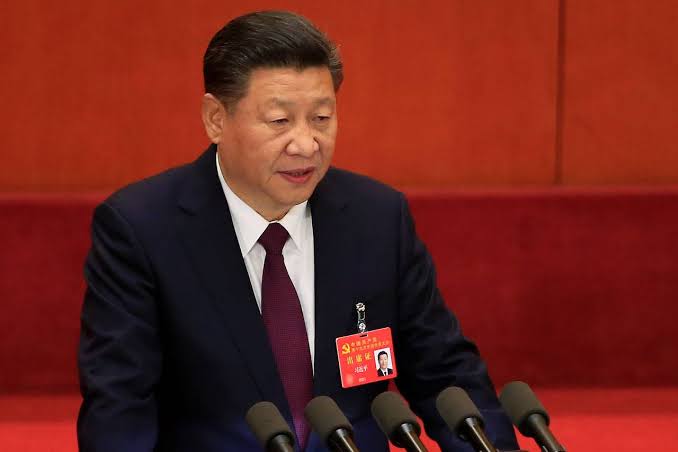
Addressing reporters and officials from the Great Hall of the People, President Xi delivered a sober assessment of global affairs, warning that the geopolitical climate is fracturing under external pressures.
”The world is far from being calm,” Xi stated, taking aim at the “damage imposed by unilateral actions and hegemony” by unnamed Western powers.
Without direct intervention from responsible global leaders, Xi warned, these actions threaten to disrupt international stability entirely, stating that it “threatens to bring us back to the law of the jungle.”
In response to these global fissures, the Chinese leader positioned Beijing and Moscow as the anchor points of a multipolar world.
He emphasized that as permanent members of the United Nations Security Council (UNSC), it is up to Russia and China to step forward and “show themselves as responsible world powers.”
According to Xi, the deepening alignment between the two capitals is not a marriage of convenience but a historical necessity.
“The great Russian-Chinese friendship is in line with the demands of the time,” Xi said, adding that bilateral ties have officially reached a “new level” under the joint strategic leadership he shares with Putin.
Central to this bond is a profound mutual reliance. “Political trust is the biggest trait of the Russian-Chinese relationships,” the Chinese leader remarked, noting that this unbreakable dynamic was formally set forth decades ago in the milestone Treaty of Good-Neighborliness and Friendly Cooperation.

Defying Sanctions: Trade Surges Past $200 Billion
The strategic convergence between Beijing and Moscow is backed by immense economic momentum. Despite sweeping Western sanctions intended to isolate the Kremlin, economic cooperation between China and Russia has broken historical records.
President Xi revealed that annual trade turnover between the two countries has comfortably exceeded the $200 billion threshold.
Furthermore, even in the face of what Xi described as a “difficult international situation,” bilateral trade turnover managed to grow by an astonishing 20% during the January–April period.
”Not an easy feat,” Xi remarked, acknowledging the immense pressure both economies face from global regulatory bodies and trade restrictions.
The surge has been heavily driven by Chinese purchases of discounted Russian energy alongside Russian imports of Chinese automobiles, industrial machinery, and consumer electronics.
The current warmth between Beijing and Moscow represents a profound historical realignment. During the Cold War, despite both being communist regimes, the Soviet Union and the People’s Republic of China were bitter rivals, even engaging in a brief border conflict in 1969.
The turning point came with the collapse of the Soviet Union and the subsequent rise of a unified, assertive United States. Realizing that a fragmented approach left both nations vulnerable to Western dominance, Beijing and Moscow signed the Treaty of Good-
Neighborliness and Friendly Cooperation. This foundational text formalised their border settlements and laid the groundwork for the modern strategic alliance.
Under Xi Jinping and Vladimir Putin, this relationship transformed into what they famously termed a “no-limits” partnership.
