

By Titus Eleweke, Editor, South East
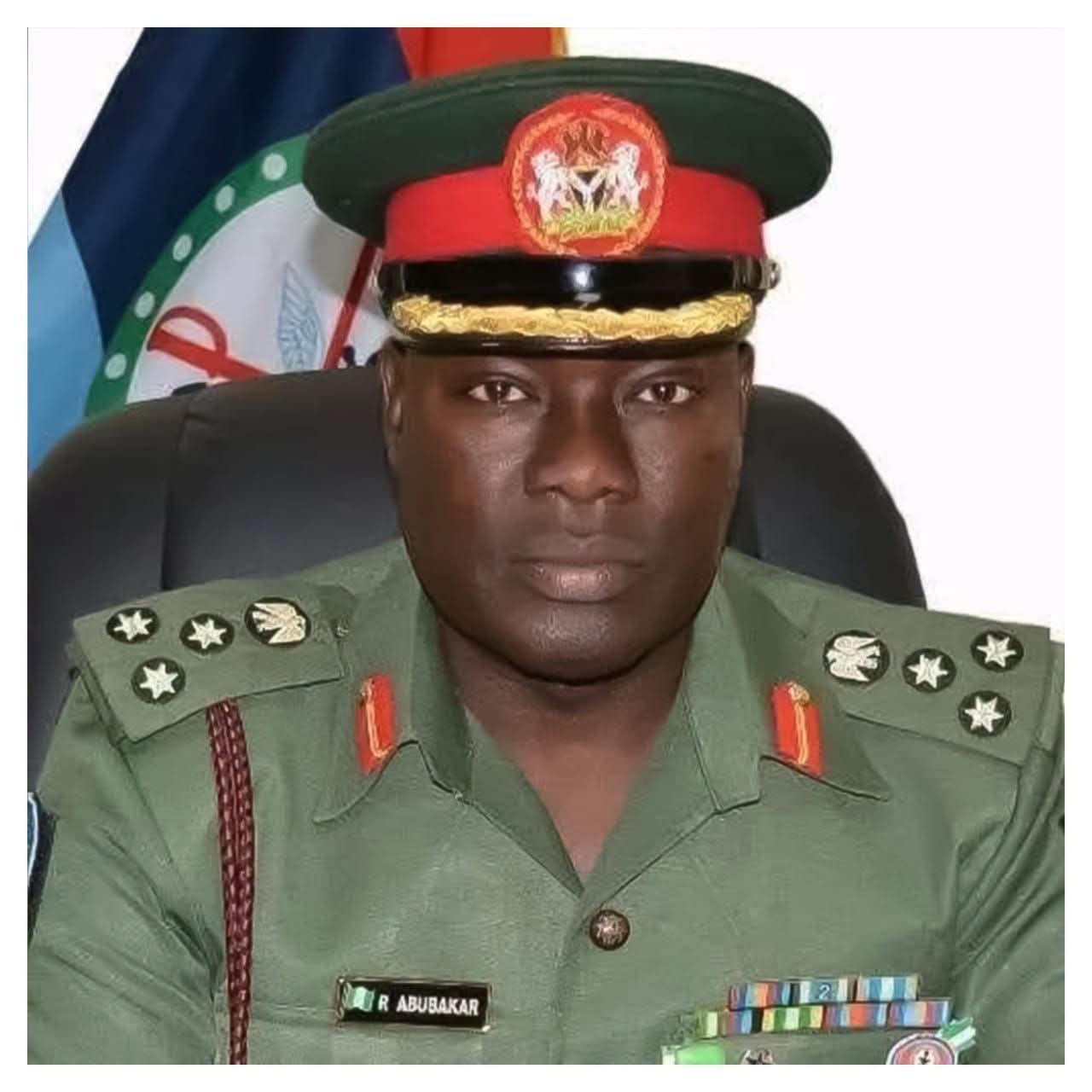
AWKA, Anambra – Nigerian human rights lawyer and lead counsel to the Indigenous People of Biafra (IPOB), Sir Ifeanyi Ejiofor, has described the death of retired Major General Rabe Abubakar in captivity in Katsina State as evidence of a nation at war with itself.
He questioned the rationale behind negotiating with bandits while hundreds of innocent Igbo youths remain detained under what he described as wrongful categorisation.
In a statement issued on Saturday titled “Weekend Musings: The Dangerous Hypocrisy of Negotiating with Terror,” Ejiofor said military service represents the highest expression of national loyalty, noting that there was a time when the uniform of a soldier commanded reverence rather than sympathy.
According to him, there was a period in Nigeria’s history when patriotism was an honour and military service was regarded as a sacred calling.
“Those were years before hypocrisy became institutionalised, before ethnic distrust became weaponised, before insecurity became commercialised, and before public officials were routinely accused of compromising with forces determined to dismantle the very nation they swore solemnly to defend.”
He stated that joining the Armed Forces of the Federal Republic of Nigeria symbolised discipline, sacrifice, courage, honour, and an unwavering commitment to defending the nation’s territorial integrity and unity.
Ejiofor said it was reasonable to assume that these ideals inspired the late Major General Rabe Abubakar and many of his contemporaries to embrace military service.
“In several of my previous interventions, I have expressed grave concern regarding the increasing tendency of certain state authorities to engage armed bandits through negotiations, accommodations, understandings, and arrangements which many Nigerians have consistently viewed as dangerous, counterproductive, and fundamentally incompatible with any serious counterterrorism strategy.” he said
He added that the Minister of Defence had publicly maintained that neither government officials nor state governments should negotiate with terrorists or bandits. Despite such declarations, he noted that reports and public perceptions of continued engagements persist.
The human rights lawyer said he was particularly astonished by reports suggesting that the Katsina State Government attributed the death of Major General Rabe Abubakar in captivity to what was described as “natural causes.”
“Natural causes?
“A retired Major General was abducted alongside his wife, deprived of his liberty, subjected to uncertainty, fear, humiliation, psychological trauma, and the unimaginable conditions that typically accompany captivity at the hands of ruthless jihadist terrorists.
“Under such circumstances, any attempt to casually attribute his death to ‘natural causes’ inevitably provokes profound and legitimate questions.
“Questions that deserve answers. Questions that should not be dismissed. Questions that call for a transparent, independent, and credible investigation.
“Whenever government appears more eager to explain away a tragedy than to rigorously interrogate its circumstances, public confidence inevitably suffers.” he added.
He further observed that across large parts of Northern Nigeria, particularly in Katsina, Zamfara, Niger, and sections of Borno State, reports over the years have painted a disturbing picture of communities living under the effective influence and coercive control of armed non-state actors.
According to him, residents in some areas reportedly pay levies, taxes, protection fees, or other forms of tribute merely to survive.
“This is happening in real time.
“This is not governance.
“This is not sovereignty.
“This is not state authority.
“It is the gradual normalisation of insecurity.
“It is the dangerous consequence of allowing criminals to evolve into alternative centres of power.” he stated.
He said history shows that whenever the state begins to share authority with armed criminal groups, the inevitable outcome is the erosion of legitimate governance.

According to Ejiofor, once criminality acquires political utility, national security becomes dangerously compromised.
He said “Yet the irony becomes even more troubling when one juxtaposes this reality with the treatment frequently meted out to innocent citizens elsewhere.
“In the South-East, numerous young men have been arrested, abducted, detained, and subjected to prolonged incarceration under broad and often controversial security classifications.
“Some were artisans. Some were drivers. Some were gardeners. Some were personal assistants.
“Some were ordinary citizens whose only crime was finding themselves in the wrong place at the wrong time.”
He argued that one of the greatest contradictions in contemporary Nigeria is that while innocent citizens are subjected to prolonged detention based on suspicion, association, or mere perception, actual terrorist networks continue to expand their operational footprints, establish territorial influence, impose levies on vulnerable communities, abduct citizens with alarming frequency, and challenge state authority openly.
He further said “How long shall this contradiction endure?
“How long shall Nigerians continue to witness a system where perceived dissent attracts swift and overwhelming state action, while armed terrorists negotiate from positions of strength?
“How long shall the nation tolerate a security architecture that appears uncompromising toward the powerless yet hesitant toward those wielding the instruments of terror?”
He said terrorism does not thrive merely because terrorists exist.
“It thrives because of silence, compromise, appeasement, and the fact that some individuals profit from instability while ordinary citizens pay the ultimate price.”
According to him, the death of Major General Rabe Abubakar must not be reduced to a fleeting news cycle or passing headline.
He said it should serve as a national moment of introspection and an opportunity to honestly evaluate whether Nigeria is genuinely confronting terrorism or merely managing it.
He added that it should also be a moment to determine whether certain actors within the system have become too comfortable coexisting with forces that ought to be decisively dismantled.
“Most importantly, it should be a moment that compels government at every level to reaffirm that no terrorist group, no matter how powerful, can ever be allowed to become a parallel authority.”
Ejiofor reiterated a position he said he has consistently maintained, particularly to people in the South-East and across Nigeria.“Security remains everybody’s business. Communities must remain vigilant. Forests and ungoverned spaces must never be permitted to become safe havens for jihadist bandits masquerading as herdsmen or operating under whatever nomenclature they choose to adopt.”
According to him, no society can afford to outsource its entire security responsibility to military and police institutions, especially where those institutions are overstretched and, at times, undermined by internal sabotage, inadequate resources, and systemic challenges.
He stressed that every community must develop lawful and effective vigilance mechanisms.
He added that every suspicious activity should attract scrutiny and every credible threat should receive immediate attention.
He said “When decent people become indifferent to their own security, those who despise peace inevitably fill the vacuum.
“And by the time the consequences arrive, they rarely discriminate between tribe, religion, region, language, ethnicity, or political affiliation.
“The terrorists certainly do not.
“Nigeria must therefore decide whether it intends to defeat terrorism or merely coexist with it.
“History will judge that decision.
“And posterity will remember those who made it.”
