

To get out of the woods therefore, Tinubu as an affirmed Federalist has a historic opportunity to make a lasting impact on Nigeria’s energy landscape…the president must listen to reason and act decisively. He must recognize the fact that, by fostering collective progress, regional cooperation, shared expertise and a cohesive strategy can accelerate electricity development. The proposed Southwest Electricity Development Board offers a promising model, and similar initiatives in other regions could replicate its success
By abiodun KOMOLAFE I Saturday, July 06, 2024
IJEBU-JESA, Osun – Available records show that the first public electricity generation took place at Pearl Street Station in New York in 1882 and that electricity generation in Nigeria began in Lagos in 1886.
Therefore, one can safely say that this year marks the 142nd anniversary of commercial electricity globally. It also means that all this talk about artificial intelligence as if the world wants to come to an end is the same way the world looked at electricity as a game changer almost a century and a half years ago.
Put simply, railways were the game changers of an era before electricity happened to our world! It also means that artificial intelligence is similar to how we once had steam and internal combustion engines, which were revolutionary in their time.
In all frankness, Nigeria’s electricity crisis is a stark reminder of her chronic inability to address critical infrastructure needs. That we are not taking the issue seriously is just another Nigerian debacle which, if not resolved, may catalyse unintended consequences.
The botched privatization of the power sector, marred by a lack of technical expertise and plagued by cronyism, has failed to deliver on its promises. Instead of ushering in a new era of reliable power supply, Nigerians are still grappling with the same old ‘padi-padi’ problems that have held us back for decades. Of course, that’s why we keep seeing the same Egyptians we had left many decades ago! To avoid exacerbating this prevailing illusion, we must rethink our approach and prioritize competence over connections.
Nigeria’s electricity generation is grossly insufficient, woefully hindering economic growth and global competitiveness. Despite 142 years of global electricity generation, Nigeria’s output remains abysmally low, struggling to reach 10,000 megawatts for its large population. For perspective, a city like Lagos requires significantly more energy to power its districts, with estimates suggesting over 40,000 megawatts to rival global hubs like New York, Singapore, or Johannesburg. Addressing this energy gap is crucial for the country’s development.
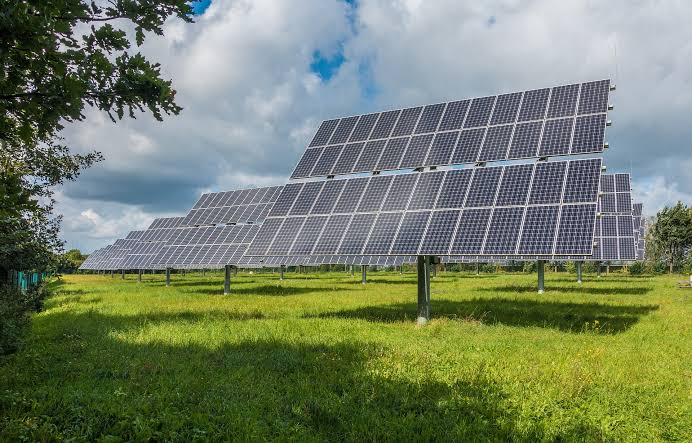
If we had been as serious, Nigeria ought to have prioritized alternative energy sources, like solar power. While previous governments’ efforts were commendable, the country could have done more. With abundant raw materials and a large market, Nigeria could have become a significant producer and exporter of solar panels, generating billions in foreign exchange and reducing electricity costs. This would have created sustainable jobs and stimulated economic growth. With the creation of the credit corporations by President Bola Tinubu, access to credit would have made it easier for individuals to invest in solar panels. By developing our renewable energy sector, we can unlock economic benefits and create a more sustainable future.
The Gujarat Hybrid Renewable Energy Park in India is five times the size of Paris. Do we know how much energy that is? But again, how did we get here?
In Nigeria, there are places in the North that are so hot that we could have had solar farms that can generate electricity. However, the country’s energy development is hindered by a constitution that prioritizes internal consumption over export-oriented production.

This has led to a system characterized by state-funded privileges, parasitic elitism and patronage politics. Clientelism, corruption and lack of political will are also part of the party.
Regrettably too, organized labor has limited influence in this context. Since it was not involved in the privatization process, its input to resolve “this deeper crisis of values” is zero!
Gone were the days of the 1950s and 1960s when Nigeria was a productive powerhouse. According to the 1961 UN Yearbook, the Nigerian Ports Authority ranked 7th globally in efficiency.
Then, Nigeria was a significant exporter of commodities like cocoa, rubber, palm oil, and groundnuts. If the country had maintained this momentum, what Nigeria would have been is that, by now, she would have diversified her economy and developed a robust rubber industry.
This could have led to significant exports of tyres to major car manufacturers in South Africa, Japan, and the UK, potentially generating billions of dollars in revenue annually.
Thirty years ago, China was not considered a major player in global electricity production. However, through vision and seriousness of intent, China has become a leader in this field. Similarly, Iran, Qatar, Russia and Vietnam have achieved notable success in providing affordable electricity even as Nigeria still struggles to provide basic necessities like education and electricity to her teeming population. So, do we have to do a degree in Statistics before coming to terms with the fact that a large population without education and other basic necessities of life is not an achievement?
Ekiti, Enugu, and Imo States deserve recognition for their efforts to establish independent electricity generation frameworks. However, it’s concerning that only a few states are taking proactive steps towards energy self-sufficiency. Osun is a special case and the reasons are obvious! In the current situation, even the blind can see that a dynasty owns Osun State in the way Obafemi Awolowo could not have thought of owning the now-rested Western Region. But who do we blame? After all, he who controls the government controls the resources of the state! Coincidentally, the template has already been institutionalized and there’s nothing anyone can do about it! Anyway, that’s an issue for another day!
Energy ‘is indeed the lifeblood of modern society’, as former US Secretary of Energy Ernest Moniz once said. To get out of the woods therefore, Tinubu as an affirmed Federalist has a historic opportunity to make a lasting impact on Nigeria’s energy landscape.
To achieve this, the president must listen to reason and act decisively. He must recognize the fact that, by fostering collective progress, regional cooperation, shared expertise and a cohesive strategy can accelerate electricity development. The proposed Southwest Electricity Development Board offers a promising model, and similar initiatives in other regions could replicate its success.
The paradox of Nigeria’s power sector reforms is that they reveal the fragility of human control and that, despite our vaunted technological advancements, the flickering lights and darkness that pervade our lives bear witness to the limits of our mastery. It is sad to note that electricity – that transient force we daily seek to harness – remains an elusive will-o’-the-wisp, always promising but never fully delivering! Bearing these in mind, Tinubu must recognize that the complexity of agreements and arrangements in the energy sector stifles meaningful reform, discourages new investment and hinders progress and that the sector must be liberalized to achieve economies of scale and reduce prices. However, the dominant players’ reluctance to adopt metering and end estimated billing raises questions about these monopolists’ commitment to a competitive market. Unlike telecommunication companies, which have embraced transparent billing practices, the energy sector’s resistance to reform is striking.
The introduction of foreign concepts like band grading has been misguided from the start, undermining the effectiveness of the Nigerian Electricity Regulatory Commission (NERC). Yes, the focus on increasing power availability hours is crucial, as it directly translates to increased revenue for generation and distribution companies. Nonetheless, the excuses for rate hikes become unjustifiable, especially when their destinies are tied to the temperatures of the dollar.
In the final analysis, the president must hold his appointees accountable for their performance. If they fail to deliver, he should not hesitate to fire them. The sweet truth is that Nigeria cannot afford to repeat past mistakes, which have hindered progress for generations. To move forward, we need diligence and integrity. International examples like Germany’s Energiewende program and Australia’s willingness to reassess her privatization approach offer valuable lessons. By learning from these success stories and leveraging economies of scale, we can drive Nigeria’s progress and achieve meaningful reform.
May the Lamb of God, who takes away the sin of the world, grant us peace in Nigeria!
*KOMOLAFE wrote in from Ijebu-Jesa, Osun State, Nigeria ([email protected])
