

By Our Religion Correspondent
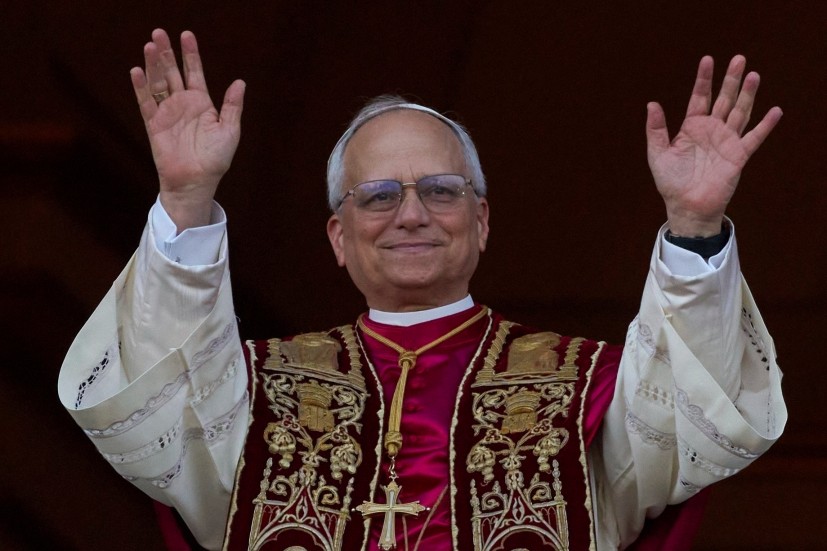
VATICAN CITY — In a striking escalation of words between the Vatican and Washington, Pope Leo issued a fierce defense of the Catholic Church’s global ministry on Wednesday, directly responding to recent political attacks from President Donald Trump.
Speaking from the Apostolic Palace, the pontiff reaffirmed the Church’s foundational commitment to global pacifism and issued a pointed challenge to his political critics to adhere to the truth.
”The Church’s mission is to preach peace,” Pope Leo said, his voice steady but resolute during an address captured by Reuters footage. “If anyone wants to criticize me for proclaiming the Gospel… do so with truth.”
The remarks mark a significant moment of friction between the Holy See and the current trajectory of American conservative politics.
While the Vatican routinely navigates complex geopolitical tensions, the directness of the Pope’s response underscores a growing frustration within the higher echelons of the Catholic Church over the weaponization of faith in modern political discourse.
The public rift ignited earlier this week when Mr. Trump, during a campaign rally, launched a scathing critique of the Vatican’s diplomatic stances, characterizing the Church’s recent global appeals as “weak” and out of touch with the realities of modern national security.
Pope Leo, however, refused to back down, framing the Church’s advocacy not as a political agenda, but as an ancient, unyielding theological mandate. Standing before reporters, the pontiff emphasized that the Church’s opposition to military escalation is deeply rooted in doctrine, particularly regarding the world’s most devastating arsenals.
The Catholic Church, Pope Leo reminded his listeners, has “long opposed all nuclear weapons.”
”I simply hope to be heard… for the sake of the Word of God,” the Pope added, shifting the argument from a political dispute to a matter of divine stewardship and human survival.
The confrontation between Pope Leo and Mr. Trump is not without precedent, but rather the latest chapter in a decade-long ideological tug-of-war between the Vatican and the “America First” movement.
Historically, the Holy See has maintained a strict policy of neutrality in foreign elections, preferring quiet diplomacy to public sparring.

However, the intersection of American populism and Catholic social teaching has frequently created flashpoints. Under previous pontificates, the Vatican repeatedly clashed with the Trump administration over issues ranging from climate change and immigration to the scaling back of international treaties.
The current dispute over nuclear proliferation highlights a fundamental theological divide:
The Vatican’s Stance: Grounded in the Holy See’s 2017 ratification of the Treaty on the Prohibition of Nuclear Weapons, viewing deterrence as a dangerous, unstable illusion.
The Populist Stance: Prioritizes peace through overwhelming military strength and national sovereignty, viewing international disarmament frameworks with skepticism.
By invoking the “Word of God” to defend his anti-nuclear platform, Pope Leo is attempting to reclaim the moral high ground, signaling to Catholic voters globally—and specifically within the United States—that the Gospel cannot be neatly aligned with aggressive nationalist rhetoric.
The timing of the exchange is particularly sensitive for American politicians. The Roman Catholic vote remains one of the most critical, and deeply divided, demographics in United States politics.
In recent years, a conservative wing of American Catholicism has increasingly aligned itself with secular political figures like Mr. Trump, occasionally putting American bishops at odds with the more progressive, pastoral priorities of Rome.
By demanding that his critics speak “with truth,” Pope Leo is throwing down a gauntlet to those who try to separate Catholic identity from its core tenets of peace and social justice.
Whether the Pope’s appeals will resonate with an increasingly polarized American electorate remains to be seen.
For now, Rome has made its position unmistakably clear: on the global stage, the message of the Gospel will not be silenced by the winds of American political campaigns.
