

By Emmanuel Thomas l Friday, Oct. 02, 2026
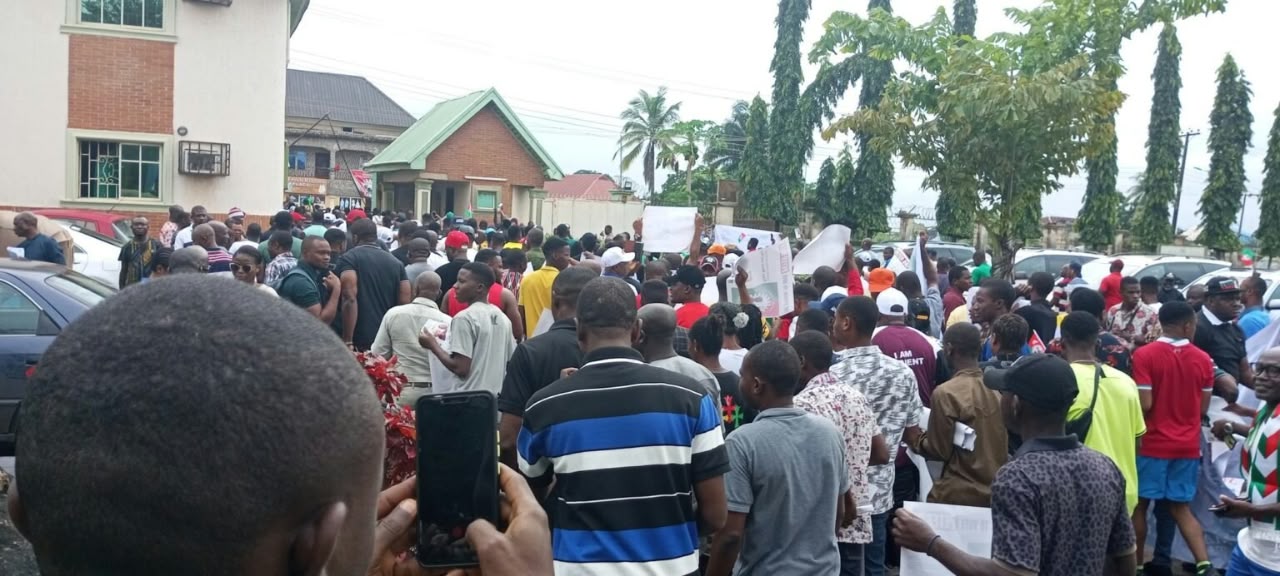
ABUJA — Public servants across federal and state government establishments have officially commenced a three-day nationwide warning strike today, following the Federal Government’s failure to reduce the pump price of Premium Motor Spirit (PMS) to ₦500 per litre and resolve lingering labor grievances.
The industrial action, directed by the Joint National Public Service Negotiating Council (JNPSNC), threatens to paralyze administrative operations in Ministries, Departments, and Agencies (MDAs) across the country.
The directive was contained in an official circular issued on Thursday by Comrade Gbenga Olowoyo, National Secretary of the JNPSNC and General Secretary of the Nigeria Civil Service Union (NCSU).
The circular was addressed to all national presidents, general secretaries, state chairmen, and secretaries of affiliate unions under the JNPSNC banner.
Union Mandate and Directives
According to the council, the warning strike was necessitated by the Federal Government’s complete disregard for an ultimatum previously issued, demanding immediate measures to cushion the severe economic hardship faced by public workers.
Labor leaders expressed deep frustration that despite a formal letter dispatched to President Bola Ahmed Tinubu on September 21, the government failed to present a concrete framework to alleviate skyrocketing fuel prices or execute key wage agreements prior to the deadline.
”Consequently, the failure of the Federal Government to take tangible steps to address these critical issues on or before September 30 has left Nigerian workers with no choice but to commence a three-day warning strike,” the council stated.
Affiliate unions executing the strike include eight major public sector associations: the Nigeria Civil Service Union (NCSU), the Association of Senior Civil Servants of Nigeria (ASCSN), the Medical and Health Workers Union of Nigeria (MHWUN), and the National Association of Nigerian Nurses and Midwives (NANNM), among others. State leadership across all 36 states and the Federal Capital Territory have been directed to strictly monitor compliance.
The JNPSNC highlighted three critical interventions required from the Federal Government to bring industrial peace to the public sector:

Fuel Price Reduction to ₦500/Litre: The council argued that reducing PMS prices is achievable if the government introduces an operational intervention fund to absorb landing costs and supports domestic energy operators.
Furthermore, labor urged the Federal Government to streamline the sale of crude oil to the Dangote Refinery and modular refineries in naira under transparent terms to boost local refining capacity.
Approval of Wage Awards: Workers are demanding the immediate disbursement of unpaid wage awards meant to cushion post-subsidy inflation.
Tripartite Minimum Wage Committee: The council called for the immediate inauguration of a tripartite committee to negotiate a revised national minimum wage, preventing administrative delays when the new wage framework is eventually passed by the National Assembly.
This latest wave of industrial action highlights the continuous friction between organized labor and the Federal Government since the policy shifts implemented in mid-2023.
When President Bola Tinubu announced the complete removal of the long-standing petrol subsidy during his inaugural address in May 2023, fuel prices skyrocketed nationwide from under ₦200 per litre to historic highs.
The concurrent unification and floating of the foreign exchange market exacerbated inflation, drastically weakening the purchasing power of the average civil servant.
While the administration argued that subsidy removal was vital to eliminate market distortions and free up capital for infrastructure, education, and healthcare, public sector workers have repeatedly borne the brunt of hyperinflation.
Transportation costs have quadrupled in major urban centers such as Lagos, Abuja, and Port Harcourt, consuming a disproportionate percentage of workers’ monthly incomes.
Previous interventions—including temporary ₦35,000 wage awards—faced implementation bottlenecks and delayed disbursements, leaving unions dissatisfied. With the failure of the President’s Independence Day address to explicitly offer immediate relief on fuel prices as demanded by the JNPSNC, labor leaders warned that this three-day warning strike serves as a final precursor to a full-blown, indefinite general strike if the government remains adamant.
As MDAs close their doors today, all eyes remain on the Federal Ministry of Labour and Employment to see if an emergency dialogue will be convened before the strike escalates further next week.
