

By Emmanuel Thomas l Saturday, May 15.2026
WASHINGTON — In a major escalation of counterterrorism operations in West Africa, U.S. special operations forces, acting in close coordination with the Armed Forces of Nigeria, conducted a lethal raid on Thursday night that killed Abu-Bilal al-Minuki, the second-in-command of the Islamic State globally.
The operation, which also resulted in the deaths of several senior ISIS lieutenants, marks a significant milestone for the Trump administration’s re-engineered security strategy in sub-Saharan Africa.
Pentagon officials described the raid as a highly synchronized, intelligence-driven strike aimed at disrupting the core operational leadership of the terrorist network’s expanding African footprint.
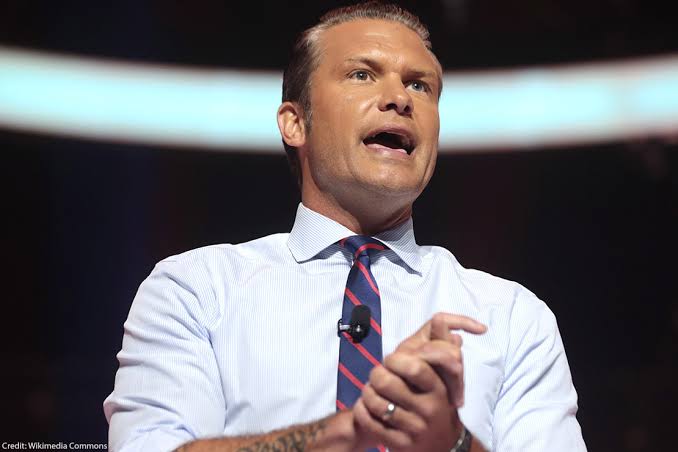
In a statement released shortly after the operation, Secretary of Defense Pete Hegseth confirmed the targeted elimination of al-Minuki, who served as the emir of the Islamic State’s General Directorate of Provinces.
From that vantage point, al-Minuki managed a sprawling network of regional affiliates, oversaw global hostage-taking operations, directed the group’s financial networks, and coordinated plots against Western interests.
“The removal of him and other ISIS personnel makes Americans safer by further degrading ISIS’s ability to plan and carry out attacks that threaten the U.S. homeland, American citizens, and innocent civilians,” Hegseth said.
A Shift in African Security Policy
The roots of the operation trace back to November 2025, when President Trump publicly pledged that the United States would take decisive action to protect vulnerable communities, specifically targeting the systemic violence against Christian populations in Nigeria.
Following that directive, the Department of Defense shifted significant intelligence, surveillance, and reconnaissance (ISR) assets toward tracking ISIS leadership operating within the West African theater.
For months, American analysts and tactical assets tracked al-Minuki’s movements across the region. The resulting operation was ultimately executed alongside Nigerian forces, reflecting a deep level of tactical collaboration with the administration of Nigeria’s president.
The joint operation comes at a critical juncture for West Africa, where local military forces have spent years combating a fractured but resilient insurgency led by Boko Haram and the Islamic State West Africa Province (ISWAP).

By striking al-Minuki—a figure with global administrative responsibilities rather than a purely localized commander—the operation underscores how central the African continent has become to ISIS’s broader global strategy.
Tactical Success and Geopolitical Questions
Military analysts say the raid demonstrates the unique capability of U.S. Africa Command (AFRICOM) to project power and execute high-risk, precise operations alongside host-nation partners.
”Operations like last night’s demonstrate the exceptional lethality, patience and skill of U.S. forces, amplified alongside willing and capable partners, to address shared threats,” Hegseth noted.
While the Pentagon is celebrating the tactical success of the raid, foreign policy experts are watching closely to see how this re-engagement shapes long-term diplomacy in the region.
The emphasis on protecting religious minorities represents a distinct ideological framing for U.S. military intervention in the Sahel, a region that has seen a series of military coups and shifting international alliances over the last few years.
U.S. officials have emphasized that the strike was designed to prevent external operations that could target the American homeland. However, the administration is also signaling a broader, uncompromising stance toward regional terror networks.
”This should serve as a reminder that we will hunt down those who wish to harm Americans or innocent Christians, wherever they are,” Hegseth said.
The Pentagon has not yet released specific details regarding the exact location of the raid or the potential casualties among allied forces, though initial assessments indicate no U.S. personnel were lost in the engagement.
In Abuja, Nigerian security officials welcomed the outcome, viewing the elimination of al-Minuki as a vital reprieve for regional stability and a powerful deterrent against the group’s ongoing insurgency.
