

By Emmanuel Thomas I Wednesday, July 08, 2026
ABUJA — The Department of State Services (DSS) has reportedly arrested and detained Zainab Sodiq, a prominent journalist assigned to covering the daily activities of key opposition and political figures, Omoyele Sowore.
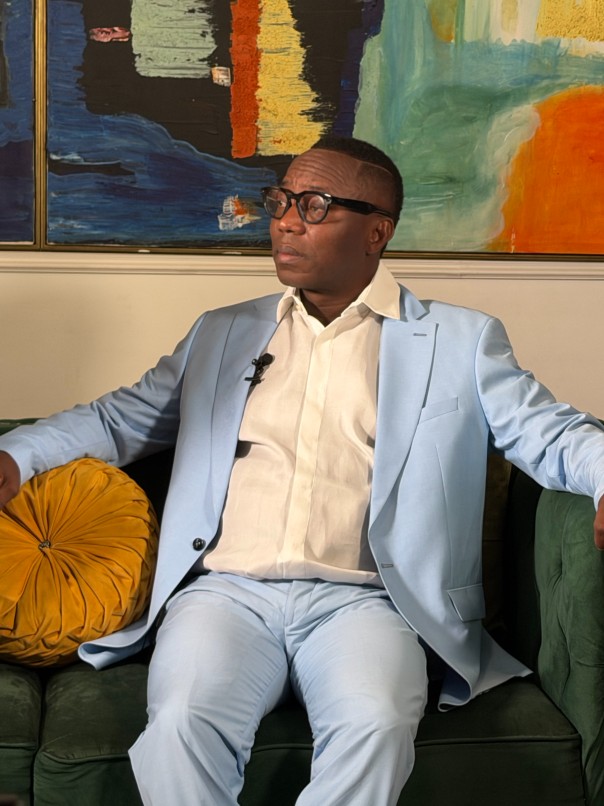
According to Sowore, who is the Presidential candidate of the African Action Congress (AAC) , Ms. Sodiq was taken into custody and is currently being held at the secret police’s national headquarters in the Federal Capital Territory (FCT), Abuja.
The arrest has triggered immediate condemnation from political actors and press freedom advocates, who describe the move as an escalation of the ongoing crackdown on the press and dissenting voices under the administration of President Bola Ahmed Tinubu.
The Arrest and Growing Backlash
The news of the arrest was broken in a fiery public statement online, where a prominent political figure—whose daily operations Sodiq covers—accused the DSS of high-handedness and operating outside the confines of the law.
”The lawless DSS has just arrested Zainab Sodiq, the journalist who covers my daily activities, and detained her at its headquarters in Abuja,” the statement read. “Her only ‘crime’ is doing her job as a journalist. The regime is running scared; they are very desperate but it will not end well for lawless DSS DG, Tosin Ajayi at all!”
While the DSS has yet to issue an official statement regarding the specific reasons for her detention, insiders allege that her arrest is linked to recent investigative reports and sensitive political briefings she had been covering.
The harsh criticism leveled against the Director-General of the DSS, Tosin Ajayi, underscores the widening rift between the country’s security architecture and civil society. Under Ajayi’s leadership, critics argue that the secret police has increasingly targeted journalists, social media commentators, and political activists under the guise of national security.

This latest arrest comes amidst heightened tensions between the federal government and the media. Since the inception of the current administration, Nigeria’s press freedom index has faced rigorous scrutiny. Media watchdogs have repeatedly warned against the use of state apparatuses to silence critical reporting.
The DSS, constitutionally mandated to manage internal security and counter-intelligence, has frequently found itself at the center of controversies involving the detention of journalists and whistleblowers.
Furthermore, the administration has faced intense pressure over its handling of economic reforms and public discontent. Observers note that the government’s perceived sensitivity to criticism has led to aggressive posturing by security agencies, with the DSS often accused of acting as a political tool to stifle opposition voices.
Reacting to the development, media rights groups and civil society organizations have demanded the immediate and unconditional release of Ms. Sodiq. A representative from a frontline press freedom advocacy group, speaking on condition of anonymity, stated that the continuous harassment of journalists bodes ill for Nigeria’s democracy.
”Journalism is not a crime,” the representative said. “To arrest a reporter simply for covering the daily activities of a political figure is a direct assault on the Nigerian Constitution, which guarantees the freedom of the press. If the DSS has any legitimate charges against her, she should be brought before a court of competent jurisdiction immediately, rather than being subjected to arbitrary detention.”
As of the time of filing this report, efforts to reach the DSS spokesperson for comments regarding the conditions of Zainab Sodiq’s detention and the specific allegations against her were unsuccessful.
