

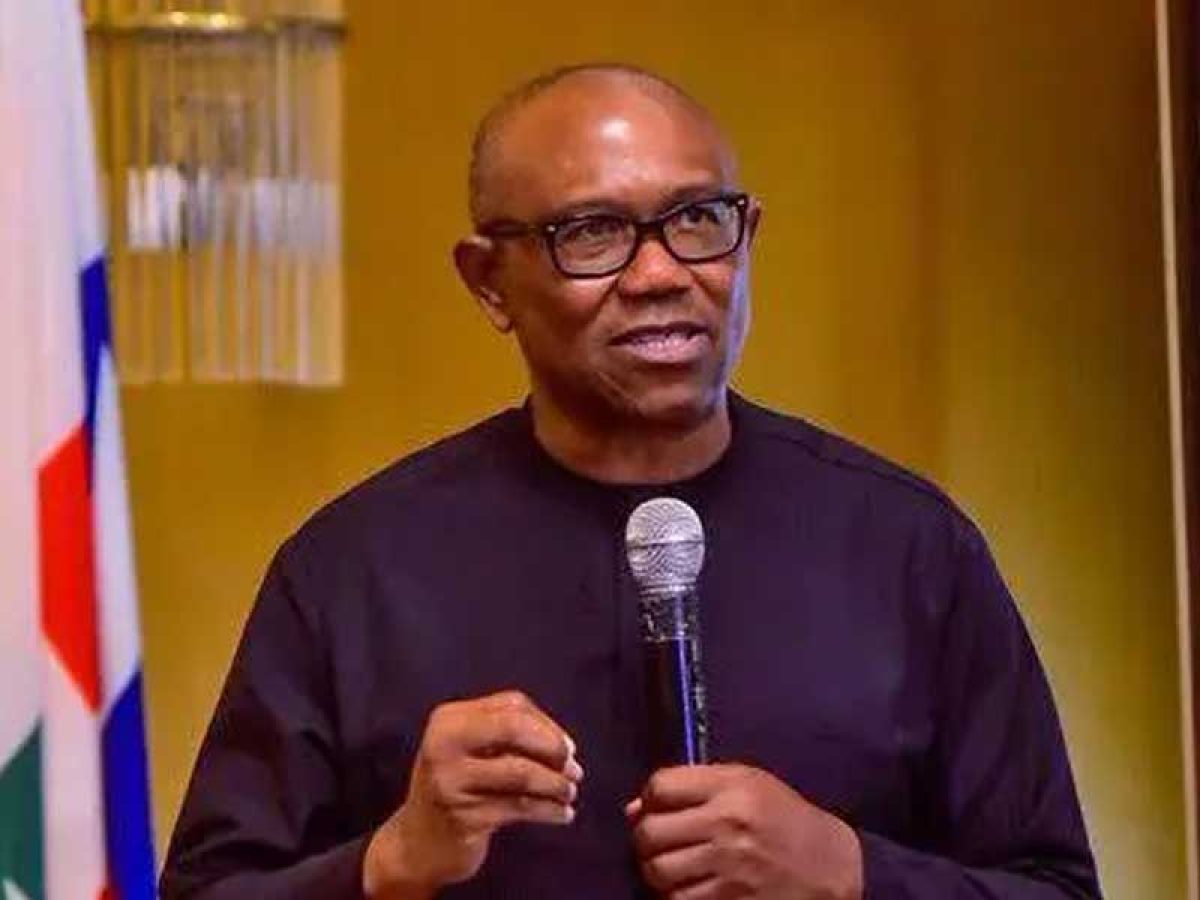
- Says We Must Build Bridges, Heal Our Fractured Nation to Avert Self-Destruction
By Emmanuel Thomas l Sunday, May 31.26
ABUJA, Nigeria – In a political development that has drastically reshaped the horizon of the upcoming 2027 general elections, former Governor of Anambra State, Mr. Peter Obi, was on Saturday, May 30, 2026, officially nominated as the presidential candidate of the Nigerian Democratic Congress (NDC).
The national convention, held amid tight security and high euphoria in the Federal Capital Territory, Abuja, drew party delegates, stakeholders, and thousands of enthusiastic supporters from all geopolitical zones of the country.
Accepting the nomination, Obi delivered a poignant, forward-looking address that blended a sobering assessment of Nigeria’s current socio-economic and security crises with an unyielding message of hope, declaring to the cheering crowd that “a New Nigeria is possible.”
A Debt of Gratitude and Collective Destiny
Beginning his address with deep humility, Obi expressed profound appreciation to the leadership of the NDC for steering the party toward a seamless convention.
He specifically extended gratitude to the National Chairman of the party, His Excellency Seriake Dickson, the National Secretary, members of the National Working Committee (NWC), and the teeming network of relentless supporters who have kept the spirit of alternative governance alive.
”I commend those who have made the journey from every region of our nation to convene here in Abuja,” Obi said, acknowledging the sacrifices of delegates.
He quickly pivoted from personal victory to national emergency, emphasizing that the mandate given to him transcends partisan politics or personal ambition.
”This pivotal moment transcends the individual ambitions of Peter Obi; it concerns the essence of our nation and the future of our children. It is about rekindling hope for millions who have faced adversity yet remain committed to Nigeria,” he declared.
The NDC flagbearer painted a vivid picture of a nation currently enveloped in uncertainty and deep psychological distress.
He noted that Nigerian families are constantly anxious about their basic safety, parents are losing sleep over the future of their children, and the nation’s talented youth are increasingly questioning whether they have any prospects left in their homeland.
With businesses struggling, communities suffering, and a growing number of citizens losing absolute faith in governance, Obi insisted that his optimism remains unshaken due to the resilient spirit of the Nigerian populace.
A significant portion of Obi’s acceptance speech focused on the deep ethnic, religious, and regional fault lines currently threatening the fabric of the country.
He warned that Nigeria cannot make any meaningful progress if it remains fragmented by narrow political divides.

”We may communicate in different languages and practise diverse faiths, but we share a singular destiny under one flag,” Obi argued.
“Our diversity should not be a source of division; rather, it is among our greatest strengths.”
Calling for an immediate cessation of divisive rhetoric across the political spectrum, the NDC candidate urged Nigerians to build bridges where others erect barriers, and to replace deep-seated mistrust with national confidence.
To drive home his point on the dangers of internal cohesion failure, Obi quoted the famous American historian and philosopher Will Durant, noting: “A great civilisation is not conquered from without until it has destroyed itself from within.” He charged the nation to heed this historical warning, stating emphatically, “We must never self-destruct. We must heal, unify, and progress together.”
Turning his attention to the worsening state of national security, Obi presented alarming data highlighting Nigeria’s downward spiral on the global stage.
He cited global terrorism impact assessments, pointing out that Nigeria’s vulnerability has steadily worsened over the years—moving from the 8th most affected nation in 2022, to 6th in 2024, and critically climbing to the 4th spot in 2026.
However, the former governor chose to contrast this grim reality with a reminder of Nigeria’s glorious past, arguing that the nation possesses the inherent capacity and institutional memory to reverse the trend.
He recalled when Nigeria garnered global recognition as a reliable, stellar contributor to international peacekeeping, regional stabilization, and conflict resolution.
”Our troops have not only displayed bravery but have also shown professionalism, discipline, resilience, and empathy in the most challenging operational contexts,” Obi remarked.
He listed countries where Nigerian officers and personnel successfully commanded international forces, monitored complex ceasefires, and reinstated constitutional order, including Rwanda, Sudan, Liberia, Sierra Leone, Mali, Western Sahara, Congo, Lebanon, Cambodia, Haiti, and Kuwait. He also paid tribute to trailblazers like Lt. General Isaac Obiakor (rtd), who once rose to lead global peacekeeping initiatives at the highest levels of the United Nations.
Rounding off his speech, Obi promised that an NDC-led administration would treat the security of lives and property as an existential, non-negotiable priority, recognizing it as the foundational basis for any economic transformation.
”We must address insecurity with resolve and urgency, for no nation can thrive while its citizens live in trepidation,” Obi concluded.
“The primary responsibility of the government is to ensure the safeguarding of lives and property.”
Political analysts observing the convention noted that Obi’s emergence on the NDC platform introduces a formidable dynamic into the upcoming political cycle.
With his speech leaning heavily on national healing and institutional reform, the stage is now set for a highly competitive campaign season as the NDC positions itself as the primary vehicle to actualize the elusive “New Nigeria.”
