

By SCM International Desk I Sunday, August 23, 2026
OSLO — Norway announced on Sunday that it intends to provide 85 billion Norwegian kroner ($9.2 billion) in financial, military, and civilian aid to Ukraine in fiscal year 2027. The commitment matches Oslo’s landmark 2026 aid baseline, signalling to both Kyiv and Moscow that Western European support remains deeply entrenched as the war continues.
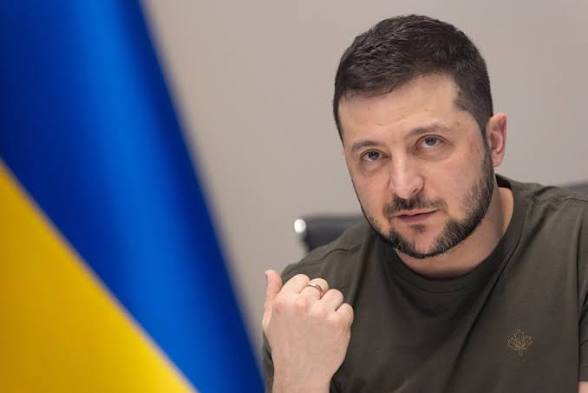
The announcement was delivered by Prime Minister Jonas Gahr Støre following a meeting in Kyiv with Ukrainian President Volodymyr Zelensky. Mr. Støre confirmed that the proposed funding allocation will be formally submitted to the Storting, Norway’s parliament, where it enjoys broad cross-party support.
“Supporting and rebuilding Ukraine is not assistance alone,” Mr. Støre said in a statement released by his office. “It is an investment in Europe’s own security.”
The funds are part of Norway’s Nansen Support Programme, a long-term aid mechanism established in 2023 and named after Fridtjof Nansen, the Norwegian explorer and Nobel Peace Prize laureate who led humanitarian efforts in Ukraine during the 1920s famine. Initially structured as a five-year, 75 billion kroner package, the Norwegian parliament extended the initiative through 2030, swelling its total lifespan commitment well past 270 billion kroner.
While previous packages focused heavily on transferring existing stocks of Western hardware and providing direct budget cushion, the 2027 allocation reflects a broader shift among European allies toward sustaining Ukraine’s domestic military-industrial complex.
Norwegian officials indicated that a primary thrust of the military budget will involve direct procurement contracts signed with Ukrainian defense suppliers.
This “Danish model”—wherein foreign donors fund Ukrainian factories to produce weapons, drones, and artillery shells designed locally—is designed to circumvent supply chain bottlenecks in NATO member nations while boosting Kyiv’s domestic economy.

The package will also continue funding civilian and emergency relief. Past disbursements under the Nansen program have channeled billions toward maintaining Ukraine’s heavily damaged power grid, stabilizing government payrolls, and restoring winter heating infrastructure in frontline municipalities.
Norway’s ability to sustain multi-billion-dollar annual aid contributions stems largely from its unique position as Europe’s premier fossil fuel supplier. Following Russia’s full-scale invasion of Ukraine in February 2022 and the subsequent European pivot away from Russian natural gas, Norwegian energy exports soared, generating record revenues for the country’s $1.7 trillion Government Pension Fund Global (the world’s largest sovereign wealth fund).
This influx of energy profits initially sparked intense domestic and international political debates. Critics, including European lawmakers and international aid groups, argued that Norway was benefiting financially from the very energy crisis created by Russia’s invasion. In response, Oslo created the Nansen Programme to systematically divert a portion of its windfall petroleum revenues into long-term Ukrainian defense and reconstruction.
Per-capita, Norway consistently ranks among the top global contributors of total assistance to Ukraine, trailing only Baltic and Nordic neighbors like Estonia and Denmark relative to national gross domestic product.
Oslo’s decision to lock in $9.2 billion for 2027—more than a year in advance—serves a dual geopolitical purpose.
First, it aims to establish predictable funding pipelines for Ukrainian military planners. Long-term budget visibility allows Kyiv to negotiate multi-year procurement deals for ammunition, air defense interceptors, and drone fleets rather than relying on piecemeal Emergency packages.
Second, the move sends a deliberate signal across the Atlantic and to European capitals. As political debates over war fatigue and budgetary constraints persist in the United States and larger European economies, Northern European allies—particularly Nordic and Baltic states—have taken on an increasingly disproportionate share of the long-term financial burden.
By guaranteeing identical aid levels through 2027, Norway reinforces a growing coalition of Northern European nations advocating for permanent, structural defense funding for Ukraine until a durable peace is achieved.
