


By Emmanuel Thomas l Sunday, Feb.22.26
NIGERIA is on the verge of a massive digital explosion that promises to transform local businesses from market stalls to global players.
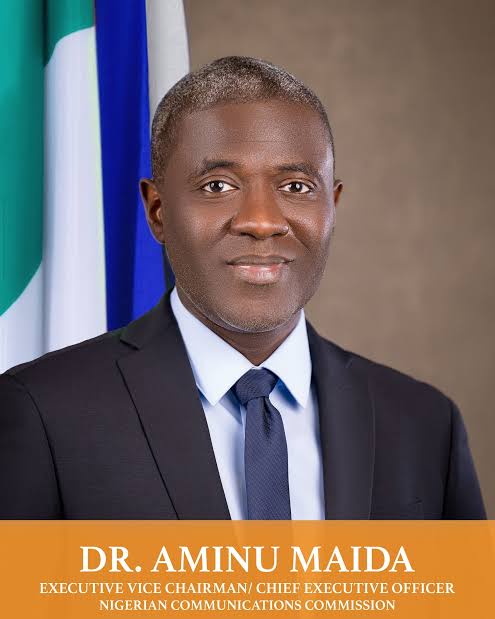
In a compelling new briefing, Dr. Aminu Maida, the Executive Vice Chairman of the Nigerian Communications Commission (NCC), has laid out a bold vision for a “Connected Nigeria,” revealing how high-speed infrastructure is becoming the new backbone of the nation’s economy.
Dr. Maida highlighted that fast internet is no longer a luxury—it is the essential fuel for local entrepreneurs. By driving the expansion of fiber-optic networks and robust data infrastructure, the NCC is ensuring that even the smallest local startups can compete on the world stage.
”High-speed connectivity is transforming the landscape,” Maida explained, noting that the agency’s focus is on creating a seamless digital environment where business can happen at the speed of light.
The NCC chief emphasized that the commission isn’t just watching the change happen; they are the ones laying the tracks. Current initiatives include:
Massive Infrastructure Rollout: Pushing for new towers and subsea cable integrations.
Local Business Empowerment: Reducing the “digital divide” to ensure rural traders have the same tools as urban tech hubs.
Economic Stability: Using connectivity to diversify Nigeria’s economy away from oil and toward a tech-driven future.
With Dr. Maida at the helm, the message is clear: Nigeria isn’t just getting online—it’s getting to work.
Nigeria is currently the largest economy in Africa and possesses one of the youngest, most tech-savvy populations in the world.
However, inconsistent internet speeds and “dead zones” have historically held back economic potential.
The Nigerian Communications Commission (NCC) is the independent regulatory body for the Nigerian telecommunications industry.
Under Dr. Aminu Maida’s leadership, the commission has shifted focus toward Quality of Experience (QoE), ensuring that it’s not just about having a connection, but having one that is fast and reliable enough to support modern banking, e-commerce, and remote work.
As Nigeria strengthens its digital infrastructure, it becomes a more attractive hub for foreign investment—particularly from UK and European tech firms looking to partner with Africa’s burgeoning “Silicon Lagoon” in Lagos.