

By SCM Correspondent l Port Harcourt, Nigeria
The Niger Delta Development Commission (NDDC) has embarked on a radical institutional transformation, digitising its core operational and procurement processes to deepen public trust, eliminate bureaucracy, and accelerate sustainable development across the oil-producing region.
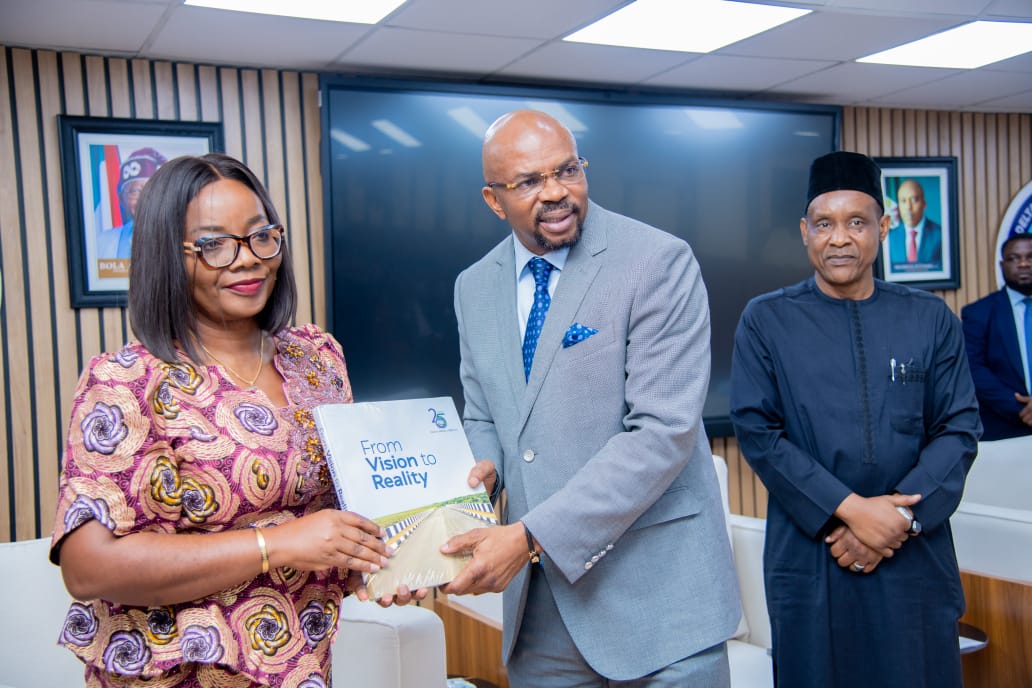
The Managing Director and Chief Executive Officer of the NDDC, Dr. Samuel Ogbuku, made this known during a courtesy visit by a high-level delegation from the National Council on Establishment (NCE) at the Commission’s headquarters in Port Harcourt, Rivers State.
Represented by the Executive Director of Finance and Administration, Alabo Boma Iyaye, Dr. Ogbuku revealed that the agency’s transition to a paperless environment is already yielding tangible results in efficiency, operational transparency, and service delivery.
Infrastructure Inroads: 600km Roads and Landmark Bridges
Highlighting the physical impacts of the current management’s drive, Ogbuku disclosed that the NDDC has completed over 600 kilometres of roads across various mandate states in the last three years alone.
In addition to road networks, critical bridge infrastructure has been prioritized to open up riverine communities to commerce. Chief among these is the monumental 1.2-kilometre Kaa-Ataba Bridge, recognized as one of the longest bridges in the country, which is now nearing final completion and scheduled for official inauguration soon.
Ogbuku emphasized that these achievements were made possible through renewed synergies with state governors, as well as fruitful partnerships with international oil companies (IOCs) such as Shell, Chevron, and NLNG.
Human Capital, Business Support, and Healthcare Upgrades
Beyond brick-and-mortar projects, the NDDC boss highlighted major strides in human capital development, small business empowerment, and healthcare access:
Educational Advancement: The revitalized Foreign Postgraduate Scholarship scheme has now been expanded locally. An additional 600 beneficiaries across the Niger Delta have been added to the local postgraduate scholarship track.

Economic Empowerment: Over ₦6 billion has been injected into small- and medium-scale enterprises (SMEs) via the newly established Niger Delta Chambers of Commerce, Industry, Trade, Mines, and Agriculture (NDCCITMA) to spark grassroots economic growth and reduce poverty.
Healthcare Interventions: The agency has constructed and fully equipped modern medical centres while running continuous free medical outreaches targeting underserved rural communities.
Lighting Up the Niger Delta: Through the strategic rollout of solar-powered streetlights across communities, night-time security has improved dramatically, reducing theft and petty crime while bolstering local night-time economies.
Boosting Oil Production to 1.4 Million Barrels Daily
Addressing regional stability, Dr. Ogbuku recalled that crude oil output in the region hovered around a low 800,000 barrels per day (bpd) when the current leadership assumed office.
However, through targeted youth engagement, sustainable empowerment initiatives, and collaborative security strategies, crude oil theft has dropped significantly—paving the way for national oil production to rebound to approximately 1.4 million barrels per day.
”The shift toward transparency and direct community engagement has restored stakeholder confidence, significantly curtailed pipeline vandalism, and restored economic stability to the region,” Ogbuku noted.
Head of Service Commends NDDC’s Paperless Directive
Speaking on behalf of the National Council on Establishment delegation, the Head of Civil Service of the Federation, Mrs. Didi Walson-Jack, commended the NDDC for driving reforms that align with national civil service standards.
Represented by Dr. Ishiyaku Muhammed, Permanent Secretary of the Service Policies and Strategies Office (SPSO), Walson-Jack noted that the NDDC’s digitisation drive mirrors the Federal Government’s directive requiring all Ministries, Departments, and Agencies (MDAs) to achieve full paperless operations by December.
She stressed the importance of continuous collaboration between the Federal Civil Service and interventionist agencies like the NDDC, urging management to remain committed to staff welfare, ongoing training, and institutional capacity building.
