

Admin I Friday, July 17, 2026
ABUJA, NIGERIA — In a major regulatory shift aimed at dismantling the deep financial networks undermining Nigeria’s multi-billion naira creative economy, the Nigerian Copyright Commission (NCC) has entered into a strategic intelligence-sharing alliance with the National Drug Law Enforcement Agency (NDLEA).
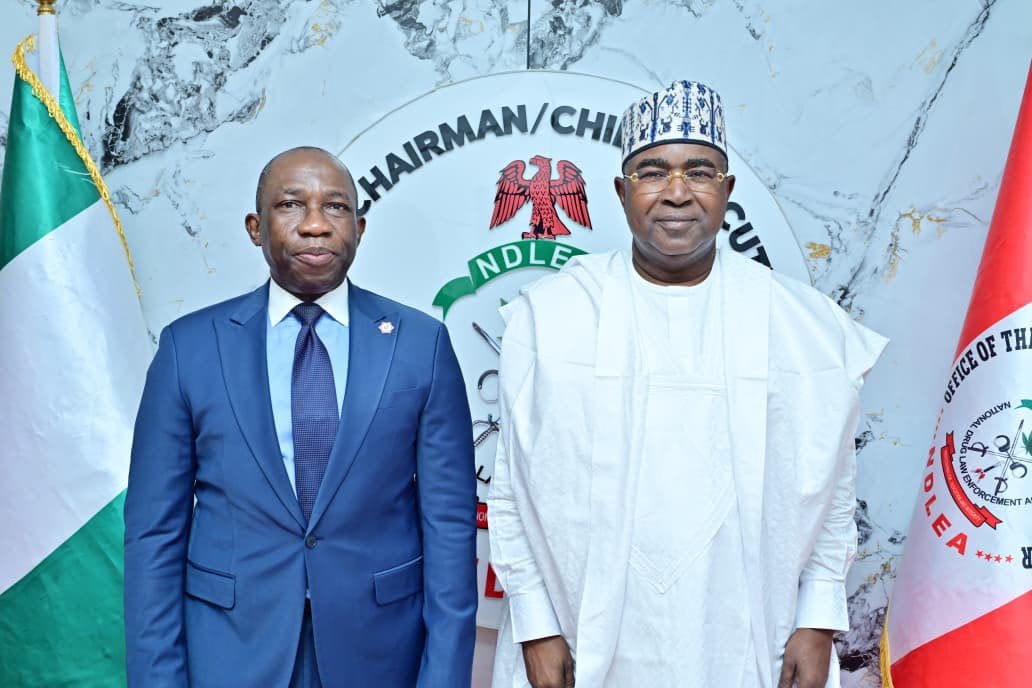
The two agencies formalized the partnership by signing a comprehensive Memorandum of Understanding (MoU) at the NDLEA headquarters in Abuja. The collaboration marks a decisive move by the NCC to elevate copyright infringement from a commercial enforcement issue to a matter of high-level national security.
For years, intellectual property theft has been mistakenly categorized as a low-level, victimless economic offense. However, the NCC’s new enforcement paradigm directly challenges this narrative. Speaking at the formal signing ceremony, the Director General of the NCC, Dr. John Asein, emphasized that modern, large-scale piracy functions as a highly organized and lucrative criminal enterprise.
According to the NCC, these illicit networks do not operate in a vacuum. Instead, the exact same syndicates aggressively cloning software, duplicating cinematic works, and pirating musical intellectual property are deeply embedded in transnational drug trafficking rings.
The proceeds generated from intellectual theft are routinely laundered and funneled back into financing narcotics distribution, creating a self-sustaining criminal value chain that threatens the stability of the state.
”Copyright piracy is sometimes wrongly perceived as a minor commercial offence or a victimless activity,” Dr. Asein stated. “In reality, large-scale piracy is a highly organized and profitable criminal enterprise. It deprives creators and investors of legitimate income, destroys jobs, discourages investment, reduces government revenue, and weakens the foundations of Nigeria’s creative economy.”
The newly minted operational framework provides the NCC with critical tactical advantages. By integrating its enforcement efforts with the NDLEA’s extensive domestic and international intelligence apparatus, the copyright regulatory body can better track the illicit financial flows fueling copyright cartels.
The inter-agency alliance establishes several operational pillars:
Bi-Lateral Intelligence Sharing: Direct pipelines for exchanging data on suspected networks, tracking both digital and physical distribution nodes.

Coordinated Joint Operations: Simultaneous field interventions targeting syndicates suspected of simultaneous intellectual property theft and narcotics distribution.
Cross-Agency Capacity Building: Technical training programs designed to equip officers of both organizations with specialized skills in digital forensics, asset tracing, and intellectual property law enforcement.
Establishment of a Joint Working Committee: A permanent, high-level administrative body tasked with meeting regularly to convert the theoretical mandates of the MoU into real-time field results.
Safeguarding Nigeria’s Creative Assets
Supporting the NCC’s proactive stance, the Chairman and Chief Executive Officer of the NDLEA, Brig Gen Mohamed Buba Marwa (Rtd), lauded the NCC’s leadership for identifying the intersections of modern organized crime. Marwa noted that criminal networks rarely confine themselves to a single enterprise, making a unified regulatory front a necessity.
From the NCC’s perspective, the alliance is not merely about executing raids or seizing counterfeit goods; it is an economic rescue mission for Nigeria’s rapidly growing cultural export sector. Nigeria’s filmmakers, authors, musicians, and tech developers lose billions of naira annually to sophisticated piracy networks.
By attacking the financial roots these networks share with the drug trade, the NCC aims to restore investor confidence, guarantee stable tax revenue for the federal government, and ensure that local creators receive legitimate economic returns for their intellectual capital.
This collaborative approach signals a broader culture of inter-agency cooperation within the Nigerian public service, setting a benchmark for how overlapping regulatory mandates can be synchronized to protect both national security and economic development.
