

By Chienye Egwuonwu I Friday, April 17.26
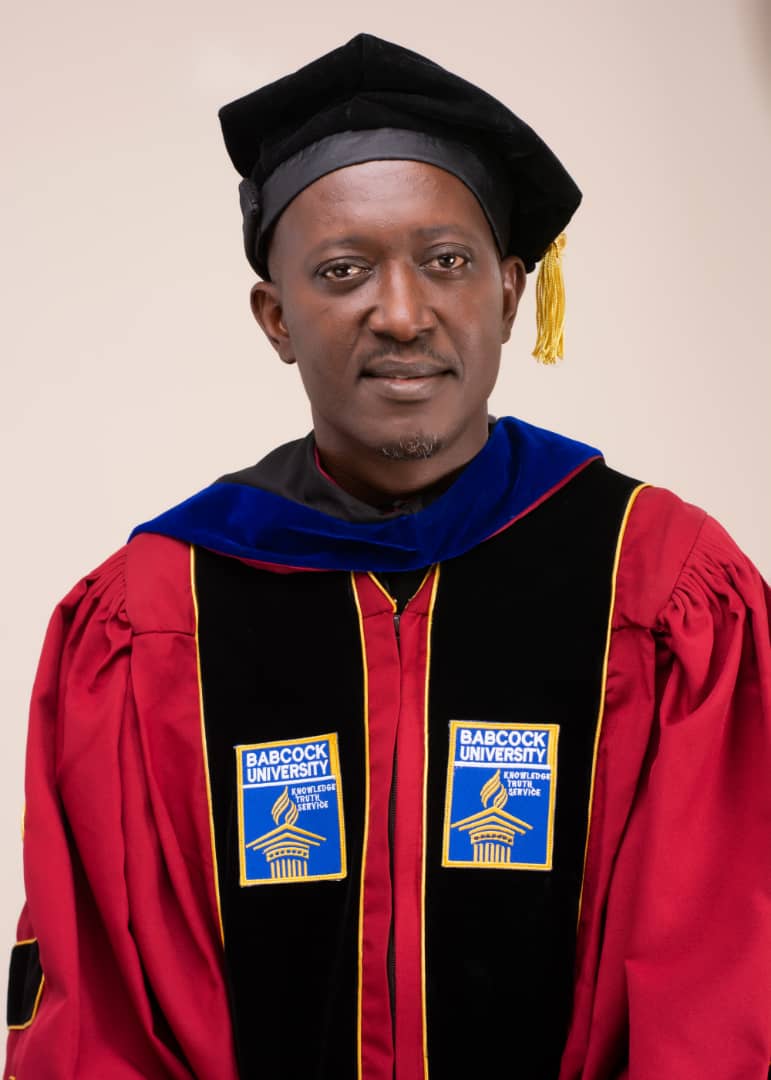
LAGOS, Nigeria – A political scientist, Dr. Olumuyiwa Adetunji, has identified persistent leadership deficit as the major obstacle to Nigeria’s development, warning that the country may continue to underperform unless urgent reforms are made in its leadership recruitment process.
Dr. Adetunji made this known while delivering the institution’s 6th Academic Lecture Series, organised by the School of Arts and Social Sciences (SASS), Federal College of Education (FCE), Osiele, Ogun State, titled “Nigeria’s Leadership Deficit as the Nation’s Albatross”, held at the Political Science Hall of SASS, where he argued that despite the nation’s abundant human and material resources, poor leadership remains the central factor responsible for governance failures, policy inconsistencies, and slow socio-economic growth.
Tracing the roots of the problem, the lecturer noted that Nigeria’s leadership challenges dated back to independence in 1960 and were further compounded by years of military rule and the transition to civilian governance in 1999. According to him, the hurried transition from military to democratic rule created opportunities for individuals, who were largely unprepared for governance to assume leadership positions.
The don further alleged that Nigeria’s leadership deficit is evident in widespread corruption, insecurity and policy mismanagement, which have continued to undermine public trust and national development.
He highlighted notable corruption cases involving public officials and stressed that the inability to secure consistent convictions, particularly among politically exposed persons, reflects weaknesses in the anti-corruption framework.
On insecurity, Dr. Adetunji described the rising cases of terrorism, banditry, kidnapping and communal clashes as clear indicators of leadership failure, noting that the primary responsibility of government to protect lives and property, has not been adequately fulfilled. He added that policy inconsistencies, such as poorly-implemented reforms and abandoned initiatives, have further deepened governance challenges and slowed national progress.
Identifying key factors responsible for the leadership deficit, the lecturer listed lack of clear ideology, prioritisation of personal interests over national goals, lack of transparency and accountability, political defections, and the emergence of what he described as “accidental leaders”.

He also condemned the practice of hostile succession, where incoming administrations abandon projects and policies of their predecessors, resulting in waste of public resources and stalled development. The don warned that the implications of these challenges are far-reaching, including maladministration, weak institutions, poor policy implementation, and declining public confidence in governance.
He emphasised that leadership and nation-building are inseparable, adding that no nation can achieve meaningful progress without competent, accountable, and visionary leadership.
To address the crisis, the political scientist called for comprehensive reforms in Nigeria’s leadership recruitment process, including the establishment of structured frameworks for grooming, and training prospective leaders. He further recommended the expansion of existing leadership and governance institutes to equip public officials with the necessary skills and knowledge, as well as reforms to the electoral process to prioritise competence over financial influence. Dr. Adetunji also urged political parties, civil society organisations and opinion leaders to intensify advocacy for credible leadership, while calling on security agencies to strengthen the screening of candidates seeking public office.
The lecturer concluded that Nigeria’s leadership deficit remains the nation’s greatest challenge, but expressed optimism that with deliberate reforms and collective commitment, the country can reposition itself for sustainable development, peace and prosperity.
The 6th Academic Lecture Series had in attendance, the Provost of the Federal College of Education, Osiele, Dr. Rafiu Soyele; represented by the Deputy Provost (Academic), Dr. Joseph Filani; College Registrar, Mr. Olabode Tonade; former Registrar, Mr. Rafiu Akinola; and Dean of SASS, Dr. Chris Omotosho; amongst others.
