

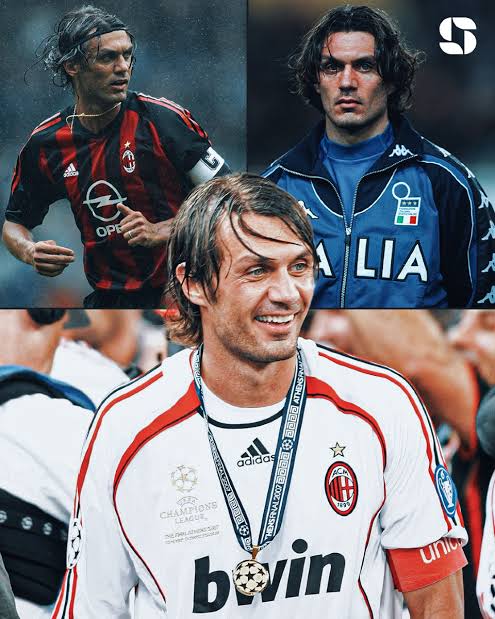
By Sports Desk I Monday, July 27, 2026
ROME — Just two weeks after embarking on a high-profile rescue mission to overhaul Italian football, Paolo Maldini has stepped down from his role as technical director of the Italian Football Federation (FIGC), plunging the national team setup into renewed disarray.
The iconic former AC Milan and Italy captain tendered his resignation following a bitter power struggle with FIGC leadership over the appointment of the national team’s next head coach.
Maldini’s decision came after federation president Giovanni Malagò vetoed the candidacy of former midfield maestro Andrea Pirlo, who had been handpicked by Maldini and his senior advisor, Leonardo, to spearhead the rebuilding process.
The abrupt breakdown of Pirlo’s appointment—and Maldini’s subsequent exit—underscores the deep political and institutional rift governing Italian sports at a moment when the national team is attempting to navigate the most devastating period in its modern history.
A Dispute Over Strategy and Sponsorship
The collapse of Pirlo’s candidacy stemmed not from tactical disagreements, but from political fallout over a commercial contract. Pirlo, 47, had emerged as the clear frontrunner after top-tier targets Pep Guardiola and Carlo Ancelotti declined the position.
However, negotiations unraveled rapidly when details resurfaced regarding Pirlo’s role as a global brand ambassador for Fonbet, a Russian sports betting operator. While the relationship was signed during Pirlo’s recent coaching stint in the United Arab Emirates, the optics of appointing a national manager tied to a Russian gambling entity triggered intense scrutiny from political figures and sporting authorities in Rome.
Despite attempts to resolve the contractual issue, President Malagò ultimately stepped in to block the deal, citing the wider reputational risks and political pressure surrounding Russian commercial links.

In a public statement released on social media, Pirlo expressed deep bitterness over how his candidacy was handled.
”The professional collaboration that has been the subject of recent controversy was exclusively commercial and sporting in nature,” Pirlo wrote. “Attributing political meaning to this collaboration means attributing convictions to me that I have never expressed and that I do not hold. I wish to thank Maldini and Leonardo for the faith they showed in me.”
For Maldini, Malagò’s intervention represented an untenable breach of authority. Having been granted broad purview over the sporting directorate, Maldini concluded that remaining in his position without the autonomy to choose the head coach rendered his project unviable.
Maldini’s departure comes less than a month after his appointment was heralded as a transformational moment for the Azzurri.
Italian football has been trapped in a prolonged structural crisis. Despite winning UEFA Euro 2020 under Roberto Mancini, the national team suffered the historic ignominy of failing to qualify for three consecutive FIFA World Cups. The repeated failures exposed systemic flaws in youth development, tactical innovation, and technical governance.
In response, the federation created a bespoke technical leadership role for Maldini, tasking the legendary defender with restructuring the entire national team pipeline from youth academies to the senior squad. Alongside Leonardo, Maldini sought to implement a modern, forward-thinking overhaul designed to modernize Italian football’s identity.
A Return to Pragmatism
With Maldini out and the revolution halted before it truly began, the FIGC appears poised to revert to a pragmatic, short-term strategy.
Italian federation officials are now turning their attention toward veteran manager Antonio Conte, who previously led the national team between 2014 and 2016. Conte, known for his disciplined, pragmatic tactical setup and intense leadership style, represents a traditional choice focused on immediate stability rather than long-term structural reform.
Yet for supporters and observers across Italy, Maldini’s swift exit serves as a grim reminder that institutional friction continues to hamper the national sport. Rather than embarking on a unified era of modernization, the Italian Football Federation finds itself back at square one—without a technical director, without a permanent head coach, and with its fundamental problems unresolved.
