

By SCM Foreign Reporter
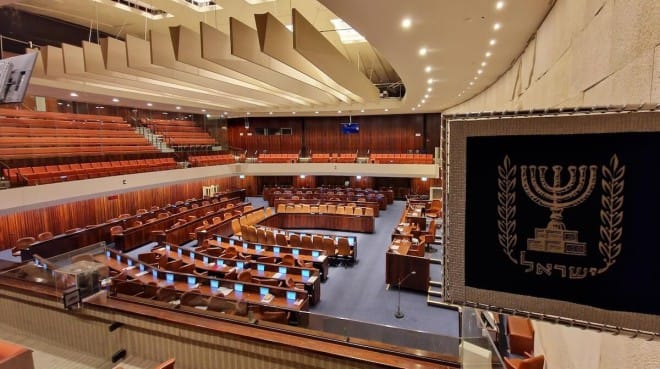
JERUSALEM — An ambitious legislative effort by right-wing lawmakers to permanently ban the International Committee of the Red Cross (ICRC) from visiting thousands of Palestinian detainees held in Israeli facilities collapsed in the Knesset, following an internal political boycott that derailed the controversial bill.
The vote, which failed 41 to 36 in its first reading, leaves the Israeli government bound by a recent landmark Supreme Court ruling ordering the immediate resumption of international humanitarian inspections.
The political defeat exposes deepening fractures within Prime Minister Benjamin Netanyahu’s governing coalition while reigniting a fierce global debate over the treatment of thousands of Palestinians held without formal charges.
The defeated bill, sponsored by members of the ruling Likud party, sought to bypass a unanimous high court decision delivered weeks earlier.
For over two and a half years following the October 7, 2023 attacks, Israel maintained a sweeping, undeclared ban on ICRC oversight, blocking the organization from entering prisons and withholding identification data on security prisoners.
During heated committee debates leading up to the floor vote, proponents of the legislation openly fretted about the public relations fallout if international inspectors were allowed back inside.
Lawmakers arguing for a total ban warned that admitting the Red Cross would invite an unprecedented public diplomacy crisis, claiming that detainees would weaponize accounts of harsh conditions to generate intense international pressure on Jerusalem.
Opponents and human rights advocates countered that the legislation was a thinly veiled attempt to conceal systemic mistreatment, including severe overcrowding, medical neglect, and physical abuse.
The bill’s ultimate failure on the Knesset floor was less a moral consensus and more a casualty of Israel’s volatile domestic politics. Ultra-Orthodox, or Haredi, lawmakers boycotted the coalition vote to protest unrelated legislative gridlock regarding their own religious agenda.
Because of the boycott, the coalition lacked the numbers to push the measure through, legally freezing the bill from being reintroduced for at least six months.

The legislative battle arrives amid unprecedented scrutiny over Israel’s treatment of security prisoners. Since the outbreak of the Gaza war, the number of Palestinians held within the Israel Prison Service (IPS) and military detention centers has nearly doubled, soaring from roughly 5,200 to more than 9,300 detainees.
Among them are thousands of individuals held under administrative detention—a procedure inherited from the British Mandate era that allows authorities to jail individuals indefinitely without trial or access to the state’s evidence against them.
For decades, visits by the Red Cross served as a primary safeguard and a rare conduit of information between jailed Palestinians and their families.
The suspension of these visits in late 2023 left families entirely in the dark regarding the locations, health status, and survival of missing relatives.
In the vacuum of independent oversight, harrowing accounts began leaking out of facilities like the notorious Sde Teiman military camp. Rights groups, including the Association for Civil Rights in Israel (ACRI), compiled testimonies detailing systemic starvation, untreated outbreaks of infectious skin diseases like scabies, and severe physical violence.
The United Nations also noted a stark escalation in severe mistreatment, prompting a coalition of human rights organizations to petition the Supreme Court to intervene.
In its June ruling, the High Court rejected the state’s defense that the ban was a justified security measure linked to the fate of Israeli hostages in Gaza. Justice Daphne Barak-Erez wrote that a sweeping, open-ended prohibition lacked any coherent domestic or international legal framework. Maintaining basic standards, she noted, was not a “luxury” but a core obligation of a law-abiding state.
With the legislative override defeated, the ICRC has stated it stands ready to resume its monitoring mandate in accordance with the Fourth Geneva Convention.
Human rights attorneys have vowed to closely monitor compliance, warning that any further administrative delays by Israeli prison authorities will face immediate legal challenges.
