

By SCM Foreign Desk
TEHRAN — The Islamic Revolutionary Guard Corps (IRGC) has dramatically escalated geopolitical tensions in the Middle East by threatening the wholesale destruction of American corporate assets throughout the Persian Gulf.
The warning marks a fundamental shift in Tehran’s military doctrine, moving targets away from fortified American military bases toward the vulnerable, high-value commercial infrastructure driving the region’s technological and energy future.
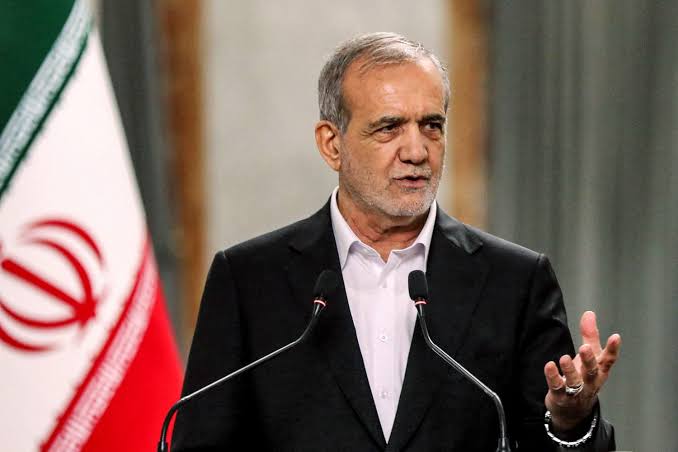
In an aggressive pronouncement delivered on Iranian state television, senior IRGC commander and military advisor Mohsen Rezaei stated that if the United States continues to launch airstrikes against Iranian bridges and logistics infrastructure, Tehran will retaliate by dismantling industrial and information technology assets in which American companies hold a stake.
The sweeping mandate effectively places a target on the entire American commercial footprint in the Gulf. High-profile multi-billion-dollar investments by companies such as Microsoft, Google, and Halliburton spanning Saudi Arabia, the United Arab Emirates, and Qatar are now classified by Tehran as active target zones.
According to Rezaei, the fragile diplomatic framework established under the Islamabad Memorandum of Understanding (MoU) is “all but dead.” Speaking with Al Jazeera and state media, the commander detailed a list of what Tehran characterizes as compounding American violations that forced Iran’s hand:
Regional Military Postures: Israel’s ongoing failure to withdraw its forces from southern Lebanon.
Maritime Routes: The establishment of an “illegal alternative route” through the highly contested Strait of Hormuz.
Sovereignty Violations: Direct military attacks on Iranian territory alongside the continued freezing of Iranian financial assets abroad.

Rezaei leveled his sharpest rhetorical charge against Washington’s bad-faith diplomacy, claiming the United States originally signed the MoU “with the aim of exerting maximum pressure” rather than seeking peace.
He alleged that Washington deliberately exploited a recent two-week ceasefire observed by Iranian forces to consolidate a heavy naval blockade and position strategic assets while negotiations were actively underway.
The corporate threat is not merely rhetorical. Earlier this week, a kinetic strike hit the KGL-Halliburton compound in Kuwait, an event intelligence analysts view as a “proof of concept” for Iran’s shifting engagement rules.
By targeting logistics, tech hubs, and data centers, the IRGC is attempting to exploit the reliance of Western capital on the stability of the Gulf Arab states.
For years, regional states like the UAE and Saudi Arabia have pitched themselves as safe, hyper-modern sanctuaries for Western tech innovation and green energy transitions.
By directly threatening these corporate entities, Iran hopes to deter further U.S. strikes on its domestic infrastructure by imposing an unsustainable economic penalty on Washington’s private sector allies.
The friction boiled over following consecutive nights of U.S. Central Command airstrikes inside southern Iran, which damaged vital transport links, including six critical bridges in Hormozgan province. U.S. officials maintain the strikes are necessary to degrade the IRGC’s ability to supply proxy networks and disrupt international shipping lanes.
However, Iranian officials counter that the destruction of transport routes is a prelude to broader economic isolation or a ground assault on vital Persian Gulf islands.
With the Islamabad MoU incapacitated, the risk of miscalculation has reached its highest point in years. State Department officials have advised American citizens and corporate employees throughout the Gulf to review security protocols, as the line between commercial enterprise and military theater continues to erode.
