

By SCM International Desk I Saturday, August 08, 2026
TEHRAN — Iran’s highest security body declared on Saturday that it will not allow the reopening of the strategic Strait of Hormuz unless the United States meets a stringent list of conditions, demanding a full withdrawal of American forces from the Persian Gulf, an end to sanctions, and the unfreezing of billions of dollars in blocked assets.
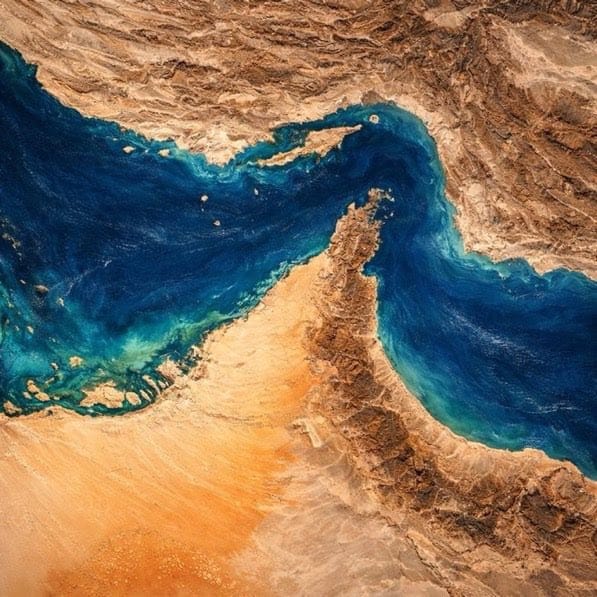
In a official statement released by Tehran, Mohammad Baqer Zolqadr, the secretary of Iran’s Supreme National Security Council (SNSC), stated unequivocally that the vital maritime choke point—through which roughly a fifth of the world’s petroleum flows—will remain restricted until Washington fundamentally changes its military and economic posture toward the Islamic Republic.
“Until America corrects its behavior, the Strait of Hormuz will not be reopened,” Mr. Zolqadr said in a statement published by Iranian state media. He added that the council “will never back down, whether in war or in negotiations.”
The Supreme National Security Council laid out a six-point mandate outlining what Tehran considers a complete “correction” of American conduct:
Cease Threats and Insults: The U.S. must permanently refrain from threatening Iran or disrespecting its national and religious sanctities.
End All Aggression: Washington and its regional allies must permanently halt military campaigns against Iran and its partner networks in Lebanon, Palestine, Yemen, and Iraq.
Lift Naval Blockade and Withdraw Forces: The U.S. military must end its maritime blockade of Iranian ports and pull all air and naval assets out of the waters and airspace surrounding Iran.
Pay Reparations: The U.S. must pay full compensation for physical and economic damage caused to Iran during recent military conflicts.

Lift Economic Sanctions: Washington must eliminate all unilateral financial, trade, and energy sanctions against the Iranian nation.
Release Frozen Assets: The U.S. government must unconditionally unfreeze and return all seized Iranian financial assets held in international institutions.
Deepening Standoff and Diplomatic Impasse
The hardline decree marks a significant complication in delicate, multi-nation diplomatic efforts to restore freedom of navigation through the Persian Gulf.
In mid-June, negotiators from Washington and Tehran had endorsed a preliminary Memorandum of Understanding (MOU) brokered by Qatari and Pakistani mediators.
That framework was intended to establish an immediate cessation of hostilities and chart a 60-day roadmap toward restoring commercial shipping, easing oil export restrictions, and resolving nuclear compliance deadlocks.
However, the agreement faltered in execution as both capitals traded accusations of non-compliance. Washington insisted that any major release of frozen Iranian funds—estimated at approximately $24 billion—be sequenced alongside strict, verifiable performance milestones regarding Tehran’s nuclear stockpile and maritime security. Conversely, Iranian negotiators insisted that sanctions relief and blockade removals must precede any concession on their part.
Tensions spiked further this week following reports of maritime disruptions in the narrow waterway, prompting the U.S. Treasury and State Department to slap fresh sanctions on international exchange networks, shell companies, and digital asset platforms accused of funding Iranian operations.
The continued closure of the Strait of Hormuz threatens to destabilize global energy markets, forcing commercial shipping operators to reroute tankers or pay exorbitant war-risk insurance premiums.
While White House officials have maintained that a temporary ceasefire and maritime agreement remain within reach, Mr. Zolqadr’s uncompromising declaration reflects intense political pressure within Iran’s governing hierarchy against accepting incremental or front-loaded U.S. demands.
By framing these six requirements as non-negotiable conditions for international transit through the strait, Tehran appears to be signaling that it is prepared to leverage global maritime trade indefinitely to break the cycle of economic sanctions and military containment.
