

By SCM International Desk I Wednesday, August 26, 2026
TEHRAN — Iran and Oman have reached a preliminary agreement establishing a framework to manage traffic through the Strait of Hormuz, officials from both nations announced in a joint statement on Tuesday. However, Iranian officials quickly cautioned that the diplomatic development does not signal an immediate reopening of the critical maritime chokepoint, which remains shuttered to commercial passage.
Iran’s Foreign Ministry emphasized that the strategic waterway will remain fully closed until the United States lifts its naval blockade and all parties strictly abide by the terms outlined in the preliminary memorandum of understanding (MoU).
While exact legal and operational text of the Tehran-Muscat accord has not yet been formally published, preliminary details released by regional authorities indicate that the understanding grants Iran regulatory authority over incoming maritime traffic, as well as the right to levy service and transit fees on commercial vessels navigating through the shipping corridors.
Iranian media reports suggest the agreement envisions a temporary seven-mile-wide transit route operating under shared oversight, alongside planned joint de-mining operations.
The preliminary pact represents the latest diplomatic maneuver in a monthslong maritime crisis that has severed one of the global economy’s most vital energy arteries.
The standoff escalated significantly earlier this year following military exchanges between Washington and Tehran, which led to a U.S.-enforced naval blockade designed to intercept Iranian-linked maritime trade. In response, Tehran asserted sovereign jurisdiction over the narrow passage, deploying naval assets and establishing anti-ship defenses that halted normal commercial transit.
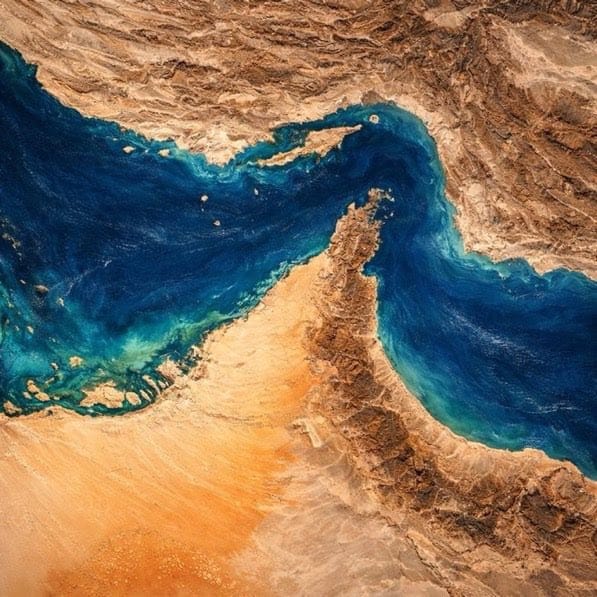
The Strait of Hormuz—a narrow choke point bounded by Iran to the north and Oman and the United Arab Emirates to the south—typically carries nearly 20 percent of the world’s petroleum supply and significant volumes of liquefied natural gas (LNG).

The sustained disruption has sent shockwaves through global energy markets, forcing commercial tankers to reroute around Africa or idle in international waters, while driving up inflation and shipping insurance premiums worldwide.
Oman, which maintains a historic policy of diplomatic neutrality and shares control over the strait’s international navigation lanes with Iran, has acted as the primary intermediary attempting to broker a functional compromise between Tehran, Gulf neighbors, and Western powers.
A Framework Contingent on Washington
Despite Muscat’s diplomatic push, Iranian foreign ministry officials reiterated that any full resumption of shipping remains tied directly to political concessions from the United States.
Tehran has consistently maintained that free navigation cannot resume unilaterally without the removal of American naval blockades and a binding commitment to previous international protocols.
Maritime industry groups and Western naval commanders have expressed caution over the preliminary deal. Analysts note that granting Iran explicit rights to inspect vessels and collect transit fees represents a fundamental shift in the legal administration of the strait, which under the United Nations Convention on the Law of the Sea (UNCLOS) has historically operated under the principles of unimpeded transit passage.
Whether the Iran-Oman arrangement can transition from a tentative framework into an operational reality will ultimately depend on upcoming technical negotiations—and whether Washington is willing to ease its naval posture in exchange for a monitored shipping corridor.
