

Admin I Friday, June 26, 2026
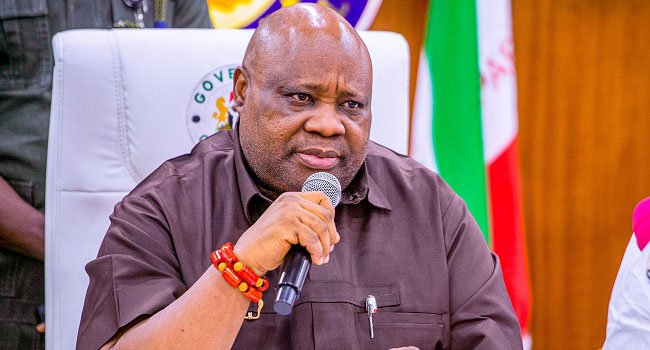
OSOGBO — Governor Ademola Adeleke of Osun State has launched a scathing attack on the leadership of the State Police Command, accusing some operatives of forming an “unholy partnership” with political thugs to unleash violence on innocent citizens.
Receiving a high-powered police delegation led by a Deputy Inspector General of Police (DIG) in Osogbo, a visibly displeased Adeleke declared that the current security architecture in the state had failed, demanding the immediate redeployment of the State Commissioner of Police.
The Governor’s outbursts followed weeks of escalating tension, marked by targeted assassinations, sporadic shootings, and the destruction of opposition campaign materials, which he claimed had gone completely unpunished by local law enforcement.
Governor Adeleke explicitly listed three recent, high-profile political murders that have rocked the state within the last few weeks: the killings of citizens identified as Eluyera at Ikire, Ezekiel at Ilobu, and Aderogba at Esa Oke. In all three instances, the Governor noted with dismay, law enforcement has failed to make a single arrest.
“You are in this state at a time negligence and partisanship of some of your officers have worsened political violence,” Adeleke told the visiting DIG.
“Your official entrance comes at a time when we have recorded three unresolved political murders. There has been no single arrest. In Osun today, political thugs drive round the town, shooting sporadically, attacking innocent residents. They destroyed Accord Party billboards. Yet, the police command looks the other way.”
The Governor further alleged a double standard in the enforcement of the law, claiming that local police operatives are quick to clamp down on members of opposition parties like the Accord Party over minor infractions, while turning a blind eye to severe, armed violence perpetrated by elements allegedly linked to the All Progressives Congress (APC).
Expressing total loss of confidence in the local police hierarchy, Governor Adeleke passed a vote of no confidence on the state’s topmost cop.
“The Commissioner of Police has demonstrated lack of willingness and capacity to act fairly and without partisan bias,” Adeleke stated emphatically. “The general consensus among Osun people is that the Commissioner of Police is compromised and should be moved out of the state.”
While distancing the federal leadership of the police from the alleged local rot, the Governor expressed faith in President Bola Ahmed Tinubu and the Inspector General of Police (IGP) to restore sanity.

He, however, maintained that peace can only return if the state command is completely reshuffled ahead of upcoming electoral engagements.
“Osun people want free and fair polls. Our people seek a peaceful environment to cast their votes. We need the reshuffling of the state police command to secure impartial policing. I have listened to the message from the IGP, but we wait to see the outcome of these interventions. Your state police commissioner has failed us,” Adeleke concluded.
The brewing crisis in Osun State is deeply rooted in the volatile political history of the southwestern state, particularly the intense rivalry between the ruling Peoples Democratic Party (PDP) and the main opposition, the All Progressives Congress (APC).
Osun has traditionally been a major political battleground. The transition of power to Governor Ademola Adeleke following a fiercely contested election has left deep political fractures.
In recent times, the state has witnessed a resurgence of aggressive turf wars, with various political actors utilizing non-state actors and thugs to assert dominance, dismantle campaign billboards, and intimidate rivals.
Furthermore, the involvement of third forces—such as the Accord Party, whose campaign materials were reportedly targeted in the recent wave of destruction—has complicated the security dynamics.
The state’s strategic importance in southwestern politics means that local skirmishes frequently escalate into federal security concerns.
Historically, Nigerian state governors—who are nominally the “Chief Security Officers” of their states but lack direct operational control over the federalized Nigeria Police Force—often clash with state Commissioners of Police during high-stakes political seasons.
Adeleke’s public confrontation with the DIG’s team underscores a systemic friction regarding the neutrality of federal security agencies during local political contests.
