

By SCM Football Correspondent
HOUSTON, Texas — The tournament favorites arrived in the Lone Star State expecting a celebratory procession, but they left the pitch of NRG Stadium standardly gridlocked by African resilience.
In a captivating Group K opener at the 2026 FIFA World Cup, a deeply determined Democratic Republic of Congo side writing its first World Cup chapter in over half a century stood toe-to-toe with global heavyweight Portugal.
The resulting one-one scoreline sent shockwaves through the tournament, serving up a narrative defined by early brilliance, defensive heroism, and the quieted ambitions of global icon Cristiano Ronaldo.
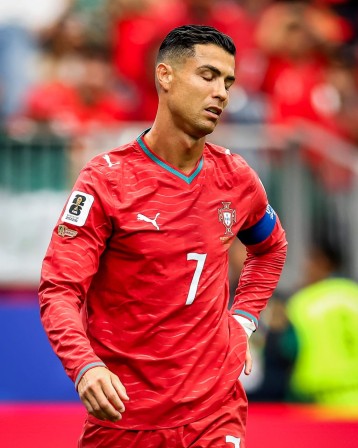
The match was widely anticipated as a showcase for Ronaldo, who carved his name further into footballing folklore by becoming the second-oldest outfield player to ever grace a World Cup tournament, starting at forty-one years and one hundred and thirty-two days old. It marked his historic, record-equalling sixth appearance at the global finals.
Yet, the evening would ultimately belong to the collective spirit of the Congolese Leopards, who neutralized the star-studded Seleção Das Quinas through tactical discipline and predatory counter-attacking.
Portugal manager Roberto Martínez could not have drawn up a more perfect beginning. Pushing his team into an aggressive, fluid shape from the opening whistle, Portugal completely starved their opponents of the ball.
The relentless early pressure bore fruit in just the sixth minute of play. Orchestrated by a delightful switch of play from Vitinha, winger Pedro Neto found half a yard of space on the flank and delivered an inch-perfect, teasing cross into the penalty area.
Rising beautifully to meet it was the young sensation João Neves, who directed a powerful, glancing header past Congolese goalkeeper Lionel Mpasi to send the Portuguese contingency into a frenzy.
At that moment, the narrative seemed set for a long, arduous evening for Sébastien Desabre’s men. Portugal set up camp in the Congolese half, manipulating the ball with agonizing patience. Across the entire match, the European powerhouse monopolized the ball, commanding an astonishing seventy-five percent of overall possession.
They pinged seven hundred and eighty-three total passes around the pitch, executing seven hundred and twenty-three of them with pin-point accuracy.
Driven by the tireless Vitinha, who logged a team-high one hundred and thirty-four touches and completed one hundred and twenty-eight passes at a ninety-four percent completion clip, Portugal breached the final third one hundred and two times and registered twenty-nine touches inside the opposition box.
Yet, despite this total territorial monopoly, Portugal lacked a sharp, cutting edge. Bernardo Silva, who started the day finalizing a major club move to Real Madrid, cut a frustrated figure on the right, earning an early yellow card in the thirteenth minute before being hooked at halftime for Francisco Conceição.
Instead of capitulating, the Congolese back-five adjusted seamlessly. Orchestrated by the veteran leadership of Chancel Mbemba, who accepted a yellow card of his own in the thirty-second minute to halt a dangerous transition, and Axel Tuanzebe, the Leopards formed an unbreakable wall.
They choked the central lanes, clearing their lines twenty-eight times and continuously forcing Portugal into ineffective wide areas.
Wissa Writes History Before the Interval
While Portugal passed with sterile control, DR Congo waited for their moments to punch back.

They out-tackled the favorites nineteen to eleven and recorded five crucial interceptions. As the first half ticked into extended stoppage time, their tactical patience was rewarded with a moment of pure sporting history.
In the fifth minute of added time before the interval, Arthur Masuaku took a short corner and floated an inviting, dipping cross toward the far post.
Escaping his marker with clever movement, Newcastle United forward Yoane Wissa ghosted into the six-yard box completely unmarked, leaping powerfully to drive a downward header past a helpless Diogo Costa.
The goal—the first ever scored by the nation at a World Cup finals, fifty-two years after their debut as Zaire in 1974—sparked wild celebrations on the pitch and in the dugout.
Remarkably, the clinical Leopards achieved parity despite having far fewer sequences, outshooting the Portuguese six to two in total first-half attempts.
Ronaldo Thwarted as the Leopards Hold Fast
The second half mirrored the first in territory but escalated in drama. Desperate to reclaim the lead, Portugal threw caution to the wind.
They thought they had found their savior when João Cancelo executed a breathtaking, acrobatic overhead kick that nestled into the back of the net, but the linesman’s flag quickly dashed their celebrations, with the defender correctly ruled offside.
As Portugal pushed forward, gaps opened behind them. DR Congo nearly turned a historic draw into a miraculous victory when thirty-five-year-old veteran forward Cédric Bakambu easily out-muscled midfielder Bruno Fernandes on a counter-attack, only to watch his blistering shot agonizingly ricochet off the post.
Ronaldo, searching desperately for his ninth career World Cup goal, grew increasingly isolated against Congo’s physical backline. While substitute Francisco Conceição injected a burst of creative energy down the wings and managed to pick out the legendary captain on two distinct occasions late in the game, the iconic number seven uncharacteristically fluffed his lines, firing both half-chances harmlessly off-target.
Mpasi remained entirely composed under a late barrage of Portuguese crosses, aided by substitute Noah Sadiki who helped shore up the midfield after replacing Ngal’ayel Mukau in the fifty-sixth minute.
Martínez threw on offensive reinforcements in Rafael Leão, Nélson Semedo, and Gonçalo Ramos, but the adjustments yielded little besides late bookings for Semedo and defender Tomás Araújo.
When the final whistle blew, the contrast in emotions was stark. Portugal left the pitch knowing they had let two points slip away through aimless possession.
For DR Congo, the hard-fought one-one tie represents a monumental milestone—a historic first World Cup point that keeps Group K completely wide open and proves that organization and heart can neutralize even the brightest stars.
