

By SCM International Desk I Friday, Sept 18, 2026
PARIS — French President Emmanuel Macron has cast serious doubt on the prospect of a near-term diplomatic breakthrough between Tehran and Washington, warning that an agreement between Iran and the United States to reopen the vital Strait of Hormuz appears unlikely in the short term.
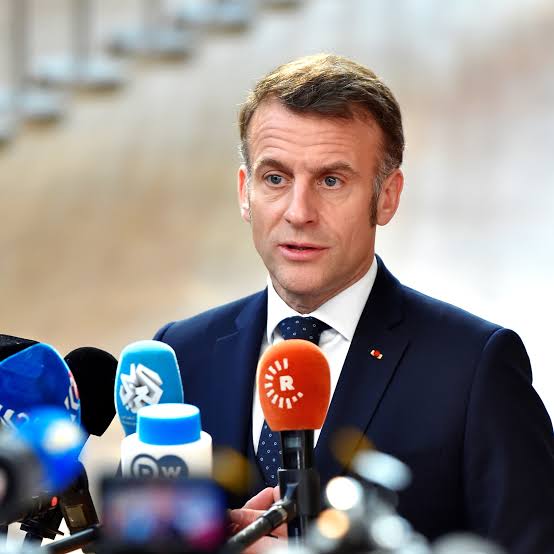
Speaking to reporters in Paris, the French leader highlighted the deep geopolitical impasse preventing the restoration of normal maritime traffic through the world’s most critical energy transit corridor.
“This depends on the ability to finalize an agreement, which seems unlikely in the short term, between Iran and the United States,” President Macron stated.
The French President’s sobering assessment underscores growing international anxiety over the prolonged disruption of maritime trade through the narrow waterway.
Connecting the Persian Gulf to the Gulf of Oman and the open ocean, the Strait of Hormuz is a vital choke point through which roughly 20 percent of global petroleum trade and vast quantities of liquefied natural gas (LNG) pass daily.
The ongoing maritime crisis in the Persian Gulf is rooted in the military conflict that erupted earlier in 2026.
Tensions escalated sharply into open warfare involving the United States, Israel, and Iran. In response to severe airstrikes targeting its military and command infrastructure, Tehran asserted control over the passage, deploying naval assets, firing on commercial vessels, and laying sea mines to restrict access to foreign shipping.

In response, Washington launched naval escort operations and deployed mine-clearing forces to secure primary shipping lanes, alongside enforcing a strict naval blockade on Iranian ports.
Despite diplomatic efforts brokered by regional and international mediators, including temporary ceasefires and memoranda aimed at restoring free navigation, skirmishes and retaliatory strikes on commercial and military-contracted vessels have persisted.
The continuous hostility has kept international shipping companies on edge, with many commercial lines choosing longer, costlier routes or suspending Gulf transits altogether.
Seeking Alternative Energy Routes
Addressing the domestic and European economic fallout, President Macron emphasized the necessity of mitigating global energy volatility by reducing reliance on the strategic choke point.
During recent bilateral talks at the Élysée Palace with Iraqi Prime Minister Ali Al-Zaidi, Macron stressed that European nations must actively work toward diversifying shipping infrastructure and energy pipelines.
”Securing our energy supplies by working toward de-escalation and developing alternative routes to the Strait of Hormuz means reducing pressure on prices at the pump,” Macron said, linking foreign policy in the Middle East directly to the protection of household purchasing power across Europe.
Efforts across the Middle East to bypass the waterway—such as utilizing Saudi Arabia’s East-West crude pipeline to the Red Sea and expanding United Arab Emirates export terminals outside the Gulf at Fujairah—have picked up urgency.
However, capacity constraints and regional security threats continue to limit their ability to fully replace the massive volume historically carried through Hormuz.
As global crude futures remain elevated and supply chain risks mount, Macron’s comments reflect a growing consensus among European leaders that diplomatic normalization between Washington and Tehran remains distant, necessitating long-term structural adjustments to global energy security.
