

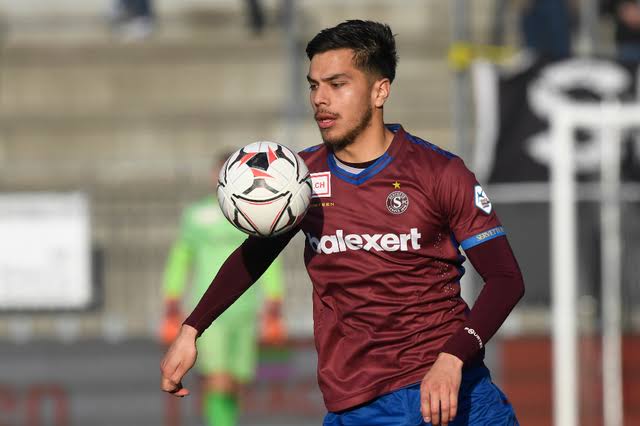
By SCM Sport Reporter
LAUSANNE, Switzerland – BOLIVIAN international Boris Cespedes has handed himself a major career lifeline after successfully convincing the Court of Arbitration for Sport (CAS) to slash his two-year doping ban.
The 31-year-old midfielder, who plays his club football for Swiss Super League side Yverdon-Sport FC, had his suspension reduced to 15 months following a dramatic appeal hearing in Lausanne.
The ruling means Cespedes could return to competitive action much sooner than anticipated, with CAS backdating the suspension to include time already served under a provisional ban.
The high-stakes legal battle traces back to a FIFA World Cup 2026 qualifying match between Bolivia and Uruguay on March 25, 2025. The fixture was held at the notorious Estadio Municipal de El Alto—a stadium sitting at a breathtaking, oxygen-depleted 4,000 metres above sea level.
Cespedes, a seasoned professional with a 12-year career at the highest level, never actually made it onto the pitch for the qualifier. The midfielder fell severely ill with acute altitude sickness prior to kick-off.
In a desperate bid to treat his debilitating symptoms, the Bolivian Football Federation (FBF) team medical staff administered prescription medication to the ailing star. However, the remedy triggered a catastrophic chain of events.
Following a routine in-competition doping control after the match, Cespedes’ sample tested positive for Acetazolamide. The drug is classified as a “Specified Substance” under Section S5 of the World Anti-Doping Code Prohibited List, which strictly bans diuretics and masking agents.
By August 7, 2025, the FIFA Disciplinary Committee clamped down hard, finding Cespedes guilty of violating anti-doping regulations and slapping him with a devastating two-year ban from all football-related activities.
Refusing to accept a sanction that threatened to prematurely end his top-flight career, Cespedes launched a formal appeal with CAS in October 2025. His legal team argued that the suspension should be cut to no more than six months, maintaining that the player bore “no significant fault or negligence.”

According to Cespedes’ defence, the midfielder was so incapacitated by his sudden illness that he was physically and mentally in no condition to verify the ingredients of the medication being pumped into his system by trusted national team doctors.
Following a virtual hearing held on January 15, 2026, a Sole CAS Arbitrator weighed the evidence. While the presence of Acetazolamide in the player’s system was undisputed, the arbitrator accepted that Cespedes had successfully proven the source of the drug. CAS ruled it was “more likely than not” that the banned substance entered his system via the altitude sickness treatment provided by the FBF staff.
CAS Statement: “The Player was significantly incapacitated by sickness during the relevant period, but there is a certain amount of responsibility that he must bear, which cannot be delegated to team doctors regardless of the circumstances.”
Ultimately, the arbitrator noted that as a veteran of the game for over a decade, Cespedes should have been fully aware of his strict personal doping obligations.
His fault was deemed “normal,” placing him in an adjusted bracket of a 12-to-24-month suspension.
Settling on a 15-month term, CAS partially upheld the appeal, describing the reduced sentence as “proportionate and appropriate.”
Because Cespedes has been voluntarily serving a provisional suspension since May 14, 2025, the 15-month clock has been ticking in the background.
The Swiss-based midfielder is now expected to be cleared for a return to professional football by mid-August 2026, offering a massive boost to both Yverdon-Sport and his national side.
