

By Emmanuel Thomas I June 16, 2026
JERUSALEM — The overall Palestinian death toll in the Gaza Strip has surpassed 73,000, local health officials announced on Tuesday, a sobering milestone that highlights the deadly fragility of a U.S.-brokered ceasefire that diplomats have increasingly described as moribund.
In its daily statistical ledger, the Gaza Ministry of Health reported that five new fatalities and eight injuries had arrived at the enclave’s remaining partially functional hospitals over the previous 24 hours.
While the single-day figures represent a lower intensity of violence than the height of the full-scale ground invasions, the steady accumulation of casualties continues to erode the peace framework signed eight months ago.
According to health authorities, the total number of fatalities recorded since the outbreak of hostilities on October 7, 2023, has reached 73,008. An additional 173,260 individuals have been documented as wounded over the course of the 32-month conflict.
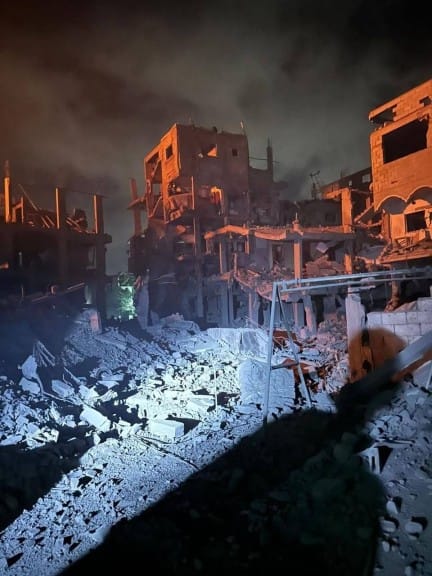
The ministry emphasized that the official data remains an undercount. “A number of victims are still under the rubble and on the roads,” health officials said in a statement, noting that municipal rescue teams and civil defense crews remain systematically blocked from reaching targeted zones due to ongoing security risks and localized military restrictions.
The latest numbers bring into sharp relief the shortcomings of the “Comprehensive Plan to End the Gaza Conflict,” a multilateral peace deal brokered by the United States, Egypt, and Qatar that officially went into effect on October 11, 2025.
Initially celebrated by international observers as a definitive diplomatic breakthrough, the truce has instead devolved into what independent monitoring groups call a low-boil war of attrition.
The health ministry’s data shows that since the ceasefire took effect, 997 Palestinians have been killed and 3,152 have been wounded. During that same eight-month period, recovery teams have successfully extricated 784 bodies from collapsed structures, often utilizing rudimentary tools or bare hands due to severe fuel and machinery shortages.
The Israeli military has repeatedly defended its ongoing, localized operations during the truce period, asserting that it strikes only in self-defense or to eliminate re-emerging pockets of Hamas militants who violate the terms of the agreement.
Independent United Nations rights investigators, however, have expressed mounting alarm over the continued civilian toll, pointing out that tightly packed displacement camps are frequently caught in the crossfire of precision drone strikes and artillery exchanges.
For the more than two million residents of the Gaza Strip, the milestone is more than statistical; it represents the near-total fragmentation of civilian infrastructure.
The United Nations children’s agency, UNICEF, recently reported that no single hospital within the territory is fully functional, with half operating at only fractional capacity amid extreme deficits of clean water, maternal care, and basic antibiotics.

With diplomacy stalled over fundamental disagreements regarding the permanent disarmament of militant factions and the total withdrawal of foreign forces, the daily reports out of Gaza’s remaining medical wards suggest that the threshold of 73,000 is merely a marker on an ongoing trajectory.
To provide a thorough understanding of the current dynamic, the story relies on key historical and geopolitical realities that have shaped the region since late 2023:
The Origin of the Conflict: The current war began on October 7, 2023, when a Hamas-led assault into southern Israel resulted in the deaths of approximately 1,200 people, primarily civilians, and the capture of some 251 hostages.
This triggered a massive, retaliatory Israeli air and ground campaign aimed at dismantling Hamas’s military and governing capabilities.
The October 2025 Ceasefire: Following several collapsed temporary truces (including brief pauses in late 2023 and early 2025), a more comprehensive 20-point peace plan was signed on October 9, 2025, taking effect on October 11.
Orchestrated under intense international pressure, Phase 1 of the plan successfully facilitated the return of the remaining living hostages and the remains of the deceased in exchange for the release of select Palestinian prisoners.
The Phase 2 Deadlock: The transition into the peace deal’s second phase—meant to handle the permanent withdrawal of the Israeli Defense Forces (IDF), large-scale reconstruction efforts estimated at upwards of $70 billion, and the implementation of a neutral transitional government of Palestinian technocrats—has entirely stalled.
The current diplomatic logjam hinges on international demands for the complete disarmament of Hamas, a condition the group’s remaining leadership has resisted.
The Humanitarian Landscape: As of mid-2026, roughly 90% of Gaza’s housing units have suffered total or partial destruction. Extreme blockades on border checkpoints mean that vital dual-use civil supplies—such as water filters, fuel, and heavy construction equipment—remain heavily restricted, directly contributing to the inability of civil defense teams to recover thousands of bodies believed to be permanently entombed beneath the ruins.
