

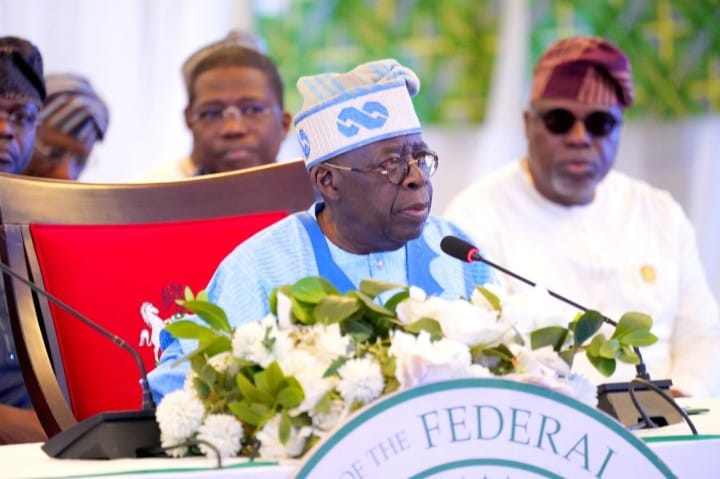
By SCM Reporter
ABUJA — Marking the third anniversary of his administration today, May 29, 2026, President Bola Ahmed Tinubu (GCFR) delivered a comprehensive national address, declaring that the difficult economic and structural choices made by his government have successfully stabilised Nigeria and prevented a looming fiscal collapse.
Reflecting on a tumultuous but ultimately redemptive three-year journey, the President empathised with citizens over the steep cost-of-living adjustments triggered by his policies. He firmly assured the nation, however, that these sacrifices have yielded a stronger, more competitive, and sustainable economy.
Choosing Long-Term Recovery Over Political Convenience
Reminding Nigerians of the stark realities his administration inherited in May 2023, President Tinubu noted that the nation was facing profound fiscal pressures, driven by unsustainable fuel subsidies and severe exchange-rate distortions.
“At the height of the subsidy regime, Nigeria was spending as much as ₦18.4 billion daily to sustain petrol subsidies—over ₦4 trillion in 2022 alone,” Tinubu revealed. He added that multiple exchange rate windows and forex arbitrage had bled the national treasury of more than ₦8 trillion over three years due to rent-seeking and speculative practices.
Faced with these figures, the President argued that taking the “easy choices” would have been politically convenient but ultimately catastrophic.
“Had we refused to act, our nation would have drifted toward fiscal breakdown, worsening poverty, and severe economic uncertainty. Together, we chose reform over ruin and decisiveness over hesitation,” he stated.
Economic Indicators and Infrastructure Boom
The President pointed to a booming capital market as clear evidence of returning investor confidence. Under his watch, the Nigerian Exchange’s All Share Index has risen exponentially from 53,000 points in 2023 to a record 250,000 points today.
Concurrently, market capitalisation has surged from ₦30 trillion to an unprecedented ₦160 trillion, with corporate bodies declaring record profits and dividends.
This financial liquidity, Tinubu noted, is translating into tangible infrastructure. More than 2,700 kilometres of highways and major arterial roads are currently undergoing construction, reconstruction, or rehabilitation across the federation.
Landmark projects highlighted include the Lagos-Calabar Coastal Highway, the Sokoto-Badagry Super Highway, the Abuja-Kaduna-Zaria-Kano Road, and vital segments of the East-West Road.
In the energy sector, the President reported that the administration’s policy reforms have unlocked billions of dollars in fresh foreign direct investments.
He noted that the $5 billion NLNG Train 7 project is nearing completion, while expanded domestic refining and modular operations are gradually curbing Nigeria’s dependence on imported fuel, thereby conserving critical foreign exchange. He also restated his commitment to wiping out legacy debts in the power sector to permanently stabilise the national grid.

Social Interventions and Digital Expansion
Addressing the social welfare of citizens, the President itemised key milestones aimed at relieving household pressures and empowering vulnerable demographics:
Education: The Nigerian Education Loan Fund (NELFUND) has distributed over ₦282 billion, granting more than 1.5 million students access to higher education.
Housing: The Renewed Hope Housing Programme, alongside the Federal Housing Authority (FHA), is actively delivering over 10,000 housing units across 14 states and the FCT, a move that has generated over 300,000 jobs.
Agriculture & Credit: Massive distributions of seedlings, fertilisers, and mechanised support have stabilized food prices from their 2023/2024 peak, while the consumer credit initiative, CREDICORP, continues to expand workers’ purchasing power.
President Tinubu also lauded the gradual recovery of the telecommunications sector, noting that operators are once again expanding networks and investing in infrastructure after years of severe operational constraints.
Turning his attention to the youth, whom he described as the “engine of Nigeria’s future,” the Commander-in-Chief pledged sustained capital allocation into digital skills, technical education, and enterprise funding.
Reclaiming the State from Criminality
On national security, President Tinubu praised the Armed Forces for intensifying operations against terrorists, bandits, kidnappers, and oil thieves.
While acknowledging that security challenges persist, he asserted that many highways and communities have become significantly safer and more economically vibrant.
“This government will not relent until every Nigerian can live, work, travel, and dream in safety,” he vowed, adding that continuous investments in military intelligence, surveillance hardware, and inter-agency coordination remain top priorities.
Concluding his address, President Tinubu made a passionate plea for national solidarity, urging citizens to eschew cynicism and embrace hope. He emphasized that true prosperity can only be achieved when no region, faith, or group feels marginalized.
“History teaches us that great nations are not built in comfort. They are built through sacrifice, resilience, courage, and collective purpose,” the President remarked.
“The work ahead is enormous, but I remain optimistic… Nigeria is passing through a test, but I believe with all my heart that we shall emerge stronger, fairer, more united, and more prosperous than ever before.”
