


BY OUR FOREIGN CORRESPONDENT Dhaka, Bangladesh
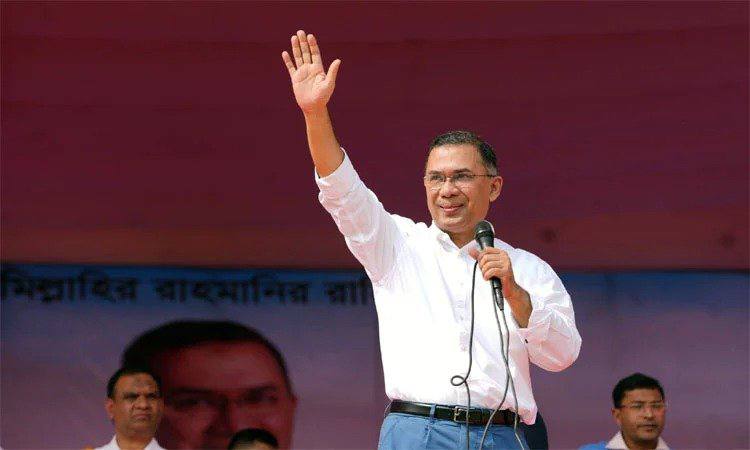
TARIQUE RAHMAN, the man who spent nearly two decades living in a quiet leafy suburb of London, is poised to become the next Prime Minister of Bangladesh following a seismic landslide victory for the Bangladesh Nationalist Party (BNP).
Preliminary results from Thursday’s historic general election—the first since the dramatic ouster of Sheikh Hasina in 2024—show the BNP and its allies securing a massive two-thirds majority in the Jatiya Sangsad.
The victory marks a stunning political resurrection for 60-year-old Rahman, who has been leading the party from his base in the UK since 2008.
Celebrations erupted across the capital, Dhaka, as news filtered through that the BNP had crossed the 151-seat threshold required for a majority. Rahman himself secured convincing wins in both constituencies he contested: Dhaka-17 and Bogra-6.
”This is not just a win for the BNP; it is a win for the people who have waited 17 years for their voices to be heard,” a senior party spokesperson said.
“The era of exile is over. The era of reconstruction begins.”
The election, overseen by the interim government of Nobel laureate Muhammad Yunus, saw a voter turnout of nearly 60%, with millions of first-time “Gen Z” voters heading to the polls. World leaders, including the Prime Ministers of India and Pakistan, have already extended their congratulations to the Prime Minister-designate.
Rahman is expected to be officially sworn in on February 16, marking the end of the interim administration and the return of the Rahman-Zia political dynasty to the seat of power.
The rise of Tarique Rahman is one of the most remarkable comebacks in South Asian politics.
For the London public, Rahman was often seen as a low-profile political figure residing in the UK, but in Bangladesh, he remained a polarizing and powerful symbol of the opposition.
The Exile: Rahman fled to London in 2008 for medical treatment following a period of imprisonment under a military-backed caretaker government.
He remained in the UK for 17 years, claiming political asylum while the subsequent Awami League government handed him multiple sentences in absentia for corruption—charges he always maintained were politically motivated.
The 2024 Uprising: The political landscape shifted forever in August 2024 when a student-led “Monsoon Revolution” forced long-time leader Sheikh Hasina to flee to India.
This opened the door for Rahman’s legal cases to be reviewed and eventually cleared by the interim administration.
The Return: Rahman returned to Dhaka in late 2025 to a hero’s welcome, positioning himself as the face of a “new, democratic Bangladesh.”
The Challenges: As he prepares to take office, Rahman faces a fractured economy and the daunting task of navigating complex regional ties with India while managing a restless youth population that demands transparency and an end to the “dynastic” politics of the past.