

By SCM Foreign Desk I Wednesday, July 08, 2026
ATLANTA — While Lionel Messi and the reigning world champions march deeper into the knockout stages of the 2026 FIFA World Cup, a financial tempest is brewing off the pitch.
The Federal Bureau of Investigation and federal prosecutors from the U.S. Department of Justice have launched a preliminary inquiry into the Argentine Football Association (AFA) over suspicions of money laundering and bank fraud. The probe focuses on the movement of hundreds of millions of dollars through the American financial system.
The investigation, first detailed by the prominent Argentine daily La Nación, threatens to cast a long, familiar shadow of institutional corruption over global soccer’s premier tournament, exactly a decade after the infamous “FIFA Gate” corruption scandal upended the sport’s governing bodies.
According to legal documents and reports, U.S. federal prosecutors have already begun taking testimonies. Last week, federal agents conducted a multi-hour questioning session with Guillermo Tofoni, a prominent Argentine soccer businessman and long-time match agent, to clarify how international commercial contracts were managed.
The epicenter of the investigation is TourProdEnter LLC, a Florida-based company utilized by the AFA to receive and manage revenue from lucrative overseas commercial agreements and global sponsorships, including deals with corporate giants like Adidas and Warner.
According to financial records reviewed by La Nación, TourProdEnter LLC funneled more than $260 million in AFA-related revenue through accounts at major U.S. institutions, including Citibank, Bank of America, and JPMorgan Chase.
While the majority of the cash flow appears tied to legitimate operating expenses, investigators have flagged approximately $57 million in unexplained transfers.
U.S. authorities are reportedly trying to determine why those millions were rerouted to shell companies and beneficiaries with no clear commercial purpose. Strikingly, some individuals listed as controllers of those corporate entities were found to be registered social welfare recipients living in Argentina.

The timing of the revelations is deeply inconvenient for the AFA leadership. The federation’s controversial president, Claudio “Chiqui” Tapia, is currently in the United States accompanying the national team.
When asked by reporters if top executives would be formally summoned by the DOJ, a source familiar with the matter noted pointedly, “They are all here.”
Neither the FBI nor the AFA has issued an official public comment on the preliminary inquiry, and no formal criminal charges have been filed. Under U.S. federal law, prosecutors routinely use preliminary inquiries to determine whether there is sufficient evidence to seek a formal indictment.
The escalating legal pressure comes at an intensely volatile political moment for Tapia back home. He has been locked in a bitter, monthslong feud with Argentina’s libertarian president, Javier Milei.
The Milei administration has fiercely lobbied to reshape Argentine sports by allowing private corporate ownership of soccer clubs—a proposal Tapia and the AFA traditionalists have aggressively blocked.
Earlier this year, Milei’s government hit Tapia with separate tax evasion charges in Buenos Aires, fueling speculation that domestic political warfare is helping feed information to American investigators.
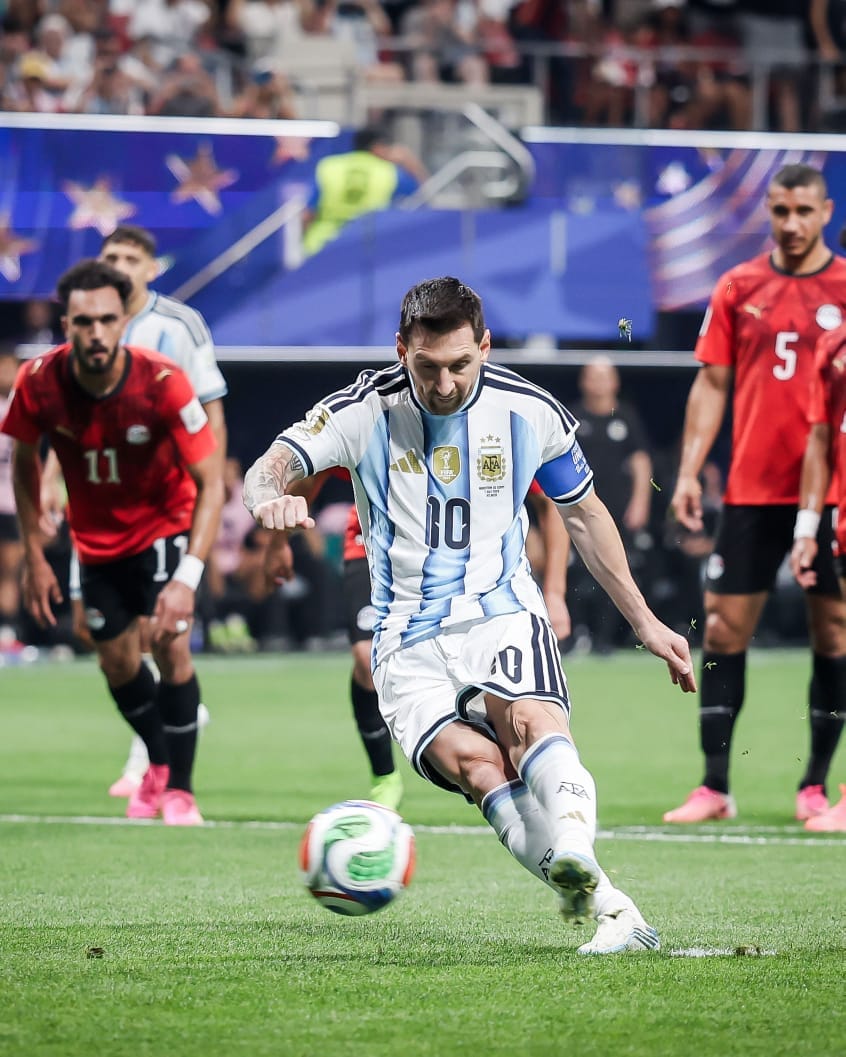
The off-field drama also arrives on the heels of on-field controversy. Just yesterday, Argentina advanced to the World Cup quarterfinals following a highly contentious 3-2 Round of 16 victory over Egypt in Atlanta, a match marred by a disallowed Egyptian equalizer that sparked furious protests from Egypt’s coaching staff.
While there is no indication from U.S. law enforcement that the financial probe is connected to tournament match-fixing, the timing guarantees that as Argentina chases its consecutive World Cup title, the actions of its executives will face as much scrutiny as the brilliance of its players.
