

By SCM Staff Reporter
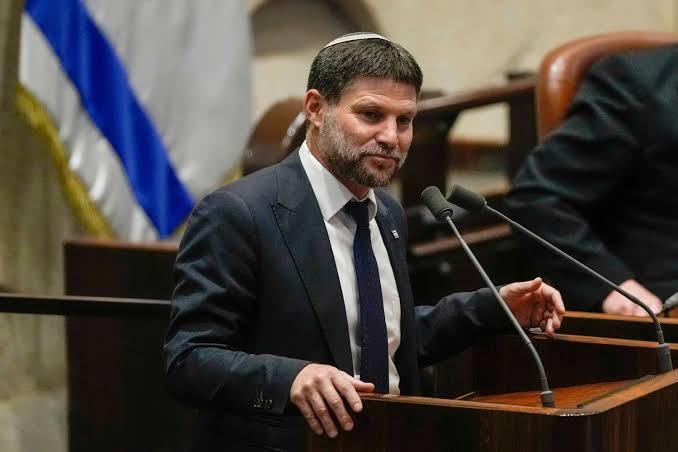
JERUSALEM — In a direct challenge to international diplomatic frameworks aimed at stabilizing the region, Israel’s far-right Finance Minister, Bezalel Smotrich, has declared that Israel must apply its West Bank settlement strategy to the Gaza Strip to ensure permanent security control.
Speaking to supporters and media, Mr. Smotrich claimed that the Israeli military has successfully advanced across the enclave and now holds effective control over approximately 70 percent of Gaza’s territory. He explicitly ruled out any international efforts to rebuild the devastated strip until a total disarmament of Palestinian factions is achieved and all security threats are permanently eliminated.
“We continue advancing in Gaza and control about 70% of the territory,” Mr. Smotrich stated, adding that his office is actively “working on additional plans to achieve the goal of destroying Hamas.”
His comments strike at the heart of the most contentious debate surrounding the future of the enclave. While international mediators—including the United States and Arab nations—have pushed for a transitional administration and multi-billion-dollar reconstruction efforts under the auspices of a newly formed “Board of Peace,” Mr. Smotrich signaled that his faction intends to use the war’s outcome to permanently alter Gaza’s borders.
”After expanding settlements in the West Bank, we seek to apply a similar approach in Gaza in the future,” Mr. Smotrich said, explicitly linking the current offensive to a broader territorial vision. “Settlement is the main guarantee for strengthening presence and long-term security control.”
Mr. Smotrich’s remarks represent the deep ideological fractures within Prime Minister Benjamin Netanyahu’s governing coalition. As the leader of the ultra-nationalist Religious Zionism party, Mr. Smotrich holds an influential dual role as Finance Minister and an adjunct minister within the Defense Ministry, granting him unprecedented civilian authority over parts of the occupied West Bank.
Under his tenure, settlement expansion in the West Bank has reached historic highs, drawing widespread international condemnation and sanctions from several European nations, including France, Ireland, and Spain.
The proposal to build Jewish settlements in Gaza directly contradicts the official stance of Israel’s closest allies, including the United States, which has repeatedly warned against any permanent reduction of Gaza’s territory or the displacement of its 2.3 million Palestinian residents.

Israel previously withdrew its military and evacuated 21 settlements from Gaza in 2005 under the “Disengagement” policy led by then-Prime Minister Ariel Sharon—a move that Mr. Smotrich and his allies have long denounced as a historic “sin.”
The timing of Mr. Smotrich’s statements is particularly delicate. It comes amid intense friction over the implementation of a U.S.-backed, multi-phase framework originally brokered to halt major hostilities, facilitate hostage returns, and establish a “National Transitional Committee” comprised of non-Hamas Palestinian administrators.
While Prime Minister Netanyahu has publicly focused on the demilitarization of Gaza and expressed skepticism about rapid reconstruction, he has generally avoided endorsing the explicit return of civilian settlers to the enclave.
However, because Mr. Netanyahu relies heavily on the political backing of far-right ministers like Mr. Smotrich and National Security Minister Itamar Ben-Gvir to maintain his parliamentary majority, such rhetoric carries significant policy weight.
Human rights organizations and Palestinian leaders have responded to the resettlement proposals with alarm, warning that implementing a West Bank-style settlement apparatus in Gaza would amount to permanent occupation and ethnic cleansing.
The United Nations estimates that the war has left Gaza in near-total ruin, with reconstruction costs projected at upwards of $70 billion.
By conditioning any rebuilding on absolute disarmament and introducing the prospect of civilian resettlement, Mr. Smotrich’s remarks signal that the political battle over the “day after” in Gaza may prove just as volatile as the military conflict itself.
