


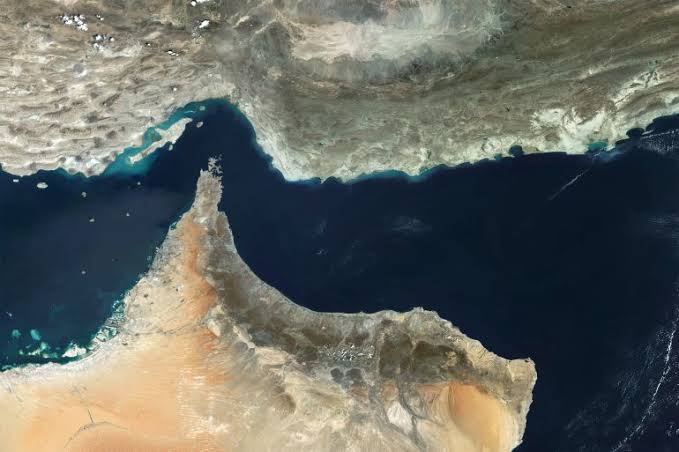
- Brussels demands ‘Zero Tolls’ for world’s most vital oil artery
By SCM Writer
LONDON — The European Union has issued a defiant “hands off” warning to Tehran, insisting that the Strait of Hormuz must remain a free, toll-free passage for global shipping as tensions in the Middle East continue to simmer.
In a direct challenge to any suggestion of maritime levies or restrictions, European Commission spokesman Anouar El Anouni declared that the EU expects the waterway to be used with “no payment or toll whatsoever.”
Speaking to Al Jazeera, El Anouni invoked decades of maritime precedent to back the bloc’s hardline stance.
”International law provides for the freedom of navigation,” El Anouni stated, signaling that Brussels is prepared to defend the legal status of the narrow chasm through which a fifth of the world’s oil supply flows.
The Legal Line in the Sand
The EU’s intervention comes amid growing concerns over the stability of global energy markets. Under the United Nations Convention on the Law of the Sea (UNCLOS), the Strait of Hormuz is recognized as an international waterway.
While the strait falls within the territorial waters of Iran and Oman, the legal principle of “transit passage” allows ships—including tankers carrying millions of barrels of crude—to move through the area without interference or taxation, provided they proceed without delay.
Why the Strait Matters
For the UK and Europe, the stakes couldn’t be higher. Any attempt to impose “tolls” or blockades would:
Skyrocket Fuel Prices: Even a minor disruption causes instant volatility in global Brent Crude prices.
Throttle Global Trade: Beyond oil, the strait is a primary route for Liquefied Natural Gas (LNG) from Qatar.
Test Military Alliances: The US and UK maintain a significant naval presence in the region specifically to guarantee this “freedom of navigation.”
Background: A History of Tension
The Strait of Hormuz has long been a geopolitical chessboard. Measuring just 21 miles wide at its narrowest point, it is the ultimate “chokepoint.”
In recent years, the area has seen a flurry of “tanker wars,” with seizures of vessels and drone attacks heightening fears of a full-scale maritime conflict. Iran has occasionally threatened to close the strait in response to Western sanctions, but the EU’s latest demand for a “zero-toll” guarantee raises the diplomatic stakes.
By citing El Anouni’s firm stance, Brussels is making it clear: the world’s most important shipping lane is not for sale—and it certainly isn’t a “toll road” for the Iranian regime.