

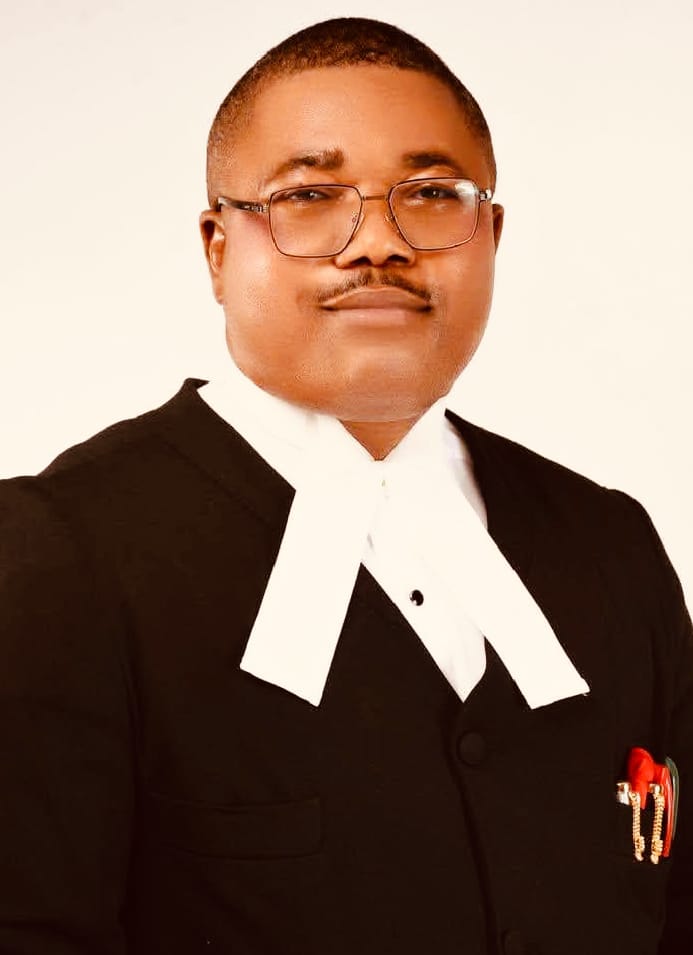
Titus Maduako Eleweke I Saturday, Oct.10, 2026
AWKA, Anambra – Anambra State-born human rights lawyer and lead counsel to the Indigenous People of Biafra (IPOB), Sir Ifeanyi Ejiofor, has called on President Bola Ahmed Tinubu to issue an unqualified public apology to the people of Asaba, Delta State, for the October 1967 massacre of innocent civilians during the Nigerian Civil War.
Ejiofor insisted that genuine healing, forgiveness, and reconciliation remain impossible without an official state acknowledgement of the tragedy and the profound suffering it inflicted on the community.
The lawyer, who holds the traditional title of Dunu-Ezeugosinachi, made the appeal in a statement titled “Weekend Musings: Asaba Massacre: 59 Years On, the Wounds Still Bleed — A Nation Cannot Heal by Pretending to Forget,” dated October 10, 2026.
He noted that the pain of the massacre continues to linger in the collective memory of the Asaba people nearly six decades later, stressing that time alone has not erased the emotional scars left by the killings.
According to him, a public apology by a sitting President would constitute a vital acknowledgement of the victims’ suffering and fulfill the moral responsibility of the Nigerian state to confront its history.
Ejiofor emphasized that the community, through its traditional ruler, the Asagba of Asaba, HRM Prof. Epiphany Azinge, SAN, is specifically seeking an apology from the incumbent President rather than a former leader.

“There will be no closure, there will be no healing until a sitting President—not an ex-President, but a sitting President—publicly apologises to us,” Ejiofor quoted the Asagba as saying.
The Asaba Massacre took place on October 7, 1967, when Federal troops entered the town.
Historical accounts document the execution of hundreds of civilians, predominantly men and boys who had gathered in the belief that peace had been restored. Ejiofor recalled that the victims were ordinary citizens whose lives were cut short, leaving behind shattered families, widowed women, and fatherless children.
Describing the event as a wound upon the nation’s conscience, Ejiofor noted that while former Head of State General Yakubu Gowon previously expressed regret in retirement, the Asaba community maintains that formal state recognition must come from a sitting leader.
He clarified that the demand is not intended to reopen old wounds or promote retribution, but rather to restore dignity to the victims’ families and strengthen the foundations of national unity.
Drawing a parallel with the federal government’s official recognition of Chief Moshood Abiola and the designation of June 12 as Democracy Day, Ejiofor argued that the nation’s willingness to reconcile with historical milestones should extend to addressing the atrocities of the civil war.
“Forgiveness may be offered, but it must never be demanded as a substitute for acknowledgement; reconciliation must not become another name for forgetting,” he stated.
Ejiofor urged the Federal Government to heed the position of the Asagba and take concrete steps toward addressing the community’s call for redress, maintaining that true national unity is fortified when a government has the courage to confront past wrongs honestly.
