

By SCM Foreign Desk
WASHINGTON — A coordinated barrage of Iranian ballistic missiles and one-way attack drones struck Muwaffaq Salti Air Base in eastern Jordan, killing American military personnel and injuring several others in one of the most direct and deadly strikes against U.S. forces in the region in recent months.
The attack has sparked conflicting reports over the precise casualty toll and tactics involved, underscoring the volatile information environment surrounding the intensifying conflict between Washington and Tehran.
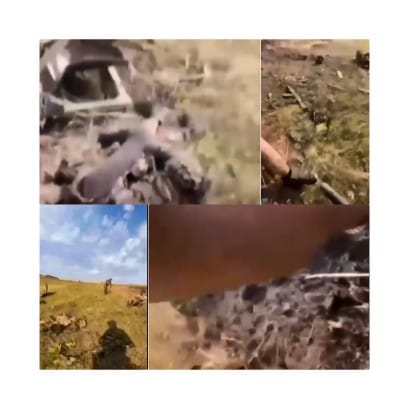
Iranian state-aligned media outlets reported that a Shahed-series suicide drone directly targeted American troops as they were attempting to evacuate wounded service members following an initial wave of strikes, claiming that at least five U.S. soldiers were killed.
U.S. Central Command (CENTCOM) confirmed that American service members were killed in action and multiple others sustained injuries requiring medical evacuation, though military officials disputed Tehran’s framing of the operational details.
”American service members were killed while defending against Iranian ballistic missile and drone attacks in Jordan,” CENTCOM said in an official statement, noting that air defense systems engaged multiple incoming threats before at least two munitions impacted the perimeter.
Strategic Role of Muwaffaq Salti Air Base
Muwaffaq Salti Air Base, situated near Azraq in Jordan’s Zarqa Governorate roughly 100 kilometers east of Amman, has long served as a vital node in regional defense architecture. Named after Lt. Muwaffaq Salti—a Royal Jordanian Air Force pilot killed in action in 1966—the facility is officially a Jordanian airbase. However, through bilateral defense agreements, it hosts a significant presence of U.S. Air Force units, including F-15E Strike Eagles, A-10 attack aircraft, and MQ-9 Reaper intelligence drones.
The base’s expansive runways and proximity to the Syrian and Iraqi borders make it an essential launching pad for counter-terrorism operations and defensive air patrols. Defense analysts note that Iranian forces have increasingly targeted such joint-use facilities to test western integrated air and missile defense networks.
”Muwaffaq Salti is not a U.S. military base in name, but it acts as an operational nerve center for U.S. Central Command,” said a senior defense fellow at the Center for Strategic and International Studies.
“Striking it is a deliberate message meant to signaling that no foreign staging ground in the region is beyond reach.”
The Multi-Layered Threat of Shahed Drones
The use of Shahed one-way attack drones highlights a persistent tactical challenge for air defense networks in the Middle East.
Manufactured in Iran and widely deployed by Iranian armed forces and proxy groups, these low-flying, delta-wing drones carry high-explosive warheads and navigate using satellite guidance.

While relatively slow compared to ballistic missiles, Shahed drones present distinct operational hurdles:
Saturated Defense Vectors: Attack packages frequently combine high-speed ballistic missiles with swarms of low-altitude drones to overwhelm radar tracking systems.
Cost Asymmetry: A single Shahed drone costs a fraction of the high-end interceptors, such as Patriot PAC-3 or NASAMS missiles, required to neutralize them.
Loitering Capability: Drones can be timed to strike secondary targets or arrival zones during initial damage assessment and medical response actions.
Military experts point out that while Iranian state media often exaggerates battlefield statistics for domestic and regional propaganda purposes, the capability of drone-missile salvoes to breach multi-layered air defenses remains a critical vulnerability.
Escalation and Regional Implications
The strike on Muwaffaq Salti Air Base represents a dangerous escalation in the ongoing regional conflict. Jordan, a key non-NATO ally of the United States, finds itself in an increasingly precarious position.
Amman has consistently sought to maintain national sovereignty and avoid being drawn into direct confrontation with Iran, even as its airspace is frequently traversed by incoming missiles and interceptors.
The Pentagon confirmed that retaliatory measures are under active consideration, with Defense Department officials signaling that attacks on American personnel will meet with calibrated counter-strikes aimed at degrading launch infrastructure and command facilities.
As tension across West Asia continues to mount, the loss of life at Muwaffaq Salti underlines the expanding scope of the confrontation—one where uncrewed aerial systems have fundamentally altered the mechanics of force protection and air defense.
