


Admin I Tuesday, May 21, 2025
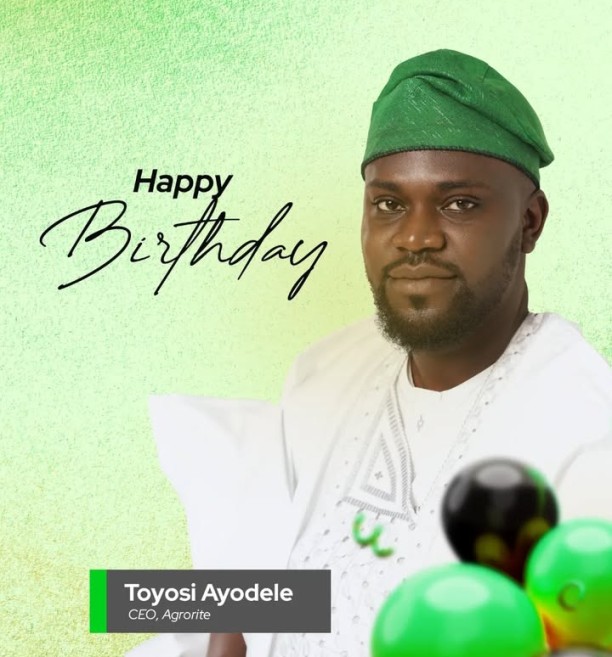
IKEJA, Lagos – The Chief Executive Officer of Reaprite Global Ltd Agrorit Ltd, Toyosi Ayodele is in trouble, following the decision of a Lagos High Court sitting in Ikeja to issue a bench warrant for his arrest.
Toyosi Ayodele is wanted in relation to alleged N600 million and $50,000 investment fraud.
He and his companies, Reaprite Global Ltd and Agrorite Ltd were charged to court on 11-count charge of obtaining money under false pretences and stealing by the Economic and Financial Crimes Commission, EFCC.
Justice Olubunmi Abike-Fadipe issued the bench warrant following the controversies surrounding the medical report submitted by his counsel and the absence of the defendant in court.
Abike-Fadipe, in her ruling said that medical report which was submitted by Ayodele’s counsel, Mr Chukwuemeka Maduagwu, purportedly from University Teaching Hospital (UCH) Ibadan did not have the stamp of the hospital.
She added that according to the report, the first defendant was brought to the emergency unit of the hospital on an emergency referral from Reddington Hospital, Lagos.
The judge said: “I have examined exhibit A, which appears to be a letter issued from the accident and emergency department of the University College Hospital in Ibadan dated May 20, 2025.
“It states that the first defendant was brought to the emergency unit on an emergency referral from Reddington Hospital with medical histories of extreme high blood pressure, and that he had been admitted and was under treatment and observation.
“The alleged report which is said to have emanated from UCH, a prestigious and famous institution of medicine in this country, the part of the body that is under high pressure was not mentioned.
“Emergency referral from quote and unquote Reddington Hospital was not given and note the error in the spelling of Reddington.”
Abike-Fadipe further said there was nothing to show that UCH conducted any procedure on the first defendant to determine what exactly was ailing him.
“Lastly, no diagnosis or suggested cause of treatment is included and I am inclined to agree with the prosecutor that this exhibit is not a medical report rather, it is a letter containing information.
“I am very wary of accepting the document in light of the observations I have made in the preceding paragraph.
“Consequently, the FCC is directed to verify the authenticity of the letter and in the meantime, a warrant is issued against the first defendant to be produced before the court to state why the bail granted to him ought not to be revoked,” she said.
The court further said the cost to be paid by the first defence counsel would be determined upon the verification of the letter and the production of the first defendant on the warrant issued.
The judge adjourned the case until July 8 for further proceedings.
Earlier, when the case was called, EFCC counsel, Mrs Deborah Ademu-etteh, had informed the court that the matter was for continuation of trial and the witness was in court.
The defence counsel, however, had informed the court that the defendant had a medical emergency after he left court on Tuesday and had been admitted in UCH.
Maduagwu had urged the court for adjournment to enable the presence of the defendant to stand the trial.
The prosecution had objected that the application was a tactic by defence to delay the trial, adding that there was no UCH stamp on the purported medical report.
Eze had also prayed the court to issue N500,000 cost to defence for delaying the case.
It was recalled that a chartered accountant and IT expert, Mr James Emadoye had on May 20 testified as the first prosecution witness against the defendant.
Emadoye, while led in evidence by the EFCC counsel, had told the court that the defendant approached him and his wife with an investment offer in agronomy and they had invested a total of N40 million and $50,000 in three tranches.
The witness had said trouble began when their daughter needed tuition for studies abroad and he requested to withdraw part of their investment and the defendant allegedly issued two cheques for payment.
“The cheques were dishonoured upon presentation due to insufficient funds.
“All efforts to reach the defendant proved futile, prompting me to consult with my brother who also invested with the same company.
“We subsequently petition the EFCC on behalf of his family and another affected investors,” the witness had said.
The court had admitted into evidence the EFCC petition, the dishonoured cheques, and investment certificates.