


By SCM Staff Writer
The Crackdown at Habima Square
The air in Tel Aviv usually carries the scent of salt from the Mediterranean, but on Saturday night, it smelled of exhaust and adrenaline.
At Habima Square, the cultural heart of the city, a small but resolute group of protesters gathered. They weren’t the thousands who had filled the streets in years past; these were a few dozen, huddled under the flickering orange streetlights, clutching cardboard signs that read: “NOT IN OUR NAME” and “CEASEFIRE NOW.”
The war with Iran, now entering its second month, had cast a long shadow over the country. While the national consensus remained largely supportive of the military campaign, a growing, vocal minority felt the cost—human and moral—had become unbearable.
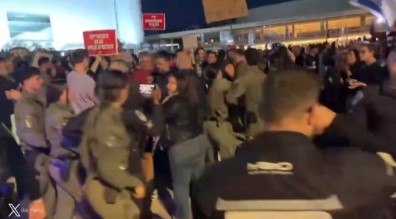
The atmosphere shifted when a line of Border Police, clad in tactical gear, moved in. Under wartime regulations, public gatherings are strictly limited to 50 people for “safety.”
But to those on the ground, the safety being protected felt political rather than physical.
“Move back! This is an illegal gathering!” a commander shouted through a megaphone.
The protesters didn’t move. They sat. They linked arms, forming a human chain on the cold pavement. The response was immediate and visceral. Officers surged forward, grabbing protesters by their jackets and limbs.
In a moment caught on dozens of smartphone cameras, a young man—his face pale under the neon lights—was hoisted into the air by two officers. He didn’t resist, yet as they cleared the path, he was slammed back-first onto the concrete. The sound of the impact was a sickening thud that momentarily silenced the chanting.
As the square was cleared, the enforcement didn’t stop at the perimeter. Footage showed police following fleeing attendees onto the sidewalks, repeatedly shoving them and shouting, “Move forward!” even as the protesters tried to leave. By midnight, at least 18 people had been arrested across Tel Aviv and Haifa, their signs left shredded in the gutters.
For the protesters, the “concrete slam” became a symbol of a domestic front where the line between national security and the suppression of dissent has become increasingly blurred.
Background: The Context of 2026
The Second Month of War: Following the initial strikes on February 28, 2026, Israel and the U.S. have been engaged in a high-intensity conflict with Iran.
Home Front Restrictions: The Home Front Command has implemented strict limits on public gatherings, citing the risk of missile strikes.
These regulations have been used by police to justify the rapid and often forceful dispersal of anti-war demonstrations.
A Fractured Public: While the majority of the Israeli public supports the “heroic” war effort, left-wing activists and anti-government groups have begun to merge, arguing that the conflict is being prolonged to serve political survival.