

By SCM Sport Reporter at the Miami Stadium
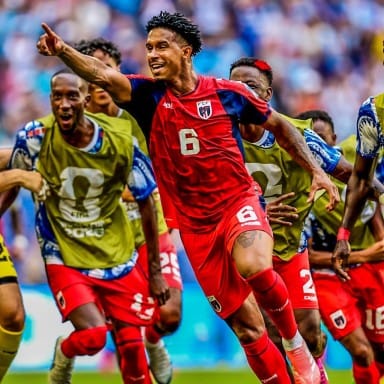
THE MAGICAL World Cup fairytale of tiny Cape Verde is officially the story of the summer after the African debutants produced a breathtaking, giant-killing display to hold two-time world champions Uruguay to a pulsating 2-2 draw under the Miami sun.
Marcelo Bielsa’s heavily-fancied South Americans looked shell-shocked at the final whistle, left entirely disjointed by an island nation with just half a million inhabitants.
The “Blue Sharks”—who already frustrated Spain in a opening-day stalemate—proved they are not just making up the numbers in the expanded 48-team tournament. Instead, they took a giants’ scalp to the brink of disaster, leaving Uruguay’s World Cup dreams dangling by a thread ahead of a must-win clash with Spain.
It was a night where heroes were born for Cape Verde. Midfield engine Kevin Pina sparked absolute pandemonium in the twenty-first minute when he stepped up over a distant free-kick. Showing zero respect for the legendary Fernando Muslera in the Uruguayan goal, Pina unleashed a venomous, swerving, long-range effort.
The low missile ripped straight through a timid, crumbling two-man Uruguay wall and nested into the bottom corner. It was Cape Verde’s first-ever goal in World Cup history, and it came in spectacular fashion.
Uruguay, boasting global stars like Federico Valverde and Manuel Ugarte, looked completely rattled by Pedro Leitão Brito’s tactical discipline.
The South Americans struggled to generate meaningful possession for the vast majority of the first half, but class briefly told just before the interval. In the forty-fourth minute, a towering header from Paris Saint-Germain’s Manuel Ugarte crashed against the post, bouncing kindly into the path of Maximiliano Araújo, who alertly nodded into an empty net to level the score.
The momentum turned entirely in first-half stoppage time. Deep into the sixth minute of added time, the relentless Araújo turned provider, perfectly flicking an inviting Valverde free-kick into the path of Agustín Canobbio. The winger made no mistake from close range, ruthlessly firing home to give Bielsa’s men a hard-fought 2-1 lead as the teams headed down the tunnel.
Yet, anyone expecting the African minnows to fold in the second half was sorely mistaken. The Blue Sharks emerged from the break playing with a fierce resilience. In the sixty-first minute, structural chaos inside the Uruguayan ranks gifted the debutants their historic moment.
Napoli defender Mathías Olivera, enduring a absolute nightmare of an afternoon, played a shockingly careless, blind back-pass. Seizing on the hesitation like a true predator, substitute Hélio Varela intercepted the ball. Veteran goalkeeper Muslera compounded the disaster, inexplicably racing out of his box for a ball he was never going to win.

Varela easily skipped around the stranded keeper and calmly slotted into the yawning, empty net to bring the house down at 2-2.
The final half-hour was pure, unadulterated World Cup drama. A furious Bielsa threw on Liverpool talisman Darwin Núñez in the sixty-ninth minute to save the day, but Cape Verde’s defence defended for their absolute lives.
Defender Steven Moreira was the ultimate hero at the back, pulling off two miraculous, goal-saving blocks in quick succession to deny late efforts from Brian Rodríguez and Tottenham’s Rodrigo Bentancur.
The underlying data painted a picture of a desperate, stretched battle. Uruguay dominated the lion’s share of possession with sixty-two percent, managing to unleash sixteen total shots across the ninety minutes.
However, their renowned cutting edge was largely blunt, as only five of those attempts found the target. Cape Verde, conversely, were remarkably clinical with their thirty-eight percent possession, matching the heavyweights with five shots on target from nine total attempts.
The match was a physical, fiercely contested affair that forced the referee to issue four yellow cards. Sidny Lopes Cabral was booked for Cape Verde as early as the fifth minute for a cynical halt of a counter-attack, while his defensive partner Diney entered the referee’s book deep into second-half stoppage time.
Uruguay’s frustration manifested in bookings for Bentancur in the twentieth minute and a yellow card for the erratic Olivera in the fifty-eighth minute.
When the final whistle blew after frantic end-to-end action, Cape Verde had secured a piece of history, becoming only the second African nation in World Cup history—after Nigeria in 1994—to score two goals from outside the penalty box in a single game.
They head into their final match against Saudi Arabia completely in control of their own knockout destiny, while Bielsa is left facing a gargantuan challenge.
Cape Verde
