

Admin I Saturday, July 04, 2026
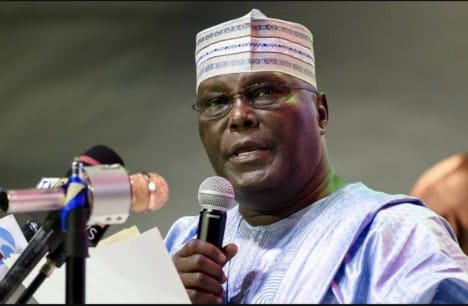
ABUJA — Nigeria’s prominent opposition leader and former Vice President, Atiku Abubakar, has accused President Bola Tinubu’s administration of “fiscal impunity,” alleging that billions of dollars in public funds have been diverted into an off-budget political war chest ahead of the 2027 elections.
The allegations follow an International Monetary Fund (IMF) review, reported earlier this week, which indicated that the Nigerian government failed to record public expenditures amounting to approximately 2 per cent of the country’s Gross Domestic Product (GDP) in recent official budgets.
Given the current valuation of Africa’s most populous economy at roughly ₦441.5tn ($290bn), Atiku noted that the discrepancy amounts to a staggering ₦8.8tn ($5.8bn) in public funds operating outside statutory oversight.
”This figure translates to public funds spent entirely outside the statutory framework of Nigeria’s official budget documents, unaccounted for, unaudited, and hidden from the Nigerian people,” Atiku said in a statement. He described the development as “the most consequential act of fiscal impunity in Nigeria’s recent democratic history.”
According to the IMF’s latest Article IV consultation notes, referenced by opposition figures, the financial variance stems primarily from large-scale government infrastructure projects executed entirely off-budget.
Economists have long warned that executing capital projects outside standard procurement frameworks invites corruption and weakens the country’s sovereign credit credibility.
Atiku, who stood as the main opposition candidate in the highly contested 2023 presidential elections, drew direct parallels between the current federal administration’s fiscal management and President Tinubu’s two-term tenure as Governor of Lagos State from 1999 to 2007.

He alleged that the administration is replicating a regional “playbook” on a national scale, drawing comparisons to Alpha Beta, a private tax-consulting firm that managed Lagos State’s revenue collection under controversial, opaque structures for years.
”The man who perfected the art of the off-budget economy in Lagos has brought that form to Abuja,” Atiku alleged, adding that the parallel fiscal system operates beyond the reach of the Auditor-General and the statutory oversight of the National Assembly.
The opposition statement also highlighted an alleged ₦800bn ($525m) deduction from statutory allocations meant for Nigeria’s sub-national state governments. The funds, which belong to the federating units, were allegedly withheld without legislative approval or constitutional backing.
Atiku claimed the combination of unrecorded federal capital expenditures and the state-level deductions points “unmistakably to the construction of a massive, multi-source political war chest being assembled ahead of the 2027 general elections.”
The presidency and the ruling All Progressives Congress (APC) have yet to formally issue a comprehensive rebuttal to the claims, though government officials have previously defended massive infrastructure spending as necessary to bridge Nigeria’s severe development deficit.
The brewing fiscal controversy lands at a sensitive time for the Tinubu administration, which is currently grappling with widespread public discontent, soaring inflation, and a cost-of-living crisis triggered by aggressive macroeconomic reforms, including the partial removal of a costly fuel subsidy and the floating of the local currency, the naira.
