

By SCM International Desk I Thursday, Oct.15, 2026
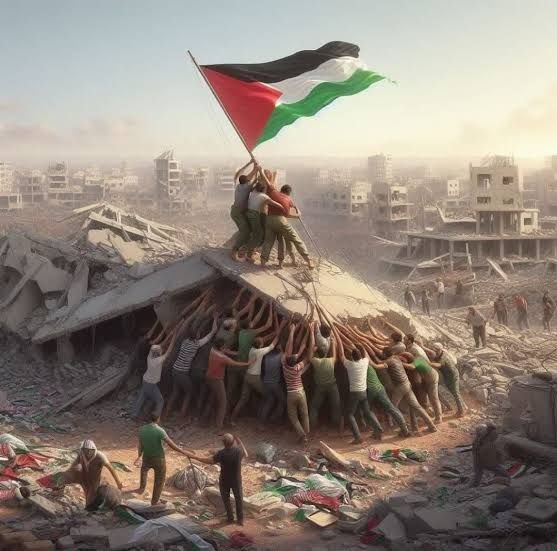
CAIRO — The State of Palestine has formally requested that the Arab League activate international protection mechanisms to safeguard civilians in the Gaza Strip and counter rising violence and land displacement across the West Bank and occupied Jerusalem.
Speaking at an extraordinary session convened at the request of Palestinian President Mahmoud Abbas, Palestine’s Permanent Representative to the Arab League, Muhannad Al-Aklouk, called on the regional body to back decisive international interventions.
During the meeting, the Arab League Council demanded that the United Nations Security Council pass a resolution under Chapter VII of the UN Charter, which allows for binding measures—including enforcement mechanisms and sanctions—to restore peace and security. Addressing the potential for a veto in the Security Council, the envoy outlined contingency steps, urging the UN General Assembly to act under Resolution 377, known as the “Uniting for Peace” procedure, alongside signatories to the Fourth Geneva Convention.
To advance the diplomatic effort, the Arab Group at the United Nations was directed to coordinate with current regional representatives on the Security Council, including Bahrain and Somalia, to mobilize support.
In addition to diplomatic maneuvers at the UN, Ambassador Al-Aklouk urged member states to enforce Arab League economic measures, calling for targeted sanctions against 60 organizations and a coordinated boycott of 214 commercial firms linked to Israeli settlements in the occupied territories.
Key Facts: Palestinian Diplomatic Push at the Arab League
Primary Request: Activation of international protection mechanisms for civilians in Gaza, the West Bank, and East Jerusalem.
Core Diplomatic Strategy: Pursuit of a binding UN Security Council resolution under Chapter VII of the UN Charter.

Alternative Route: Invoking the UN “Uniting for Peace” mechanism through the UN General Assembly in the event of a Security Council veto.
Economic Measures: Implementation of targeted Arab League sanctions against 60 organizations and a boycott of 214 settlement-connected entities.
The request by Palestinian leadership reflects ongoing attempts to leverage regional diplomacy and multilateral frameworks to address the humanitarian crisis and escalating violence in the region.
Chapter VII grants the UN Security Council the authority to determine threats to international peace and security and take action—including economic sanctions, diplomatic isolation, or military intervention—to enforce its mandates.
Resolutions passed under Chapter VII are legally binding on all UN member states, though they remain subject to the veto power held by the Security Council’s five permanent members (the United States, China, Russia, France, and the United Kingdom).
What is the “Uniting for Peace” Mechanism?
Adopted in 1950, UN General Assembly Resolution 377 A—known as “Uniting for Peace”—allows the General Assembly to consider matters of international peace when the Security Council fails to exercise its primary responsibility due to a lack of unanimity among its permanent members.
Under this mechanism, the General Assembly can make recommendations for collective measures to restore international security, though its resolutions are generally non-binding.
Economic Sanctions and Settlement Boycotts
The call to boycott settlement-linked firms aligns with broader regional and international efforts to penalize economic activities in Israeli-occupied territory. The Arab League maintains directives concerning commercial entities operating within occupied lands, seeking to curb economic practices deemed contrary to international law and Geneva Convention standards regarding occupied populations.
