

By SCM Foreign Desk
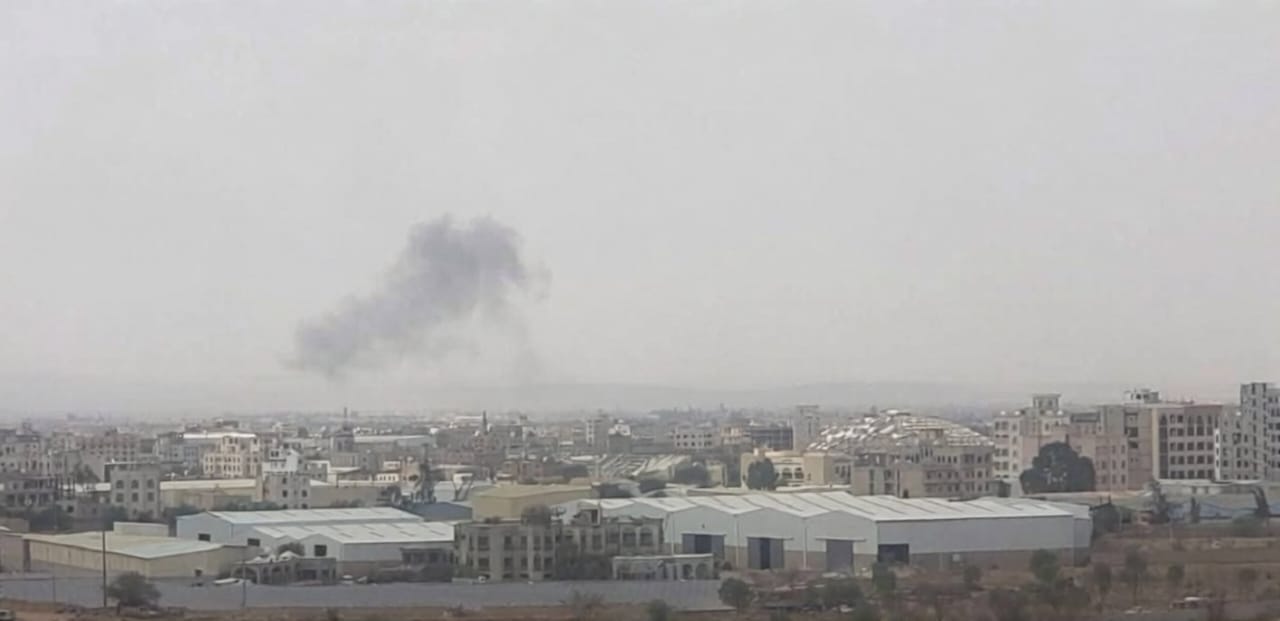
SANAA, Yemen — Airstrikes targeted the runway of Sanaa International Airport on Monday, shattering a prolonged period of relative calm and threatening to drag Yemen back into a full-scale regional conflict.
The Iran-aligned Houthi movement immediately blamed Saudi Arabia for the attack and declared that a years-long phase of fragile de-escalation had officially ended.
The strike targeted the takeoff and landing fields of the capital’s airport just as an aircraft carrying a Houthi delegation arrived, according to Hizam al-Assad, a senior member of the Houthi political bureau. While Houthi officials stated that the plane landed safely and the delegation arrived without casualties, the group’s leadership issued swift warnings of an impending military response.
”The Saudi enemy carried out several airstrikes against Sanaa International Airport,” Yahya Saree, the Houthi military spokesperson, said in a televised statement. He called the bombardment a “blatant aggression” and warned that the action “will not pass without retribution.” Mr. al-Assad echoed the sentiment, warning that Riyadh would discover it had “dug its own grave.”
The strike marks a severe escalation in a conflict that has largely simmered under a tense, unwritten truce since 2022. While Saudi authorities did not immediately confirm direct involvement, the internationally recognized government of Yemen—which operates from the southern port of Aden with heavy military and financial backing from Saudi Arabia—claimed responsibility for ordering the strike.
According to the southern government’s Ministry of Defense, the runway was targeted specifically to block an Iranian Mahan Air flight from violating Yemeni airspace.
Tensions had spiked in recent days after the Houthis successfully established a direct air corridor between Sanaa and Tehran, a move the southern government and its Gulf allies view as a direct violation of international law and a vehicle for Iranian weapons smuggling.
Moammar al-Eryani, the information minister for the southern government, accused the Houthis of further escalating the situation by temporarily detaining an International Committee of the Red Cross (ICRC) aircraft and its crew at the airport during the chaos.

The sudden return to heavy bombardment highlights the fragile state of Yemen, which has been fractured by a complex civil war for more than a decade.
The conflict began in late 2014 when the Houthis, a Zaydi Shiite movement hailing from northern Yemen, seized control of Sanaa and forced the internationally recognized government into exile.
In March 2015, Saudi Arabia assembled a coalition of Arab states, backed by Western logistical support, and launched a devastating air campaign intended to oust the Houthis and restore the recognized government.
What ensued was a grueling war of attrition that triggered one of the world’s worst humanitarian crises, leaving hundreds of thousands of people dead and pushing millions to the brink of starvation.
A UN-brokered ceasefire in April 2022 drastically reduced the violence, and even after the official agreement expired, a de facto truce largely held. In recent years, Saudi Arabia had actively engaged in direct peace talks with Houthi leadership in a bid to extricate itself from the costly war and secure its southern border.
However, regional geopolitical dynamics have grown heavily strained. The Houthis have disrupted global trade by targeting commercial shipping lanes in the Red Sea, drawing military retaliation from the United States and Britain.
The opening of direct flights between Sanaa and Tehran has added fresh fuel to the proxy rivalry between Saudi Arabia and Iran.
Monday’s runway strike effectively disrupts the delicate status quo. With Houthi commanders threatening to match “airport for airport, and port for port,” regional analysts fear that the relative peace Yemenis have experienced over the last four years may be rapidly disintegrating.
